The Best 2 Week Northern & Central Vietnam Itinerary
Vietnam had been on my travel list for years, but when I finally started planning my first trip, I quickly realized just how difficult it was to narrow down where to go.
Vietnam is a long country, roughly 1,700km by road from Hanoi down to Ho Chi Minh City, with so many incredible places to visit. I knew I didn’t want to spend my entire trip rushing from one destination to the next. I was also visiting Tokyo and Seoul on the same trip so I decided to save Ho Chi Minh City, another fast paced Asian city, for a future trip. Instead, I wanted to dedicate more of my time in Vietnam to experiences I wasn’t going to find anywhere else on my itinerary.
This 2 week northern and central Vietnam itinerary takes you from the busy streets of Hanoi to the limestone mountains of Ninh Binh, an overnight cruise through Ha Long Bay, the rice terraces of Sapa, and finally to Hoi An and Da Nang in Central Vietnam.
I followed almost this exact route on my own trip, although I completed it in 12 days rather than 14. It was absolutely doable, but there were a few stops where I found myself wishing I had more time, which is why this itinerary includes extra days. If you can take the full two weeks, I’d recommend it.
In this guide, I’ll break down exactly how I recommend spending two weeks in Northern and Central Vietnam, including how long to stay in each destination, how to get around, and where you can shorten the itinerary if you have less time.
This post contains affiliate links. If you make a purchase using one of these links, I may receive compensation at no extra cost to you. Thank you for supporting my business so I can create content like this for you.
2 Weeks in Northern and Central Vietnam: Itinerary at A Glance
2 Weeks in Northern & Central Vietnam
14 days · 1 overnight train
| Day | City | Plan |
|---|---|---|
| 1 | Hanoi | Old Quarter, pho, egg coffee and Hoan Kiem Lake |
| 2 | Hanoi | Ho Chi Minh Mausoleum, Temple of Literature, Train Street |
| 3 | Ninh Binh | Trang An or Tam Coc boat ride, Bich Dong, Hang Mua |
| 4 | Ninh Binh | Bai Dinh Pagoda and Hoa Lu Ancient Capital |
| 5 | Ha Long Bay | Overnight cruise through Ha Long and Lan Ha Bay |
| 6 | Ha Long Bay | One last afternoon in Hanoi, then the sleeper to Lao Cai |
| 7 | Sapa | Sapa Town, Cat Cat Village and a Red Dao herbal bath |
| 8 | Sapa | Trek through Muong Hoa Valley |
| 9 | Sapa | Fansipan by cable car, then travel back to Hanoi |
| 10 | Hanoi | Fly to Da Nang, Ancient Town and lanterns after dark |
| 11 | Hoi An | Ancient Town, resort time, rice fields or An Bang Beach |
| 12 | Da Nang | Marble Mountains, My Khe Beach, Han River at night |
| 13 | Da Nang | Day trip to Hue or Ba Na Hills |
| 14 | Da Nang | Son Tra Peninsula and Lady Buddha, then home |
Know Before You Go to Vietnam
Vietnam Visa Requirements
Americans need a visa to enter Vietnam. You can apply online for an eVisa through the official Vietnamese government portal, with options for single or multiple entry.
Be careful when applying because there are plenty of lookalike websites that charge additional service fees. Make sure you’re using the official government site.
The official price is $25 USD for single entry and $50 for multiple entry. The processing usually takes around three to five working days, so don’t wait until last minute to do this. Your passport also needs at least six months of validity beyond your entry date.
Some nationalities are visa-exempt for a set number of days, so check the rules for your own passport rather than assuming.
Staying Connected in Vietnam
I recommend using an eSIM for Vietnam. It’s much easier than buying and swapping a physical SIM after you land, and you can set it up before your trip so you’re connected as soon as you arrive.
Get the eSIM I recommend for Vietnam here.
Getting Around Vietnam
Grab is Vietnam’s version of Uber and the app works almost identically. You can order a car or a motorbike, and the prices are very affordable compared to Uber in the USA. Most of our short trips 10-15 minutes cost less than $2, and even a 40 minute ride to our remote countryside hotel cost about $11.
Between cities we used a mix of domestic flights, sleeper trains and buses.
Smart Packing for Vietnam
Universal adapter – Vietnam uses mostly Type A, C plugs, sometimes D or F. Type A is same as the US, but I always carry a universal adapter like this one when traveling just to be sure.
Portable charger – You’ll be depending on your phone to access Google Maps and to take photos on long days, so your phone battery will need charging throughout the day. This is the one I’m currently using.
Motion sickness medication – Worth packing if you’re prone to motion sickness, particularly for the Ha Long Bay cruise or winding mountain roads around Sapa.
Money and Paying in Vietnam
The currency is the Vietnamese dong (VND). Some hotels and nicer restaurants take cards, but we paid cash almost everywhere, so plan on carrying more than you think you need.
We used VPBank and TPBank ATMs – TPBank was known for not having fees, but this has changed.
Weather and What to Expect
Northern and Central Vietnam have different weather patterns, which can catch you off guard. The north is generally cooler, gets a real winter, and it’s especially colder up in the mountains around Sapa. Central Vietnam stays warmer year-round, swinging between hot and dry and hot and rainy depending on the season.
If you’re covering both regions in one trip, you should effectively be packing for two climates.
✦ ✦ ✦
Days 1 & 2: Hanoi
Start your trip with two days in Hanoi, Vietnam’s capital.
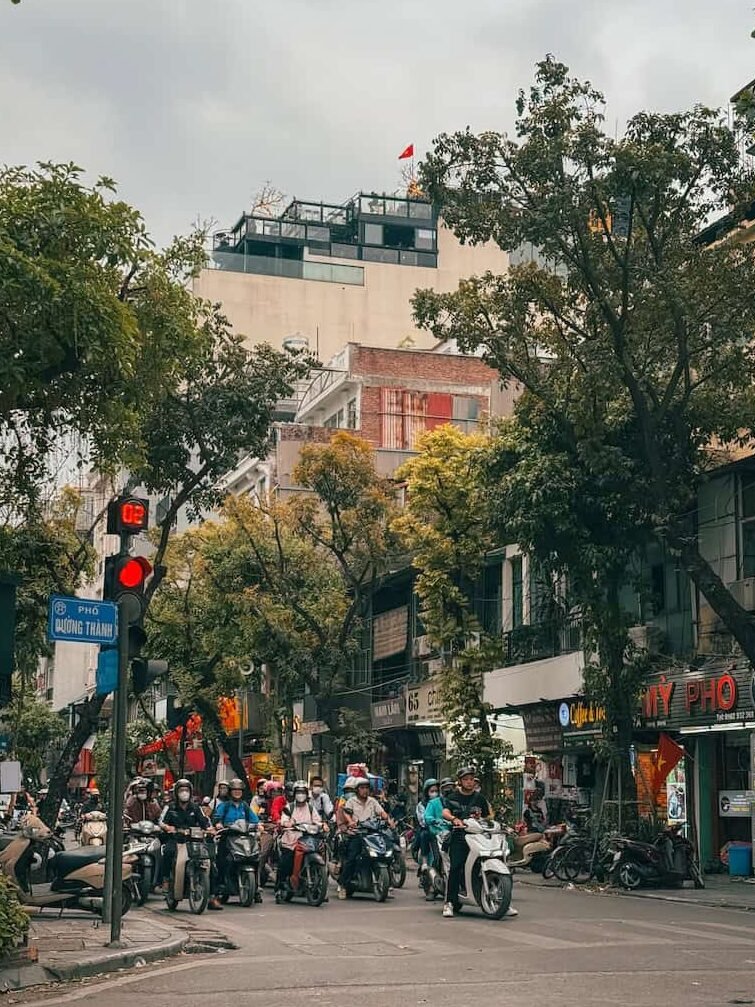
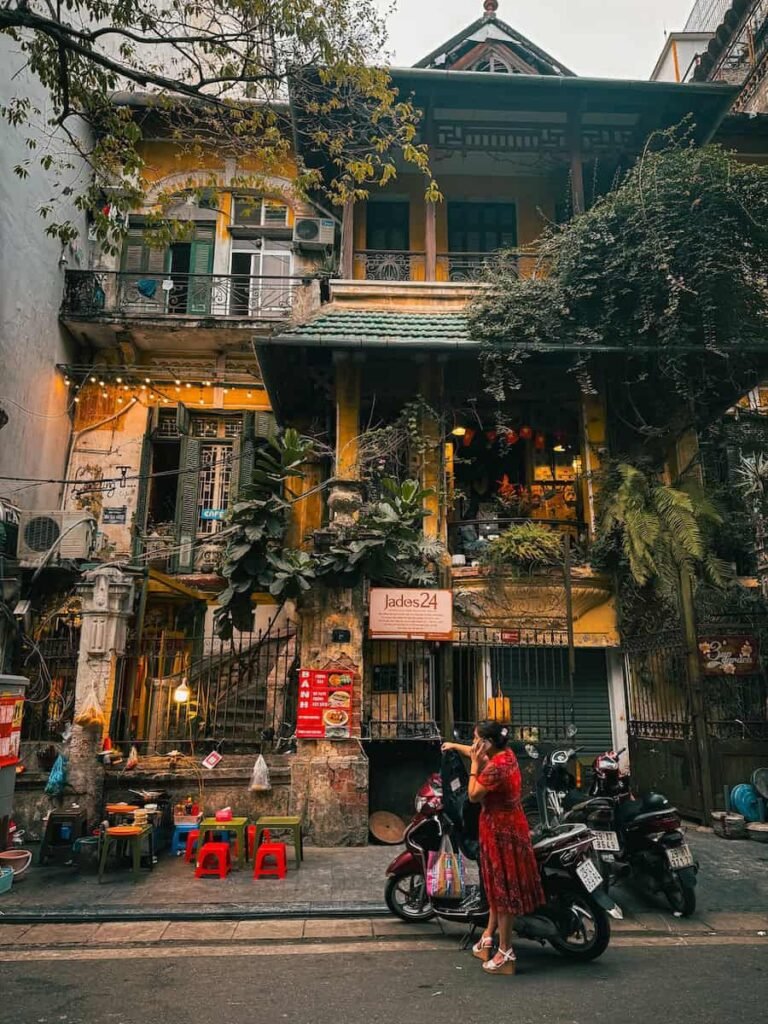
Hanoi can feel a little overwhelming when you first arrive. The streets of the Old Quarter are constantly moving, scooters seem to come from every direction, and some of the best meals are served from tiny restaurants you might walk right past if you didn’t know what you were looking for.
Give yourself two days here before heading into the rest of Northern Vietnam. You’ll also pass through Hanoi again between Ha Long Bay and Sapa, so you’ll have another afternoon later in the itinerary to revisit anything you missed.
Where to stay in Hanoi
For a first trip to Hanoi, I recommend staying in either the Old Quarter or French Quarter.
The Old Quarter puts you in the middle of Hanoi’s energy, with restaurants, cafes, shops and many of the city’s major attractions within walking distance. Just keep in mind that it is genuinely loud and chaotic.
The French Quarter, about a kilometer south, is the quieter, more polished option. It has wide boulevards, French colonial architecture, and most of the city’s luxury hotels. Better if you want to retreat at the end of the day, though you’ll likely have to walk a bit or Grab to most of the Old Quarter sights.
I stayed at Proverb Hotel Hanoi, which had only just opened when I booked it and barely had any reviews. It turned out to be an excellent find. The rooms were pristine, the staff was incredibly welcoming, and there’s a beautiful rooftop pool and bar that we unfortunately didn’t have time to enjoy.
A few other options depending on budget:
- Capella Hanoi is the bucket-list one. It’s a Bill Bensley design themed around the opera house next door. There are only 47 rooms and every single one is styled differently.
- Sofitel Legend Metropole is the historic grande dame, open since 1901. French Quarter, colonial elegance, and a wartime bomb shelter under the property you can tour.
- Peridot Grand Luxury Boutique Hotel: A good option if you want a luxury boutique hotel while staying directly in the Old Quarter. It has a rooftop pool and puts you within easy walking distance of the neighborhood’s restaurants, cafes, and sights. This was my second choice.
Noi Bai Airport to Hanoi City
The airport is about 45 minutes north of the Old Quarter. Grab is the easiest option and runs roughly 250,000 to 350,000 VND ($10 to $14) depending on time of day.
Ignore anyone who approaches you inside the terminal offering a ride. Either book the Grab yourself on the app, or arrange a car through your hotel in advance.
Day 1: Hanoi Old Quarter and Hoan Kiem
For your first day, I wouldn’t make an overly ambitious sightseeing schedule. Hanoi is a city that is best experienced by walking around, eating, drinking coffee, and getting a little lost along the way.
Start with a bowl of pho at Pho 10 Ly Quoc Su, one of Hanoi’s best known pho restaurants.
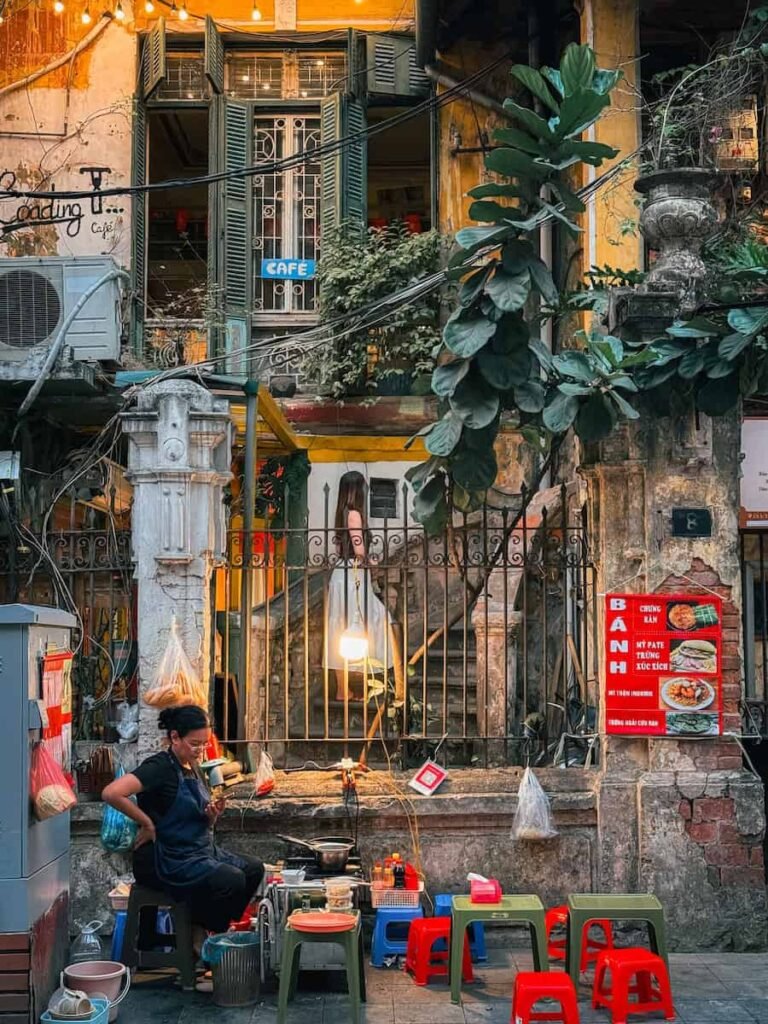
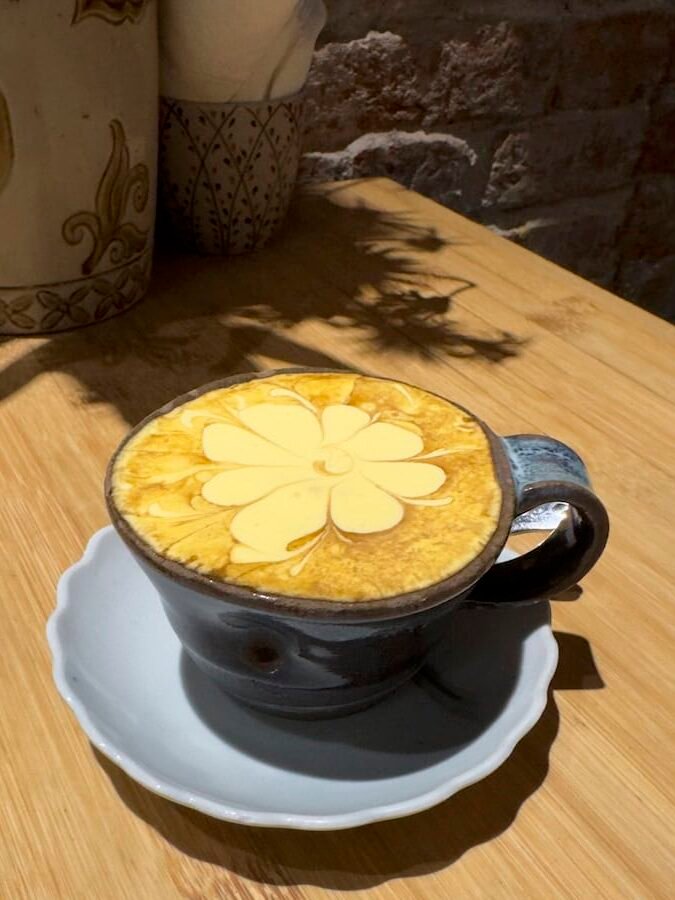
A few minutes’ walk away is Loading T Cafe, tucked inside an old French colonial building, and it served my favorite egg coffee of the entire trip. You can watch the owner whip up the egg mixture for your coffee.
If you’ve never had egg coffee, it’s a Hanoi invention made by whipping egg yolk with condensed milk into a thick, sweet foam and floating it over strong Vietnamese coffee. It sounds strange, but it’s basically like drinking coffee topped with a sweet, custard like cream. It was created in the 1940s when milk was scarce and egg yolk was used as a substitute.
Afterward, just take a stroll around the Old Quarter.
Toward the evening, make your way to Hoan Kiem Lake. The lake sits right between the Old Quarter and French Quarter and is one of the best places to walk around as the city starts to cool down.
While you’re there, visit Ngoc Son Temple, which sits on a small island in the lake and is reached by its bright red bridge.
Day 2: Hanoi’s Historic Sites, Train Street & Nightlife
Start your second day at the Ho Chi Minh Mausoleum Complex. The complex contains several important sites associated with Ho Chi Minh, including the mausoleum itself which serves as the resting place of Vietnamese revolutionary leader and President Ho Chi Minh, the Presidential Palace area, and Ho Chi Minh’s Stilt House.
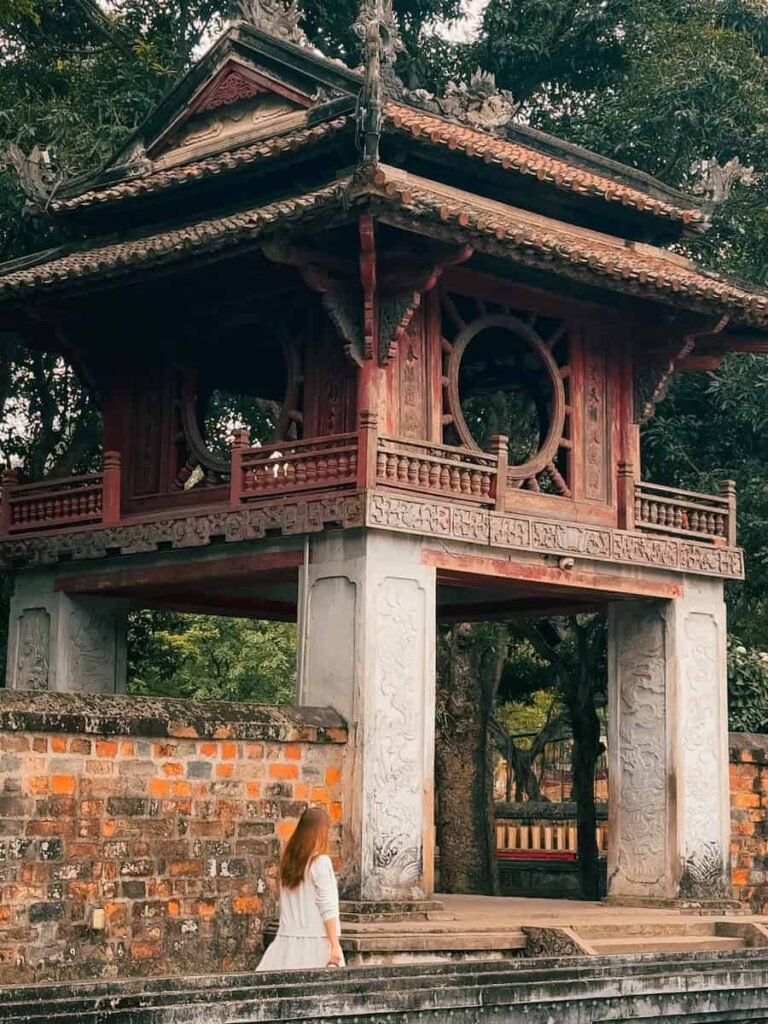
From there, continue to the Temple of Literature, Vietnam’s first national university founded in 1070, and one of Hanoi’s most important historic sites.
Next, head to the famous Train Street, where the railway runs through an incredibly narrow residential street lined with cafes. The main train street is located in the Old Quarter, running along the corridor between Phung Hung and Tran Phu streets. There’s also an alternative section at Le Duan Street, close the main Hanoi Railway Station.
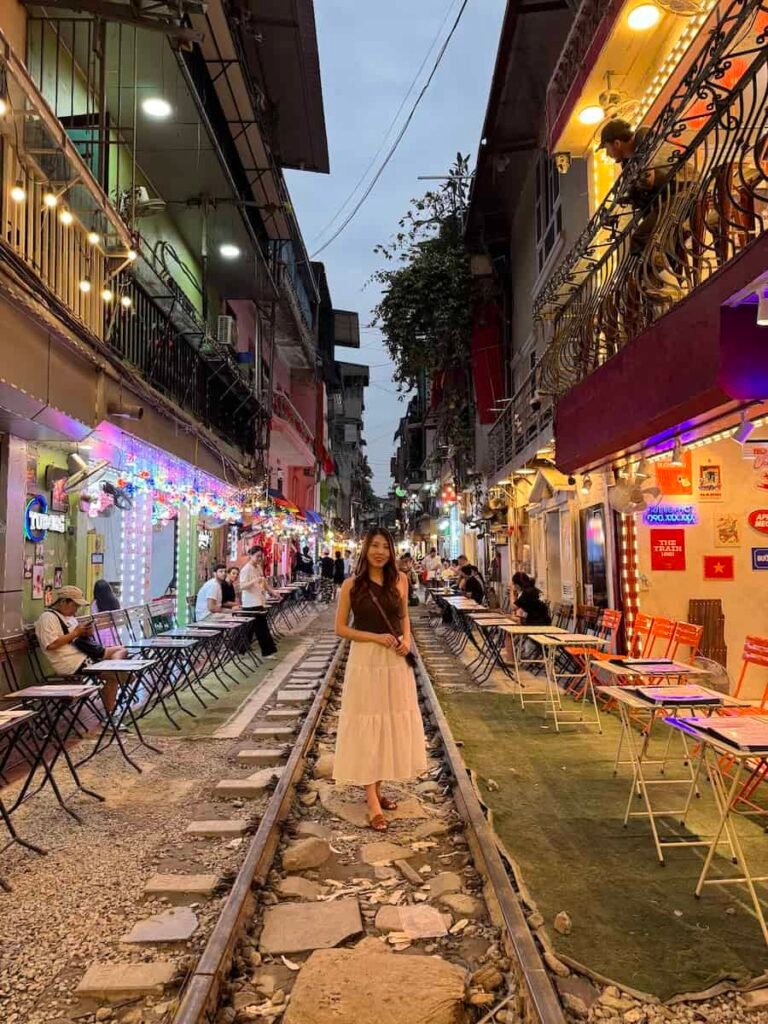
Between trains we were able to take photos on the rail tracks. Train schedules were posted at some of the shops, and I had a few time slots from Google searches, however, schedules change frequently and may not be always accurate. The cafes and restaurants along the rail tracks filled up quickly as shop owners were announcing that a train would be arriving soon. Just a few minutes before the train arrived, those who had not secured a seat or bought anything were escorted off the street so make sure to get your spot early enough.
Despite all the rumors of the train street being permanently shut down, it was very much open when we were there (social media told me it was closed). The train does come extremely close, so be smart and take caution.
For the evening, you can check out Ta Hien Beer Street in the Old Quarter.
I’ll be honest: I didn’t love Beer Street. It was loud, packed with foreigners, and felt much more like a party and club scene than the Hanoi I enjoyed during the rest of my stay. I think it’s worth walking through once just to see it, especially if it’s your first time in Hanoi, but I wouldn’t consider it a must do. If nightlife isn’t your thing, or if you have young children, you can easily skip it.
Where to Eat in Hanoi
Hanoi has some amazing cuisine. Some of the places we really enjoyed were:
- Bun Cha Dac Kim for bun cha. Grilled pork in a bowl of broth with noodles and herbs. This is the Hanoi dish you need to try.
- Mr Bay Mien Tay for banh xeo. It’s a southern dish, but it was excellent!
- Pho Thin Bo Ho & Pho 10 Ly Quoc Su for pho. Northern style pho has clear, simple broth with either chicken or beef slices.
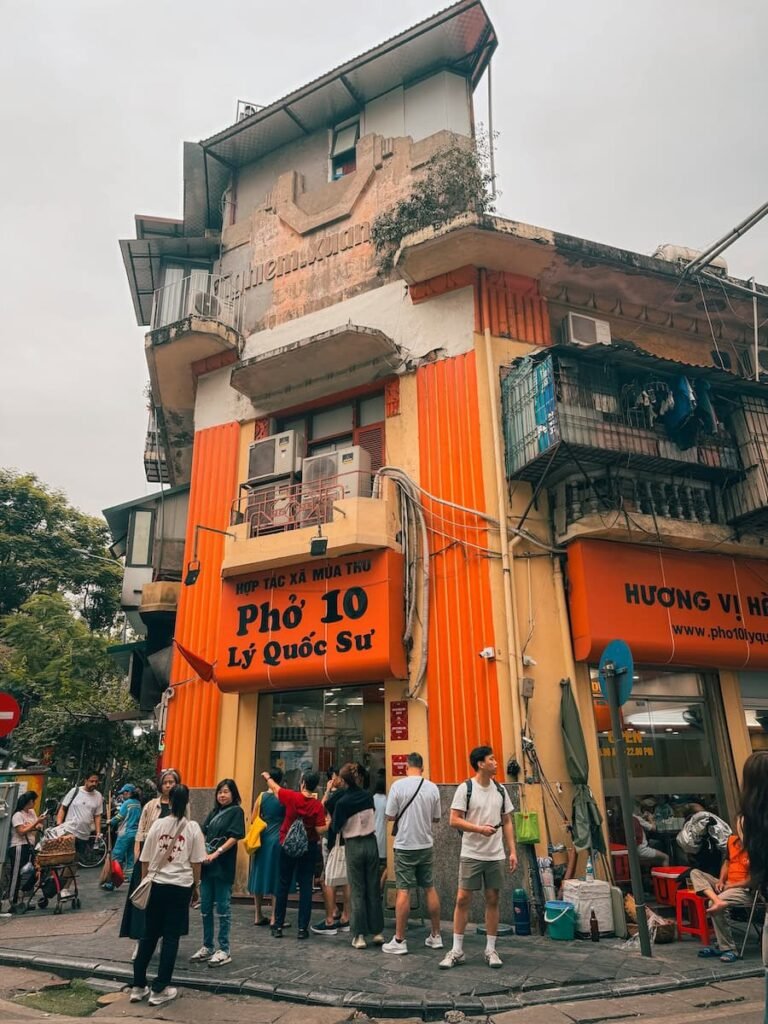
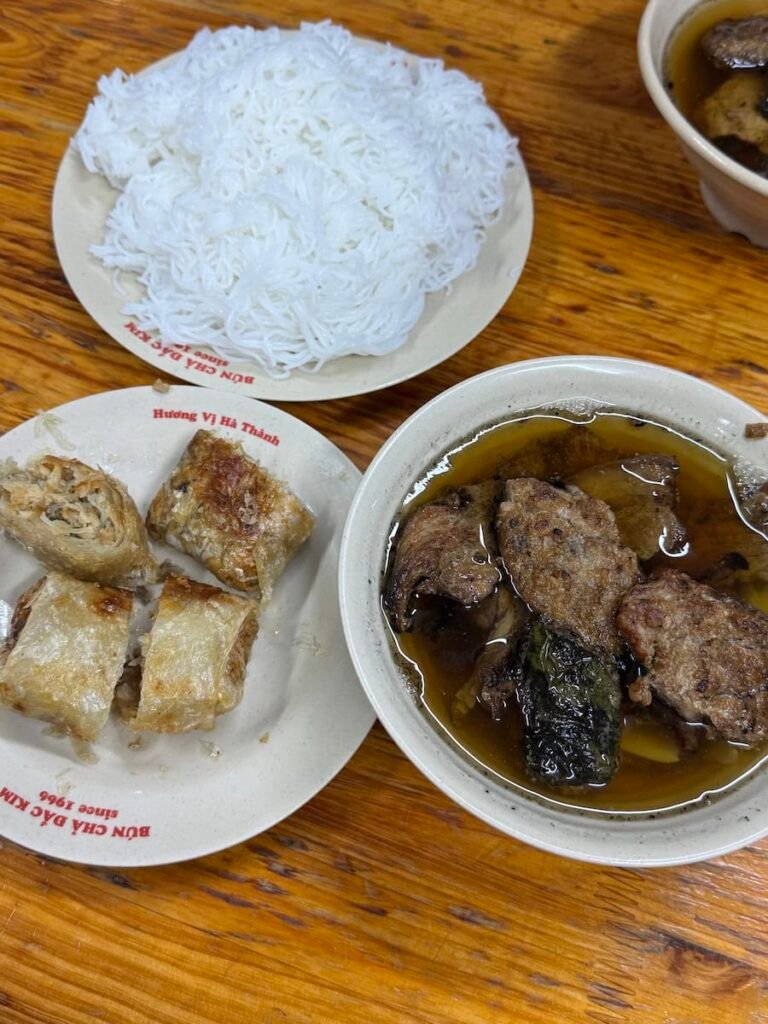
I had a huge list of cafes I wanted to get to in Hanoi and didn’t manage even half of them. What I did try:
- Loading T Cafe had my favorite egg coffee, in a beautiful old colonial building.
- Cafe Giang is where egg coffee was invented, so it’s worth going for the history. I still preferred Loading T.
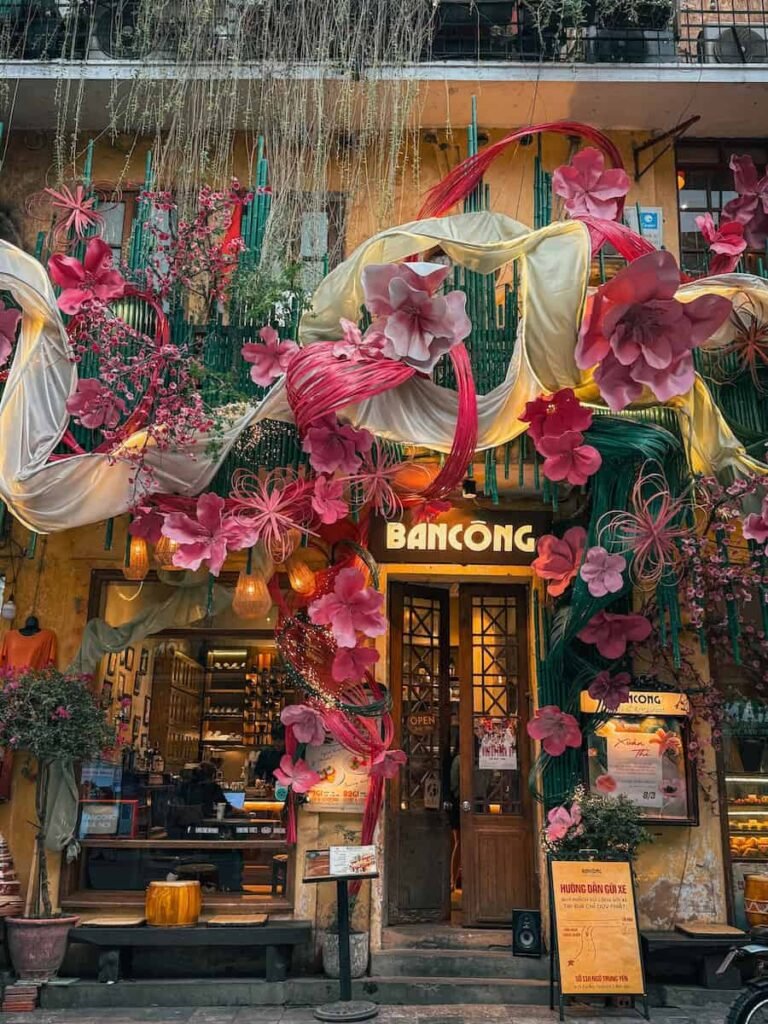
- Bancong Cafe for the prettiest decor outside.
- Note Coffee I saw this place all over social media, but honestly thought it was a bit overrated.
I’ve pinned my full list, including the cafes I didn’t get to, in a Google Map at the bottom of this post.
Days 3 to 4: Ninh Binh
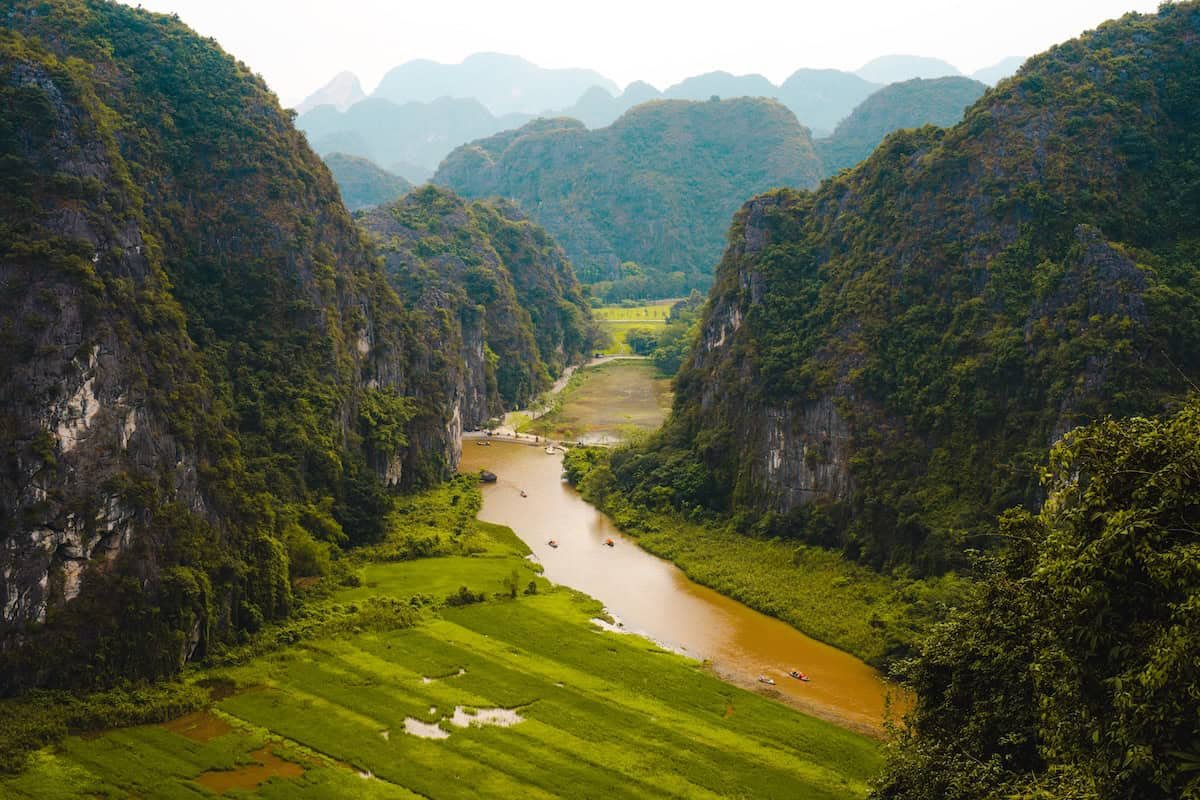
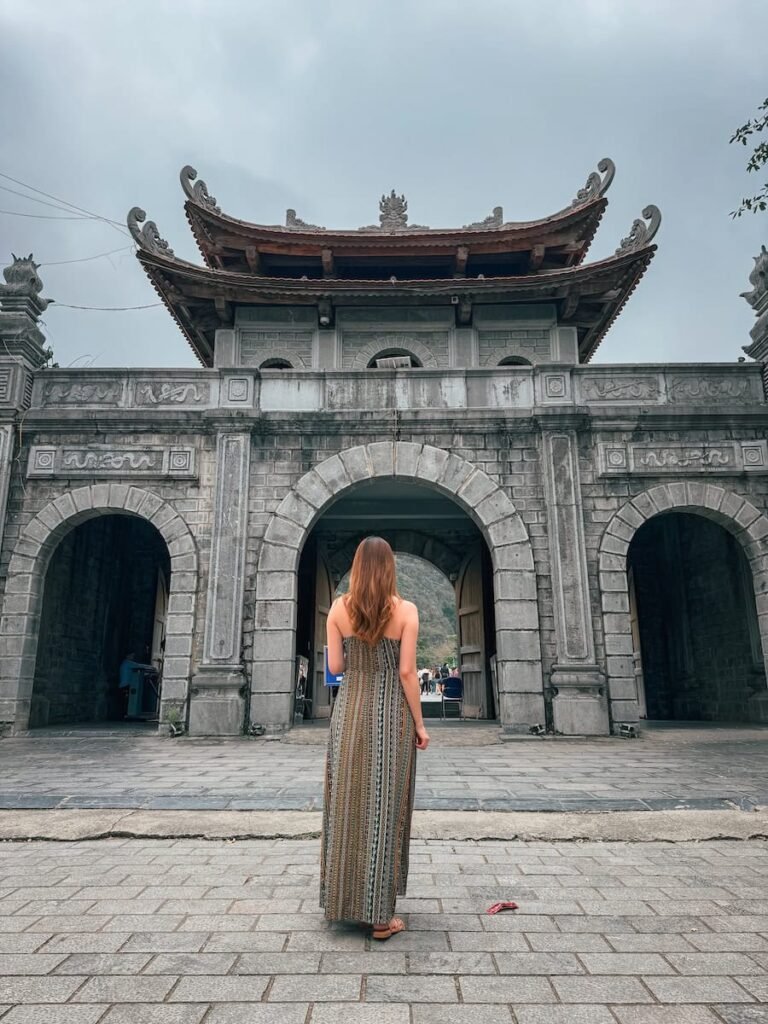
Located about two hours south of Hanoi, Ninh Binh is often called “Ha Long Bay on land” because of the enormous limestone karsts that rise dramatically from its otherwise flat landscape.
You can visit Ninh Binh as a day trip from Hanoi, which is what I did, but this was one of the places where I left wishing I had more time. For this two week itinerary, I recommend slowing down and spending one night here.
Leave Hanoi early in the morning for Ninh Binh. Regular buses, limousine vans, private cars, and trains connect the two and take about 2 hours depending on traffic.
For most travelers, I recommend booking a limousine van. These comfortable shared minibuses typically have larger reclining seats, and many offer pickup in central Hanoi with drop off around Tam Coc.
If you’re traveling with two or more people and prioritize convenience, a private transfer is another great option. It costs more, but you can travel directly from your Hanoi hotel to your accommodation in Ninh Binh.
If you’re visiting Ninh Binh as a day trip like I did, the easiest option is to book an organized day tour from Hanoi. Transportation is taken care of, and most tours combine several of Ninh Binh’s major sights into one long but very doable day.
Day 3: Trang An or Tam Coc, Bich Dong and Hang Mua
Take a Boat Ride Through Trang An or Tam Coc
Once you arrive, spend your first day exploring Trang An, Hang Mua, and the surrounding countryside.
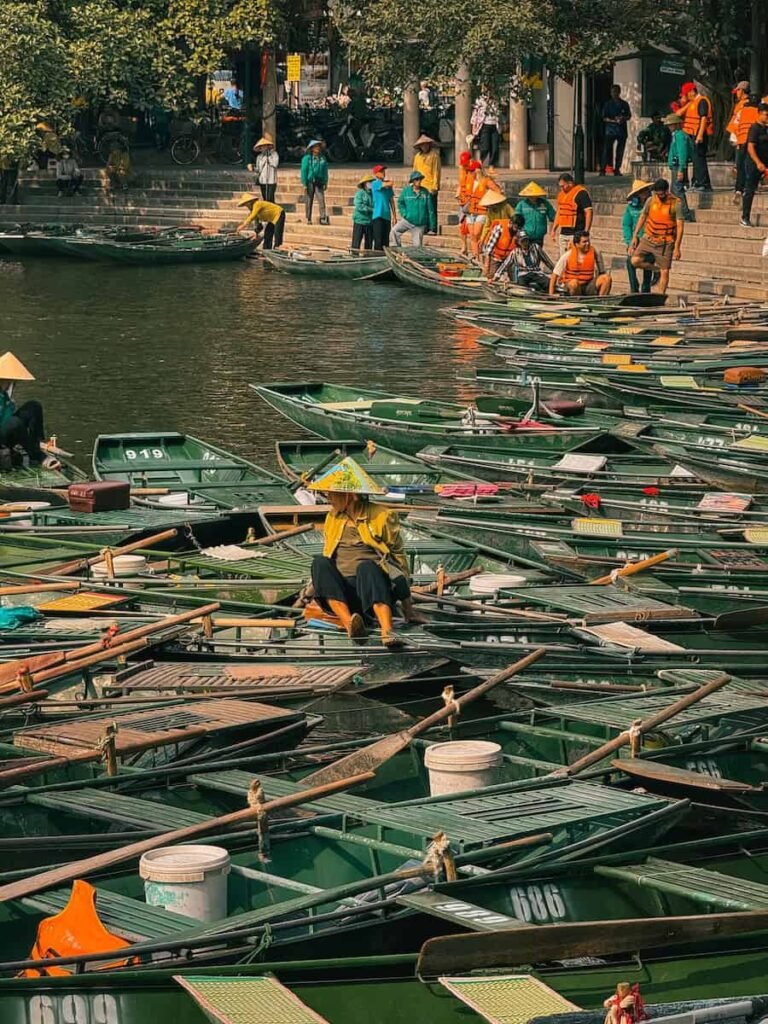
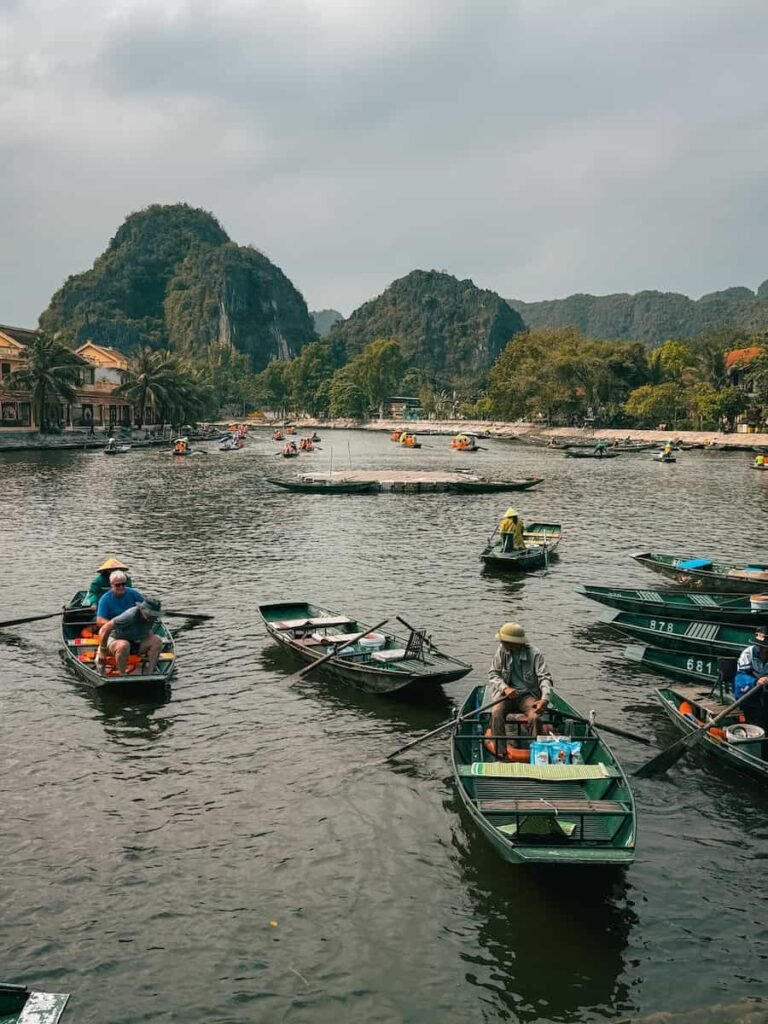
One of the quintessential Ninh Binh experiences is taking a small rowboat between the towering limestone karsts.
The two options available are Trang An and Tam Coc, and I don’t think you need to do both.
Trang An is part of a UNESCO World Heritage Site, with waterways winding between limestone karsts, temples, valleys, and caves. The boat ride takes approximately 2.5 to 3 hours and passes through caves beneath the mountains into hidden valleys. Boats are for 4 passengers so you may sit with strangers.
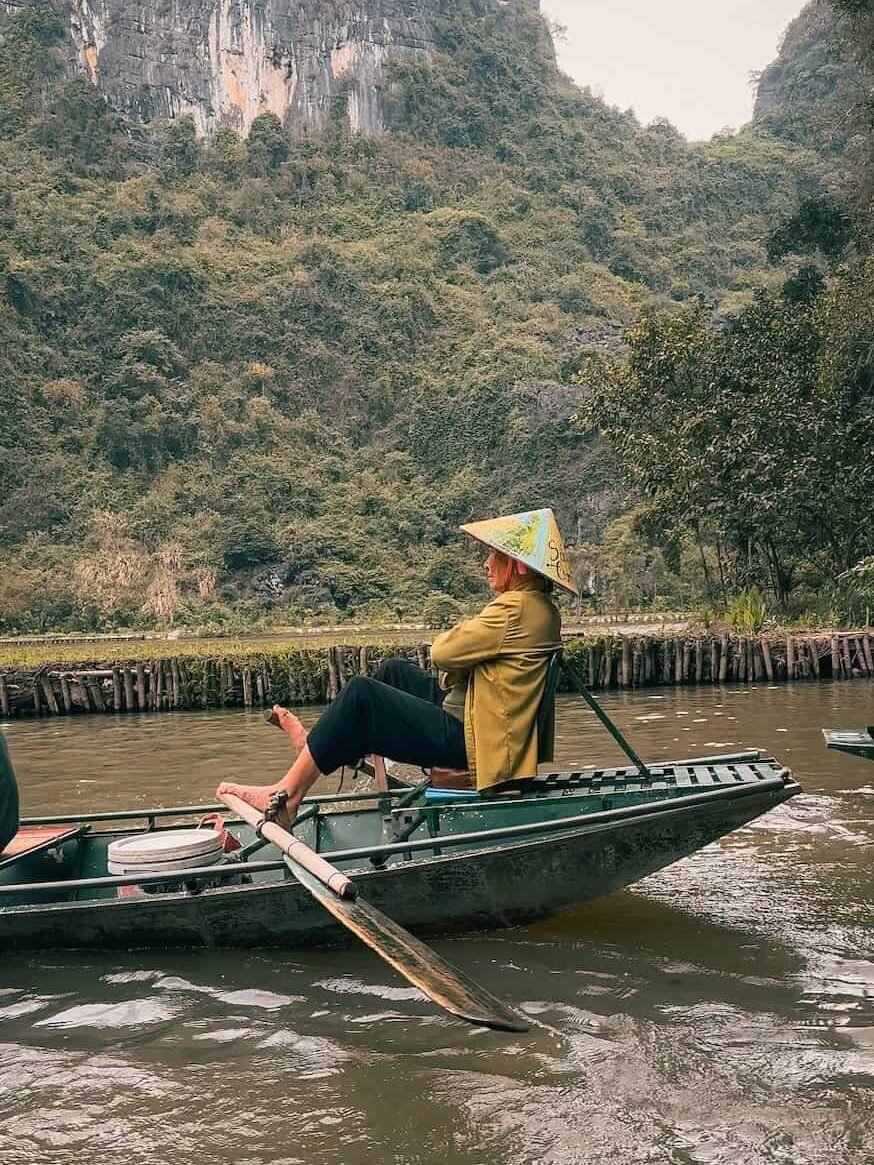
Tam Coc follows the Ngo Dong River through rice fields and three caves. The ride is shorter at around 90 minutes and is especially beautiful when the surrounding rice fields are green or golden. The rowers here are also famous for their unusual technique of rowing with their feet (real skills!)
I chose Tam Coc on my own day trip because the boat ride was shorter and we could have a private boat for the two of us. However, if I were following this two day itinerary and had more time, I would choose Trang An.

Stop at Bich Dong Pagoda
A short drive from Tam Coc or Trang An, Bich Dong Pagoda is a three-level complex built into the side of a limestone mountain, with the levels connected by stone steps and a cave passage.
I didn’t get to make it here, which I was quite disappointed about. Our day trip didn’t include it and there was no time to add it. It’s one of the first things I’d add with a night in Ninh Binh, but if your Trang An boat ride runs long, I would prioritize having enough time at Hang Mua (next stop) rather than trying to squeeze everything in.
Climb to the Hang Mua Viewpoint
Next, head to Hang Mua, also known as Mua Cave.
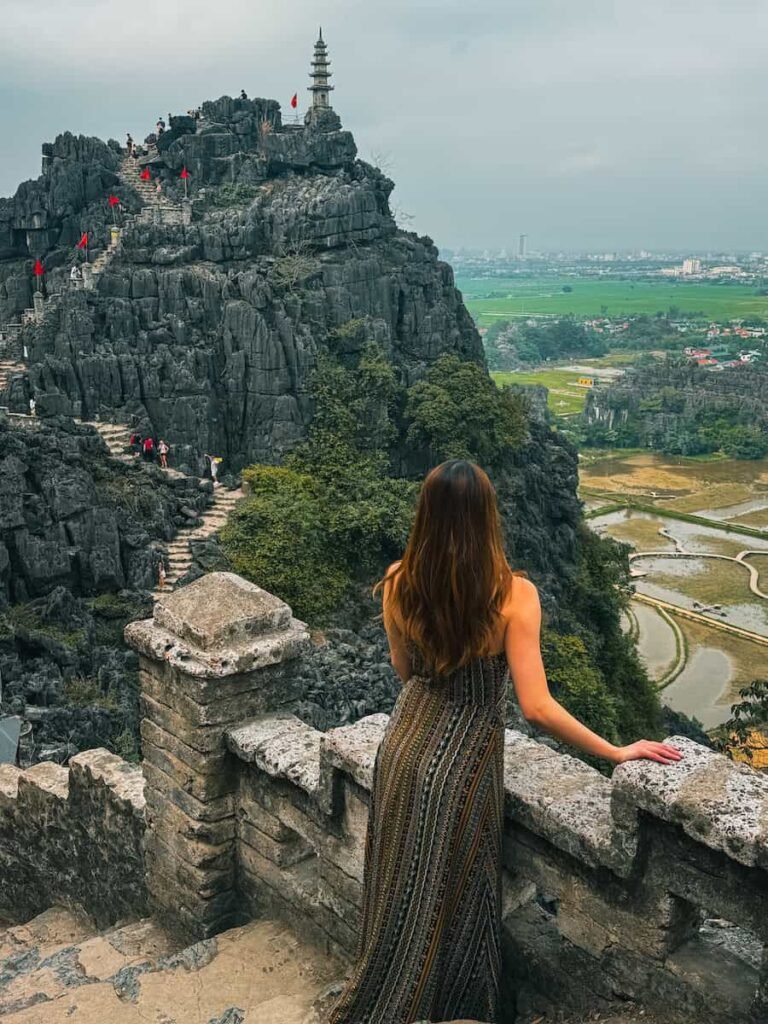
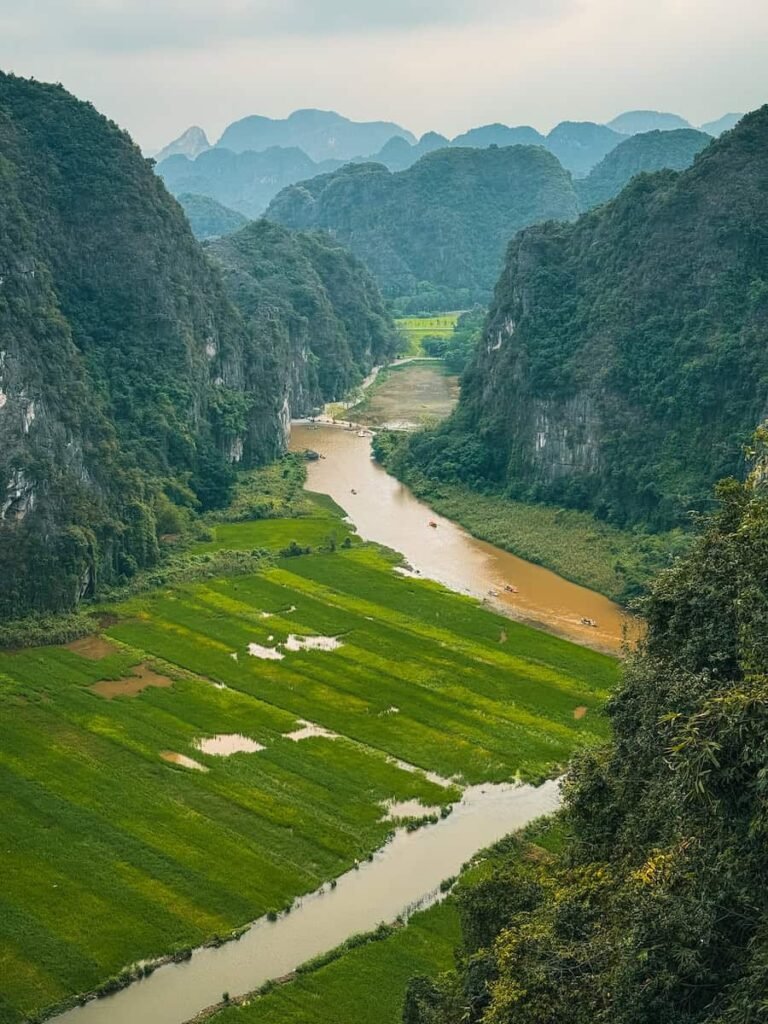
The real attraction here is the climb up Ngoa Long, or Lying Dragon Mountain. Nearly 500 stone steps lead toward the viewpoints at the top, where you can look down over the Ngo Dong River winding between rice fields and limestone mountains.
The climb can be steep, especially in Vietnam’s heat and humidity, but this was some of my favorite scenery in Ninh Binh. We even encountered a few cute mountain goats along the way!
Where to Stay in Ninh Binh
This is where my recommended itinerary differs from the trip I actually took.
I returned to Hanoi that evening, but if I had the full two weeks to do this trip again, I would stay in Ninh Binh for the night and these are the hotels I have narrowed down for a future trip.
I recommend staying around Tam Coc, Trang An, or the Hoa Lu countryside rather than Ninh Binh city itself. Since you’re only staying one night, choose somewhere surrounded by the limestone mountains and rice fields that make Ninh Binh so special.
Jiva Hoa Lu Retreat: My pick for a luxury stay, with beautiful villas surrounded by the limestone landscape of Hoa Lu.
Tam Coc Garden Resort: A romantic boutique resort surrounded by rice paddies and limestone karsts, with traditional Vietnamese inspired design.
Tam Coc Retreat Ninh Binh: My midrange pick, offering bungalow style accommodations, a pool, and a scenic countryside setting at a more approachable price.
Tam Coc Peaceful Nature: A great budget friendly option with simple rooms, a pool, and beautiful views of the surrounding mountains.
Day 4: More of Ninh Binh and Return to Hanoi
Today you’ll explore the west side of Ninh Binh. Start your second day at Bai Dinh Pagoda, a massive Buddhist temple complex within the Trang An Scenic Landscape Complex.
Bai Dinh combines an ancient pagoda with a much newer and grander temple complex. As you explore, you’ll pass enormous Buddha statues, a bell tower, temples, and a long corridor lined with more than 500 stone Arhat statues.
The complex is huge, so give yourself at least a couple of hours. Electric carts are available to help you get around.
On the way back east, stop at Hoa Lu Ancient Capital. This was Vietnam’s capital during the 10th and 11th centuries under the Dinh and early Le dynasties, and temples dedicated to the emperors still stand here today.
We visited Hoa Lu as part of our guided day trip and spent about an hour here. I would consider this more of a history stop than a scenic one, especially compared with places like Trang An and Hang Mua, but it’s worth visiting if you want to understand more of the rich history behind the region.
Return to Hanoi later in the day and spend the night there before leaving for Ha Long Bay the following morning.
Can You Visit Ninh Binh as a Day Trip From Hanoi?
Absolutely. This is actually what I did.
If you have 10 to 12 days rather than the full two weeks, Ninh Binh is the first place I would dedicate more time to.
I booked an organized small group tour from Hanoi with a maximum of 22 people, which included hotel pickup, guided tour of Hoa Lu Ancient Capital, lunch, a Tam Coc boat ride, and Hang Mua.
Here’s the exact Ninh Binh day trip we booked: Book the tour
Overall, I thought the tour was a very efficient way to experience Ninh Binh in one day. The included buffet lunch was a little underwhelming, and the vendors approaching our boat in Tam Coc were surprisingly persistent, but neither would stop me from recommending the tour.
My biggest complaint was simply not having enough time.
At Hang Mua, we made it almost to the top of Ngoa Long Mountain before turning around because I was worried about missing our bus. The scenery here was some of my favorite in Ninh Binh, and this was the moment I really wished we were staying overnight.
So if you’re short on time, take the day trip. You’ll get a great introduction to Ninh Binh without changing hotels.
But if you have the full two weeks, I would take a limousine van from Hanoi, spend the night, and explore Ninh Binh at your own pace.
Day 5: Ha Long Bay Overnight Cruise
After Ninh Binh, return to Hanoi for the night before heading to Ha Long Bay the following morning.
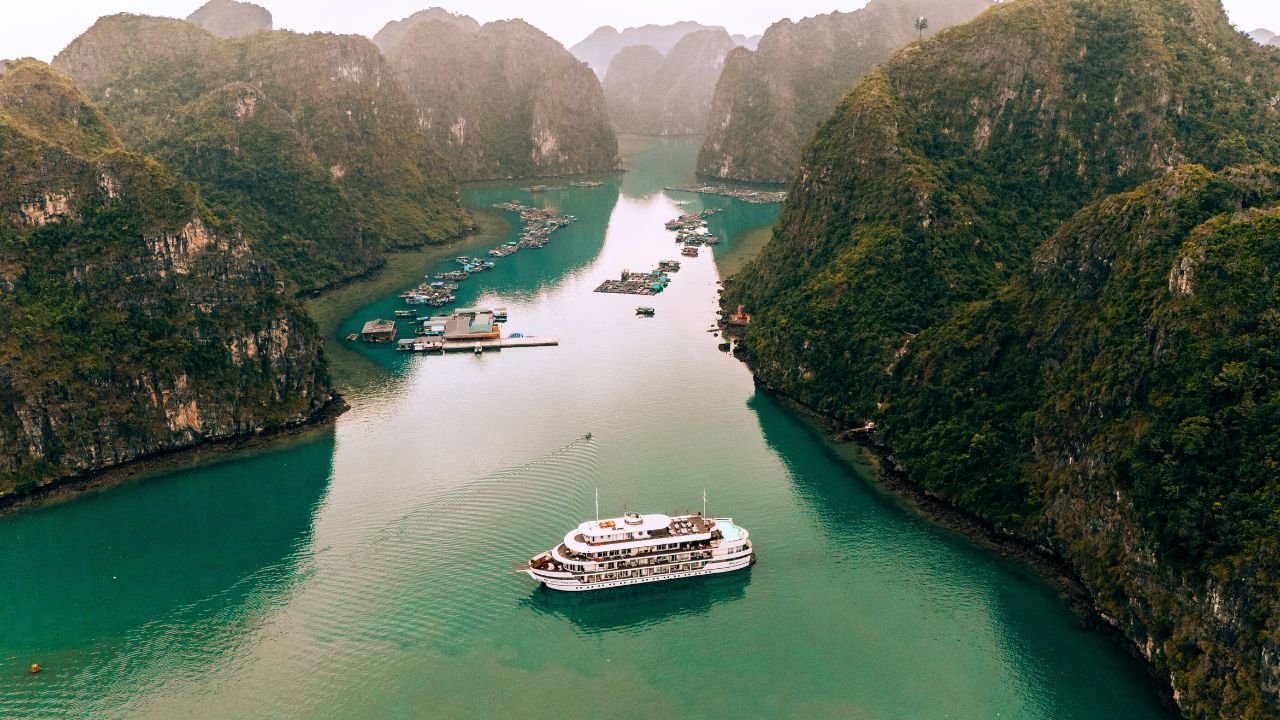
Ha Long Bay is one of Vietnam’s most recognizable destinations, known for the thousands of limestone islands and karsts rising dramatically from the emerald water. It’s a UNESCO World Heritage Site, and despite its reputation as one of the most touristy places in Vietnam, I still think it earns a spot on a first trip.
The best way to experience Ha Long Bay is on an overnight cruise.
You can visit as a day trip from Hanoi, but I wouldn’t recommend it for this itinerary. You’re already traveling several hours to reach the bay, and staying overnight gives you time to actually enjoy being on the water rather than spending most of the day getting there and back.
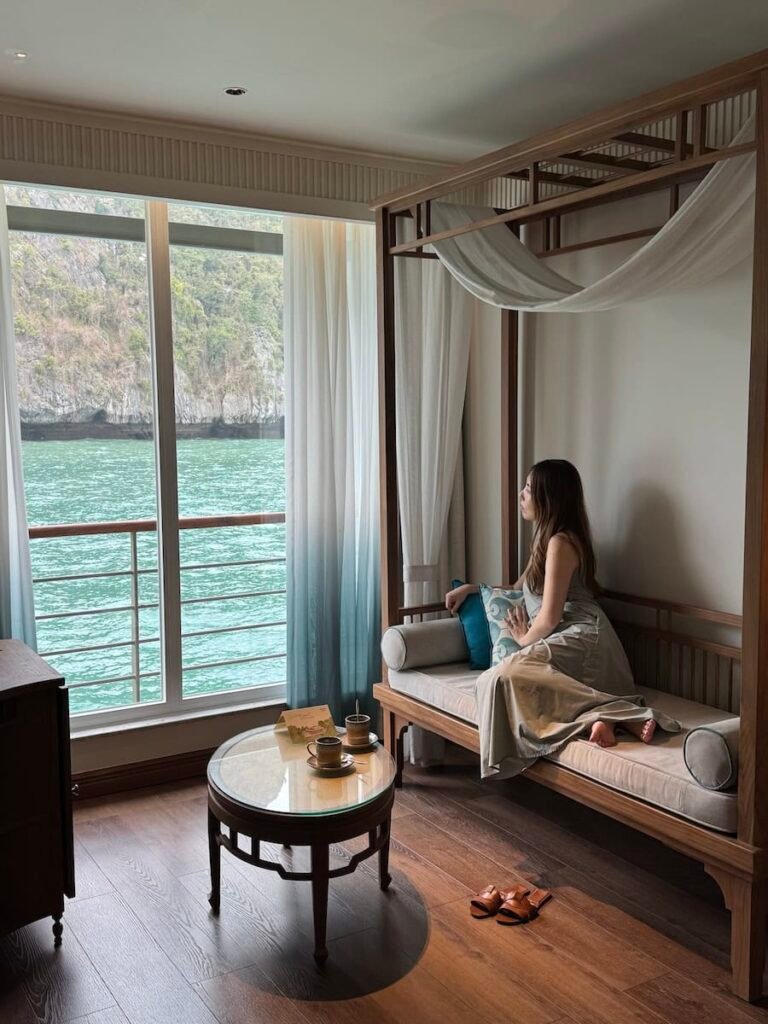
We sailed on Bhaya Soul by Bhaya Cruises, a new small luxury and wellness focused ship with just 20 cabins.
We were hosted by Bhaya Cruises on this sailing. All opinions are my own.
How to Get From Hanoi to Ha Long Bay
Most overnight cruises make this easy, offering round-trip transfers between Hanoi and the port either included in your booking or for a small fee. Pickup is usually available from hotels in the Old Quarter.
The drive takes roughly 2.5 to 3 hours depending on traffic and which port your cruise leaves from, with a stop at a rest area.
Unless you have a specific reason to arrange your own transportation, I recommend booking the transfer directly through your cruise company. It removes the stress of coordinating your arrival with the ship’s departure time.
How to Choose a Ha Long Bay Cruise
There are dozens of cruise companies at different price points, so this is one part of your Vietnam trip where I recommend doing some research before booking.
Look beyond the cabin itself and compare the route, ship size, included excursions, meals, and number of nights.
One thing I didn’t fully understand before planning my trip was that not every “Ha Long Bay cruise” follows the same route.
Ha Long Bay or Lan Ha Bay?
Some cruises sail primarily through Ha Long Bay, while others continue into Lan Ha Bay, which sits just south of it and has similar limestone scenery.
We cruised through both Ha Long and Lan Ha, and the latter was noticeably quieter, with almost no other ships in sight for much of our time there. I’ve since seen videos from other cruises where travelers are queuing to kayak and visiting attractions alongside numerous other boats. Our experience was nothing like that.
So check which bay your cruise actually sails through before booking. The route can make a big difference in how crowded or “touristy” the experience feels.
One Night or Two Nights in Ha Long Bay?
For this itinerary, I recommend a 2 day, 1 night cruise.
That gives you enough time to cruise through the bay, participate in a few excursions, have dinner and breakfast onboard, watch the scenery from the ship, and experience waking up surrounded by the limestone karsts.
If you have more than two weeks in Vietnam and want a slower trip, you could consider a 3 day, 2 night cruise. But with Sapa, Ninh Binh, Hoi An, and Da Nang still ahead, I think one night is the right balance.
What a Ha Long Bay cruise costs
There are a lot of operators sailing this bay at a wide range of prices, and comparing them can be quite confusing. Some cruises are listed as a tour (activity) and priced per person. Other times it may be listed as a room under hotels, and priced per cabin for two. So you can look at two listings for the same boat and see numbers that appear to be miles apart. Always check which one you’re looking at before you compare.
Roughly what to expect for a one-night cruise:
- Mid-range: around $100 to $200 per person, or $200 to $300 per cabin for two
- Upgraded cabin types on those same ships cost more again
- Luxury: up to around $700+ a night
Bhaya Soul sits at the upper end, around $350 per person. Rates move a lot with season and sailing date, so consider these as a rough estimate rather than a quote.

What Our Ha Long Bay Cruise Was Like
Most overnight cruises follow a fairly structured itinerary, with boarding around midday, lunch as you begin cruising, an afternoon excursion, dinner onboard, and another activity the following morning before returning to port.
The exact itinerary depends on the cruise you choose, so look closely at the included excursions before booking.
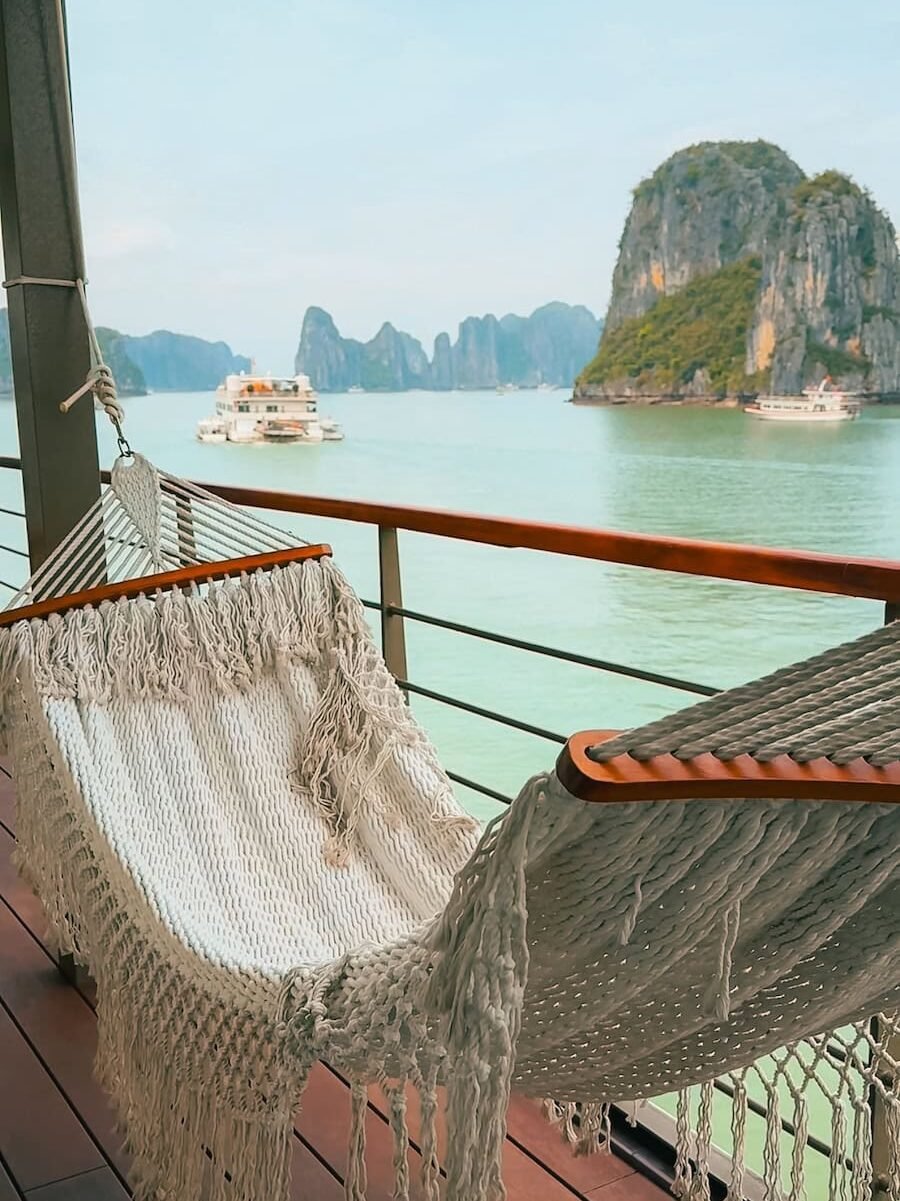
On Bhaya Soul, everything was optional, which I really appreciated. We could join the activities or simply stay onboard and relax.
Our 2 day, 1 night cruise included kayaking & a boat ride through Ba Ham Lake, meditation session inside a cave, visit to the Cua Van Floating Village, and a herbal foot ritual and wellness treatment.
And the food deserves a mention. Lunch, dinner, and breakfast were included, and it was phenomenal. I genuinely wasn’t expecting the food on a boat to be one of the highlights.
Is it worth it?
Absolutely.
This was actually my first time ever taking a cruise or sleeping on a boat, and waking up surrounded by the limestone karsts was one of those experiences that felt completely different from anything else on this Vietnam itinerary.
Bhaya Soul was intimate, quiet, and relaxing, and cruising through the less crowded waters of Lan Ha Bay made a huge difference to the experience.
One honest note: I did feel a little seasick during the cruise. In fairness, I was jetlagged and already pretty run down before I boarded, and nobody else on the ship seemed bothered, so I don’t think it says much about the boat itself. The staff noticed I wasn’t feeling well, brought me medication, and checked on me afterward, which made me feel really taken care of.
Your experience in Ha Long Bay will depend heavily on the cruise you choose, so this is one booking I wouldn’t make based on price alone.
I’ve written a complete guide to our Bhaya Soul Ha Long Bay cruise here, including our cabin, food, excursions, what the cruise was really like, and whether I think the luxury price is worth it.

Day 6: Ha Long Bay to Hanoi & Overnight Train to Sapa
Wake up to your final morning on Halong Bay before cruising back toward the port.
Most overnight cruises return to the harbor around late morning, and if you book your transfer through the cruise company, you should arrive back in Hanoi sometime in the afternoon. We returned to Hanoi around 1 pm.
But you’re not staying the night. Tonight, you’re taking the overnight train to Sapa.
Spend One Last Afternoon in Hanoi
One of the reasons I like this itinerary is that you get a bonus afternoon in Hanoi without having to dedicate another full day to the city.
If you need a place to store bags for the afternoon, Hanoi Railway Station has luggage lockers.
If there was a restaurant, cafe, or attraction you didn’t manage to fit into Days 1 and 2, this is your chance to go back.
I had saved a huge list of Hanoi cafes before my trip and didn’t make it to even half of them, so I’d personally use these few hours for another coffee and a good meal before heading to the train station.
Here’s what we did:
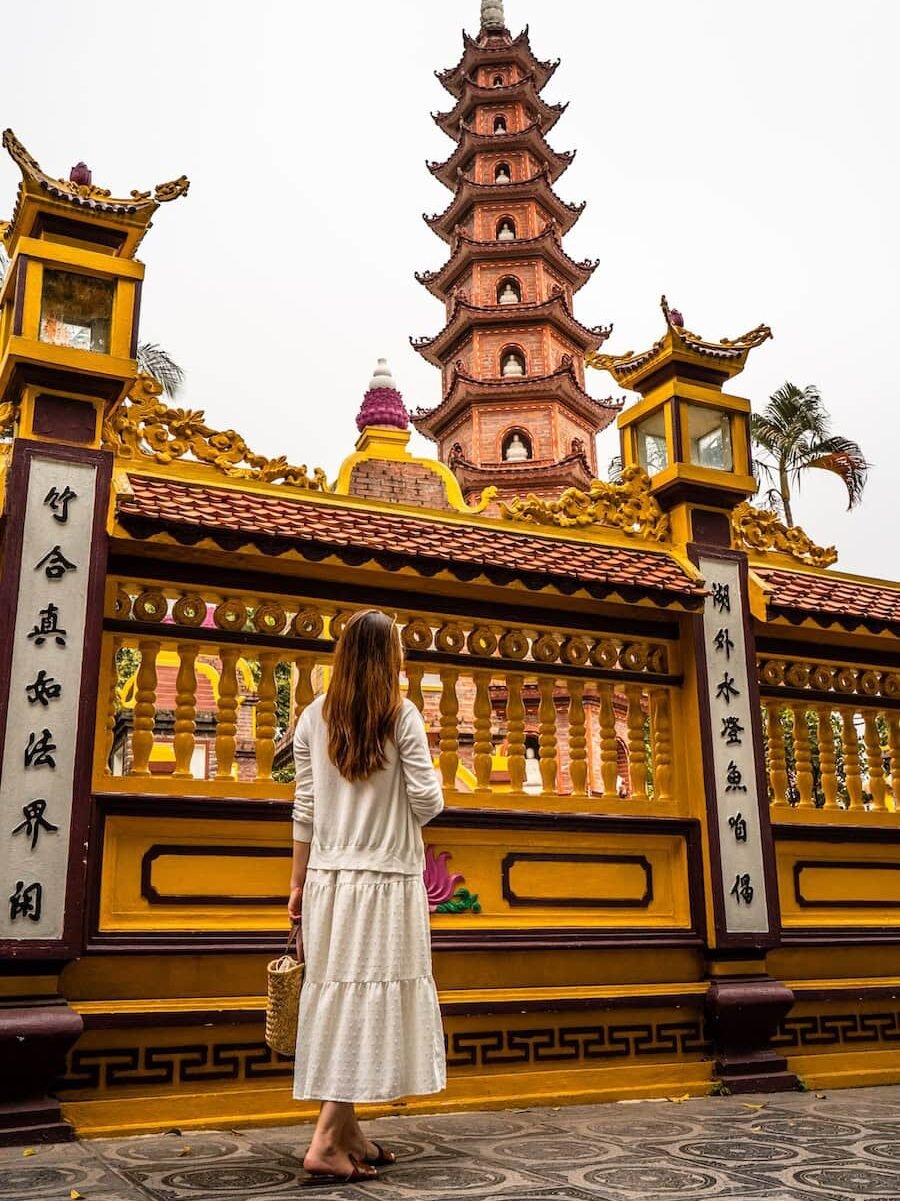
Tran Quoc Pagoda: The oldest Buddhist temple in Hanoi, located on a small island in West Lake. It’s a little removed from the Old Quarter, so we took a Grab here. Make sure your shoulders are covered before entering, and yes, that applies to guys too!
Sen Spa Hanoi: One of my favorite little discoveries in Hanoi. We both booked the 60 minute deep tissue massage for around $16 per person, and it felt heavenly after several busy days of travel. We actually showed up without a reservation and had to come back several hours later, so learn from us and book ahead. Of the spas we went to in Hanoi, we loved this one the most!
How to Get From Hanoi to Sapa
There are several ways to travel from Hanoi to Sapa:
- Sleeper Train: Takes about 8 hours to Lao Cai Station, followed by a 45 to 60 minute car ride up to Sapa. The best train operators for this route are VICSAPA and Chapa Express. Book early, especially for private cabins, as they sell out fast.
- Bus: Takes about 5 to 6 hours and goes directly to Sapa city center. Both daytime and sleeper buses are available. HK is a reliable company.
- Shared limousine or private car transfer.
We took the luxury overnight train to Sapa and the sleeper bus back to Hanoi. Between the two, I preferred the train for the comfort, privacy, and access to bathrooms, so that’s what I recommend for this leg of the itinerary.
Taking the Overnight Train to Sapa
The biggest advantage is that you travel while you sleep instead of losing most of a day getting there. You board in Hanoi in the evening, sleep in your cabin, and arrive in Lao Cai early the next morning.
Two trains run nightly from Hanoi station. SP1 leaves around 21:35 and reaches Lao Cai around 05:30. SP3 leaves around 22:00 and arrives around 06:10.
One important thing to know: the train doesn’t actually go to Sapa. It runs to Lao Cai, a city near the Chinese border, and from there it’s roughly another hour by road up into the mountains. It sounds complicated but it’s very straightforward in practice, and most sleeper train companies can arrange the onward transfer from Lao Cai station to your hotel. Remember to add the van transfer when you book your train ticket.
There are several different operators and cabin configurations, so pay attention to exactly what you’re booking.

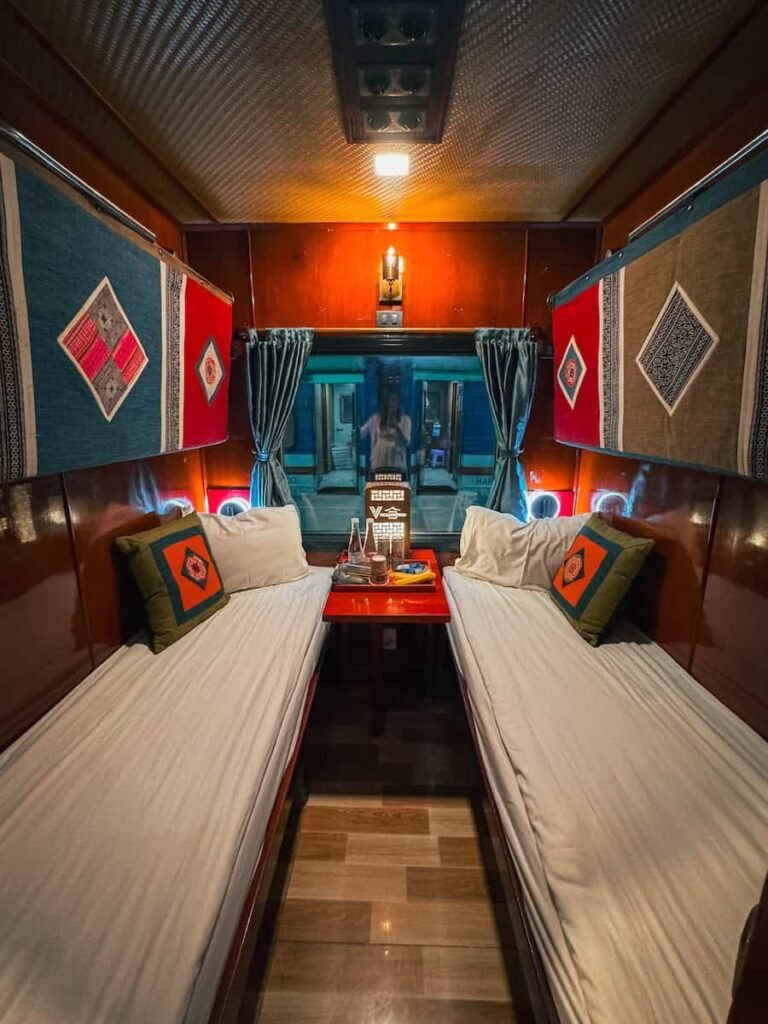
My top choice was Chapa Express, but it was sold out by the time I went to book. We took the VicSapa, which was my second choice. These train cabins do sell out, so book further ahead than you think you need to.
We took the private cabin for two, and it’s worth knowing what that actually is: it’s the same physical 4-berth cabin, just with the upper bunks folded up and sold to one party. You’re not getting a different class of room, you’re paying for the space and for not sharing with strangers. On an overnight where the whole point is to sleep, I think that’s money well spent.
Book your train tickets here: Luxury Sleeper Trains to Sapa
Remember to add on the van transfer from Lao Cai to Sapa when you book your trains.
Days 7 to 9: Sapa
Sapa sits high in the mountains of Lao Cai province near the Chinese border, and it is named the Switzerland of Vietnam. Terraced rice fields cut into steep valleys, clouds drift between the mountains, and villages throughout the region are home to Hmong, Red Dao, Tay, and other ethnic minority communities.
Getting here from Hanoi takes around 6 to 9 hours depending on whether you travel by bus or train, so I recommend spending three days in Sapa to make the journey worthwhile.
Where to Stay in Sapa
In Sapa town: If you want to be close to restaurants, cafes, and attractions, staying in town is the most convenient option.
My top picks include:
- Hotel de la Coupole MGallery – French-inspired luxury hotel with one of the best locations in town with direct connection to Sun Plaza
- Pistachio Hotel – a standout choice with spacious rooms, rear-facing rooms with fantastic views of the terraced rice paddies, and a well-known outdoor pool
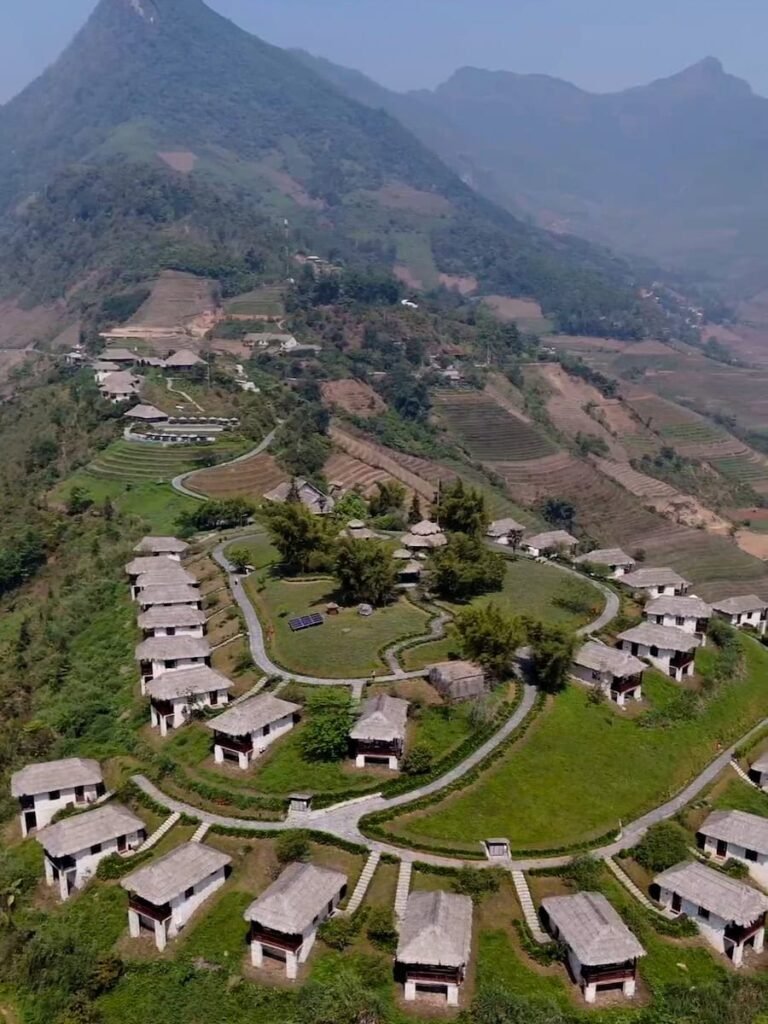
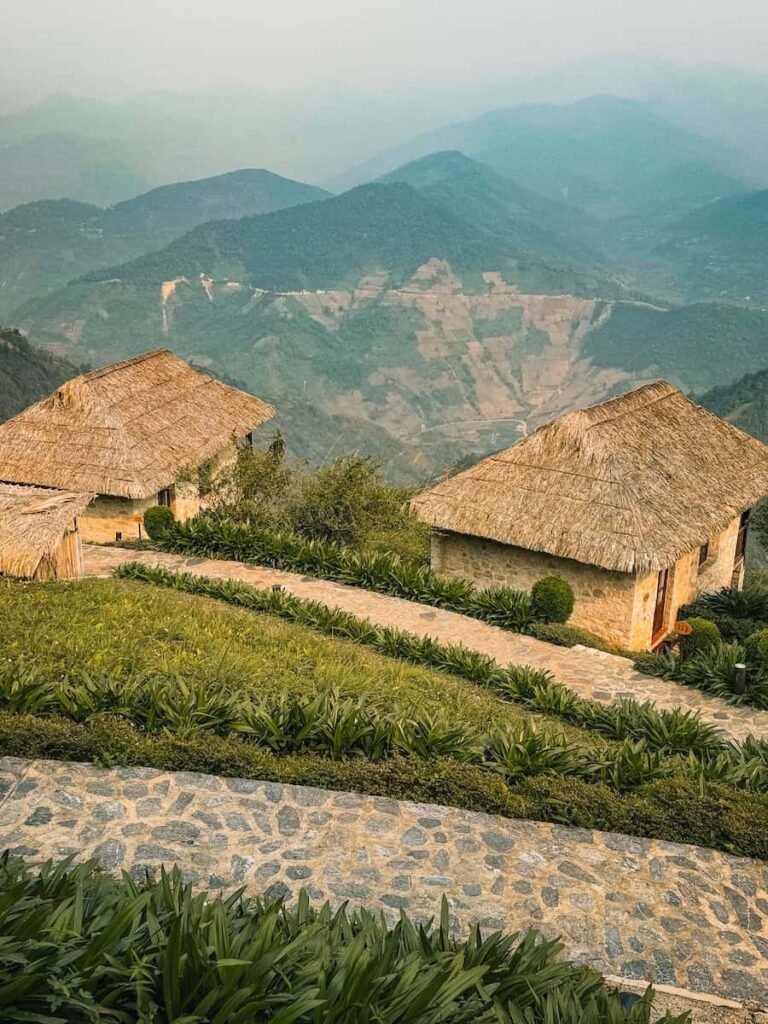
Outside of town: For a more immersive and peaceful experience, I highly recommend staying in the surrounding area at a mountain resort. Waking up above the rice terraces, watching the mist roll through the valleys from your balcony, and returning to a quiet hilltop retreat at the end of the day is an entirely different kind of Sapa experience.
My top picks include:
- Topas Ecolodge – where we stayed, more on this below.
- Ville de Mont Mountain Resort – stunning stone and wood villas set inside a century-old samu pine forest, with one of the highest infinity pools in Vietnam overlooking Muong Hoa Valley.
- Laxsik Ecolodge – beautifully designed H’Mong-inspired bungalows with valley views, a cozy fireplace in rooms, and an infinity pool about 15 minutes from town.
If you’re looking for a peaceful and luxury escape, I highly recommend Topas Ecolodge. Perched on a mountaintop about 45 minutes from Sapa town, it’s one of the most breathtaking hotels in Vietnam, with panoramic views of the surrounding valleys and rice terraces. It has one of the most stunning pools I’ve ever seen.
Day 7: Arrive in Sapa and Take It Easy
After an overnight train, resist the temptation to immediately tackle one of Sapa’s biggest attractions.
I actually went straight to Fansipan after arriving, and I wouldn’t do it that way again. Even though I slept reasonably well on the train, I felt grimy afterward, and going up a very cold mountain in that state was more tiring than it needed to be.
Drop your luggage at your hotel and give yourself an easier introduction to Sapa.
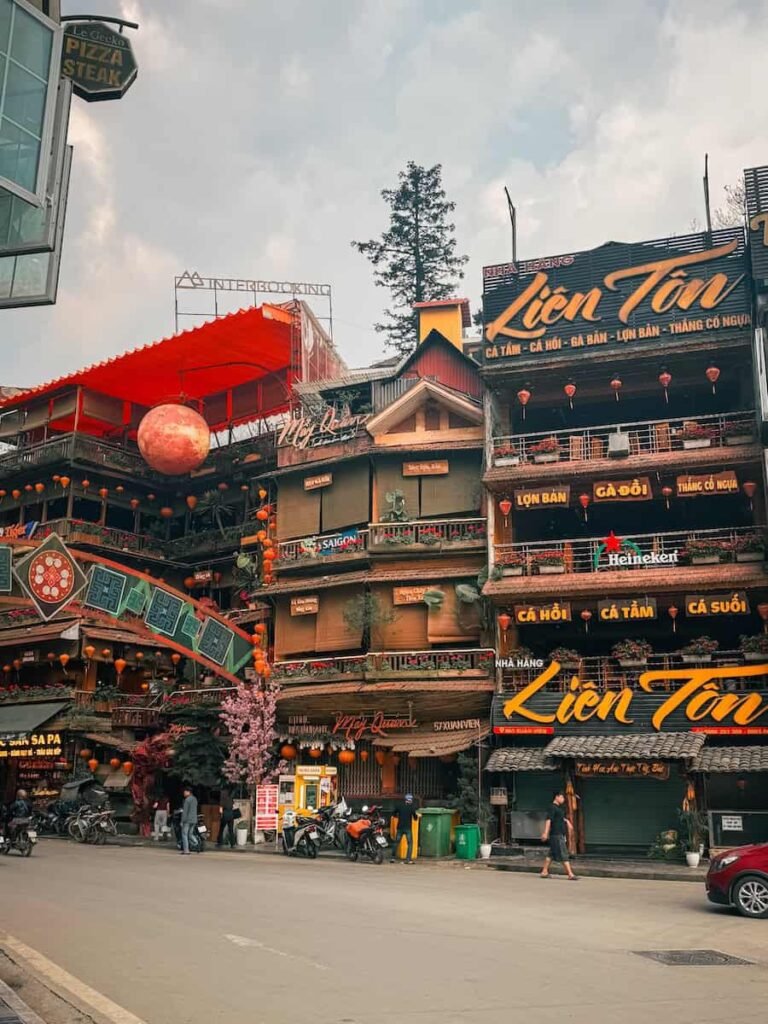
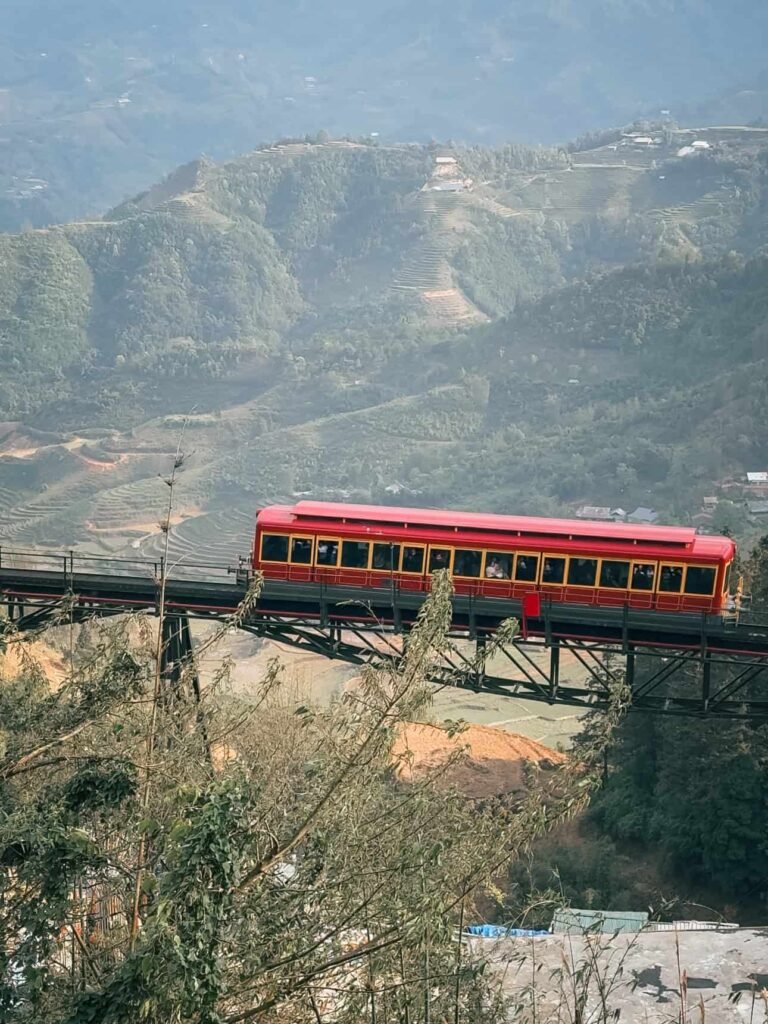
Spend some time exploring Sapa Town, fill up with breakfast and stop for coffee at Viettrekking Coffee & Restaurant, one of my favorite cafes in Sapa for views. The terrace has beautiful views over the surrounding mountains and the red Muong Hoa Mountain Train as it travels along the hillside. You’ll actually be riding that same train on Day 9 as part of your journey up to Fansipan.
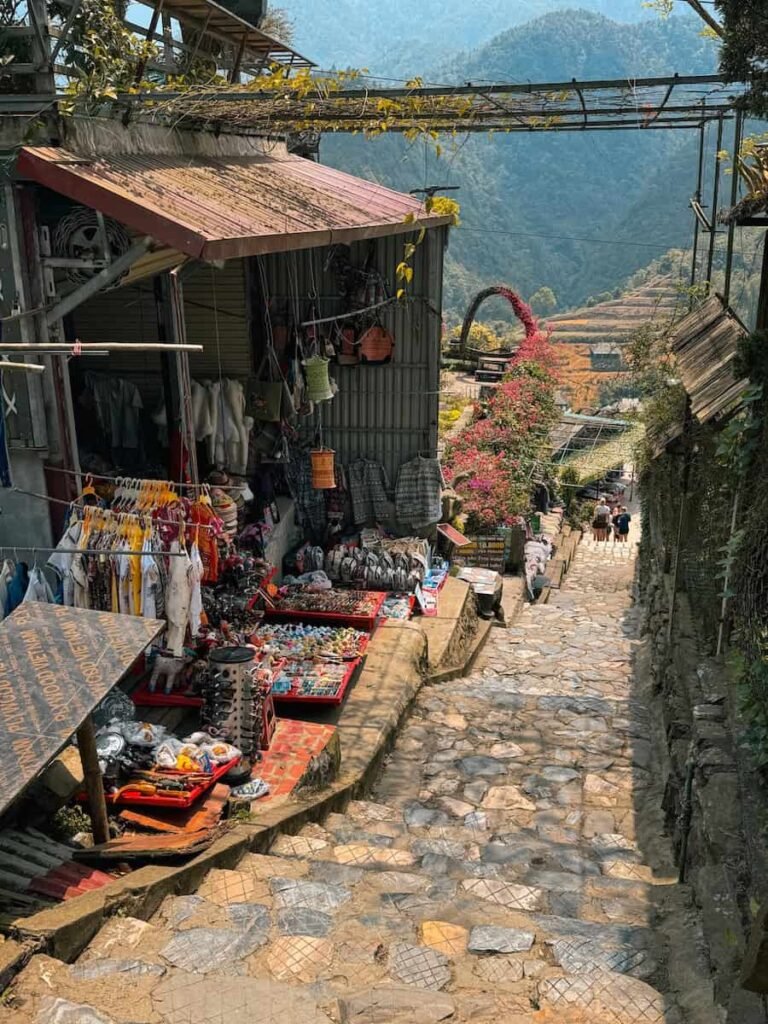
Next, head to Cat Cat Village, a Hmong village about 3km from town in the valley below.
Cat Cat is definitely developed for tourism, but it’s easy to reach from Sapa and makes a good first day activity. You can walk through the village, see the waterfalls and mountain scenery, and ride the Rainbow Slide at the end for something a little more fun.

Afterward, slow things down.
You could book a traditional Red Dao herbal bath, where you soak in hot water infused with herbs and medicinal plants traditionally used by the Red Dao people. After an overnight train and a day of walking, this is probably the perfect time for it. We went to Eden Central Massage & Spa in the town center and it was good. Tonkin Spa was also on my list and looks beautiful, but I didn’t get there.
Or, if you’re staying at one of Sapa’s mountainside resorts, head back early and actually enjoy your hotel.
We stayed at Topas Ecolodge, which is about 45 minutes outside Sapa Town. Thankfully, Topas has an office in the center of Sapa where we dropped off our bags that morning, then caught their complimentary 2 PM shuttle to the resort.
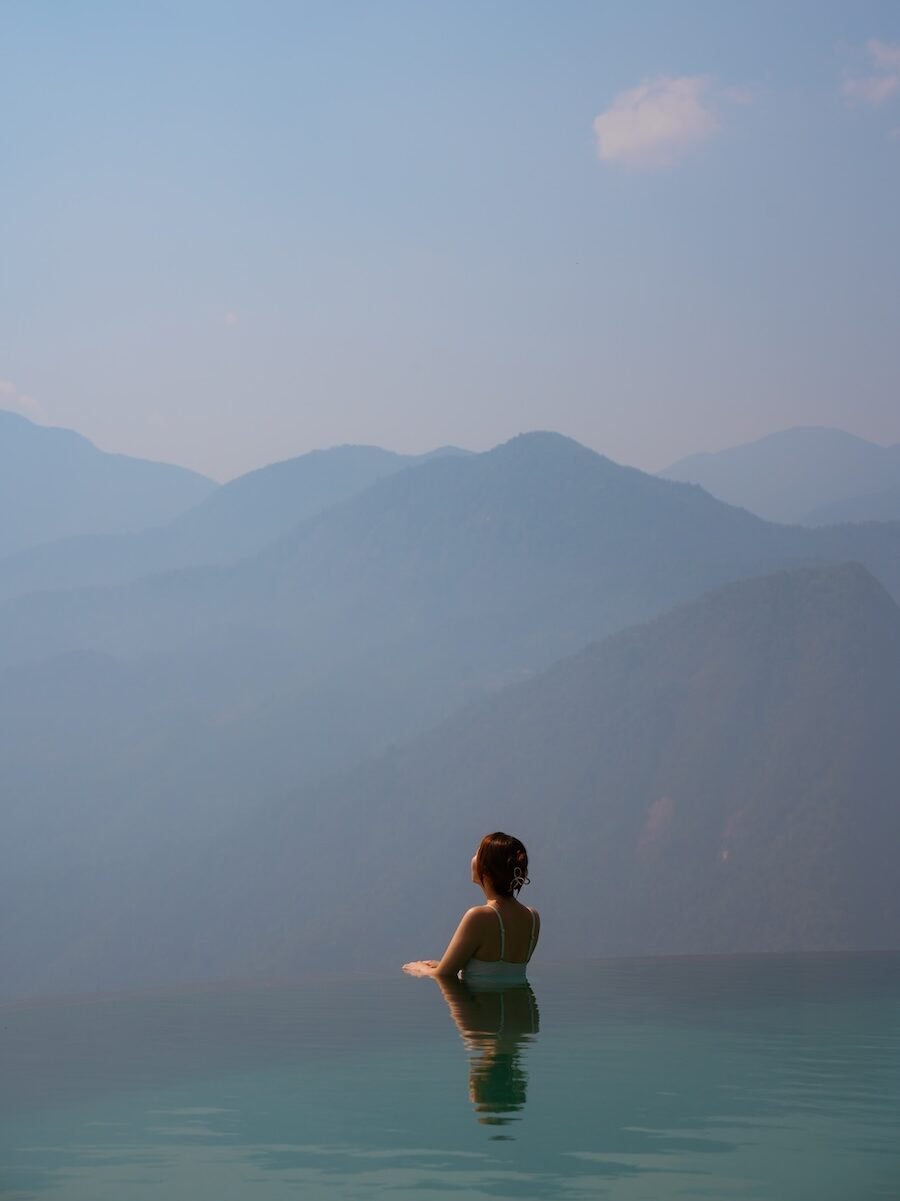
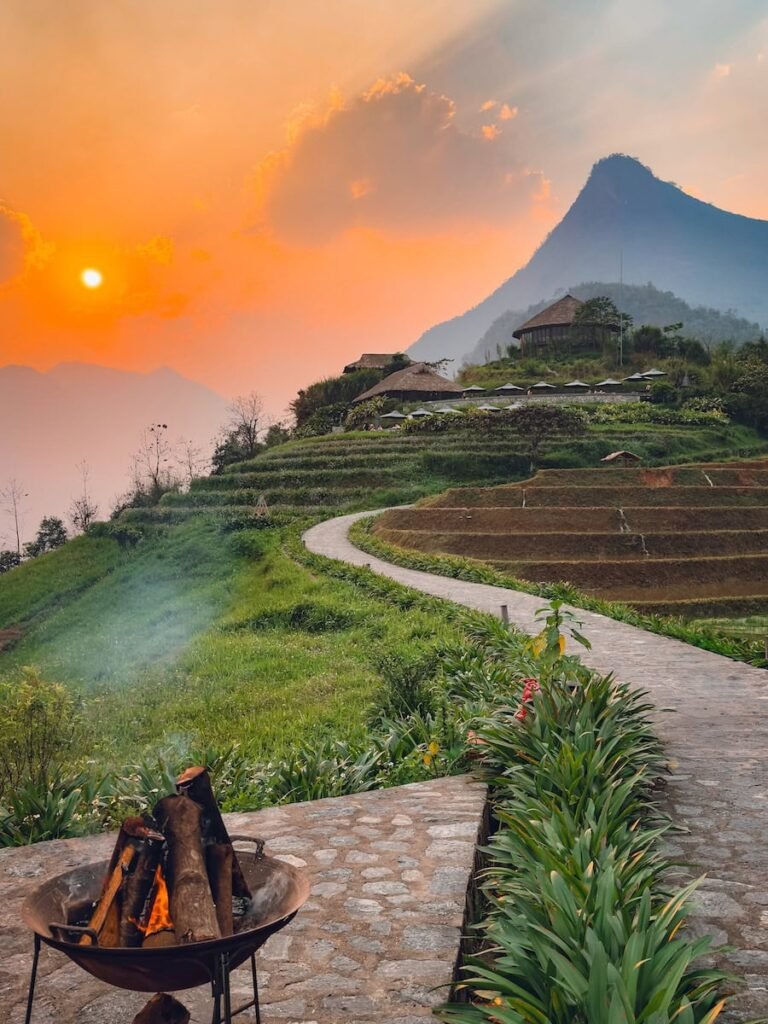
That worked perfectly for this itinerary. We could spend the morning and early afternoon exploring Sapa without our luggage, then head to the resort and spend the rest of the day actually enjoying it. We had time to use the pool, take in the mountain views, have dinner at the resort, and simply relax.
If you splurge on a mountainside resort in Sapa, I think it’s important to actually build some time into your itinerary to enjoy it. The setting is a big part of what you’re paying for, and after traveling overnight, this is the perfect day to do exactly that.
Day 8: Trek Through Muong Hoa Valley
Today, get out into the landscapes that make Sapa worth traveling all the way to northern Vietnam for.
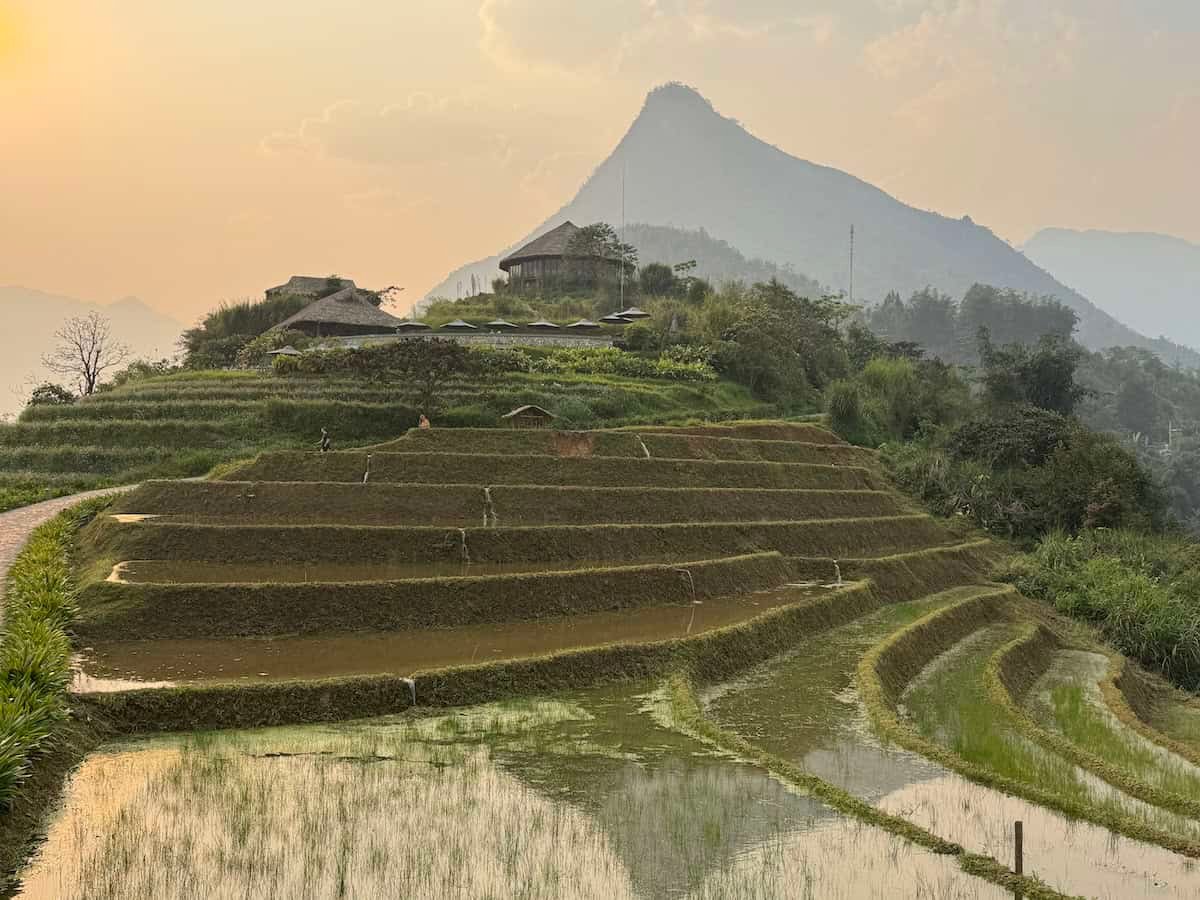
No visit to Sapa is complete without spending time in Muong Hoa Valley, home to the iconic terraced rice fields that make this region so visually stunning. The valley stretches between dramatic mountain slopes and is dotted with villages belonging to ethnic minority communities including the Hmong and Red Dao people.
For this itinerary, I recommend booking a guided half day trek through the valley. Routes wind through the rice fields and connect villages like Lao Chai and Ta Van, giving you a much closer look at the landscapes and communities than you can get from the road.
Book a guided half day trek here.
You don’t need to be a serious hiker to experience Sapa this way, and I specifically prefer a half day trek rather than committing your entire day. You’ll still have plenty of time afterward to relax and enjoy the mountains.
If trekking isn’t for you, you can absolutely still experience Muong Hoa Valley. This no-trek tour visits several scenic viewpoints by van, includes a gentle walk with a local guide, and ends with a Dao herbal foot soak.
You can also explore independently. Grab is affordable and widely available in Sapa, making it relatively easy to reach scenic cafes and viewpoints without committing to a tour.
The valley is beautiful year round, but the scenery changes dramatically with the seasons. Summer brings lush green terraces, while September and October are known for the golden rice fields around harvest.
Afterward, keep the rest of the day relaxed. If you’re staying at a mountainside resort, head back and enjoy the property. Otherwise, spend the afternoon exploring Sapa Town, cafe hopping, or book a traditional Red Dao herbal bath if you didn’t have one on Day 7.
Day 9: Take the Cable Car to Fansipan
Save your final morning in Sapa for Fansipan, the highest mountain in Vietnam and one of the most popular things to do in Sapa.
At 3,143 meters above sea level, Fansipan is known as the “Roof of Indochina.” You can get to the summit by using a combination of mountain train, cable car, and funicular.
From Sapa Town, start by taking the bright red Muong Hoa Mountain Train from Sapa Sun Plaza Station. This is the same little red train you saw winding across the mountains from Viettrekking Coffee on Day 7.
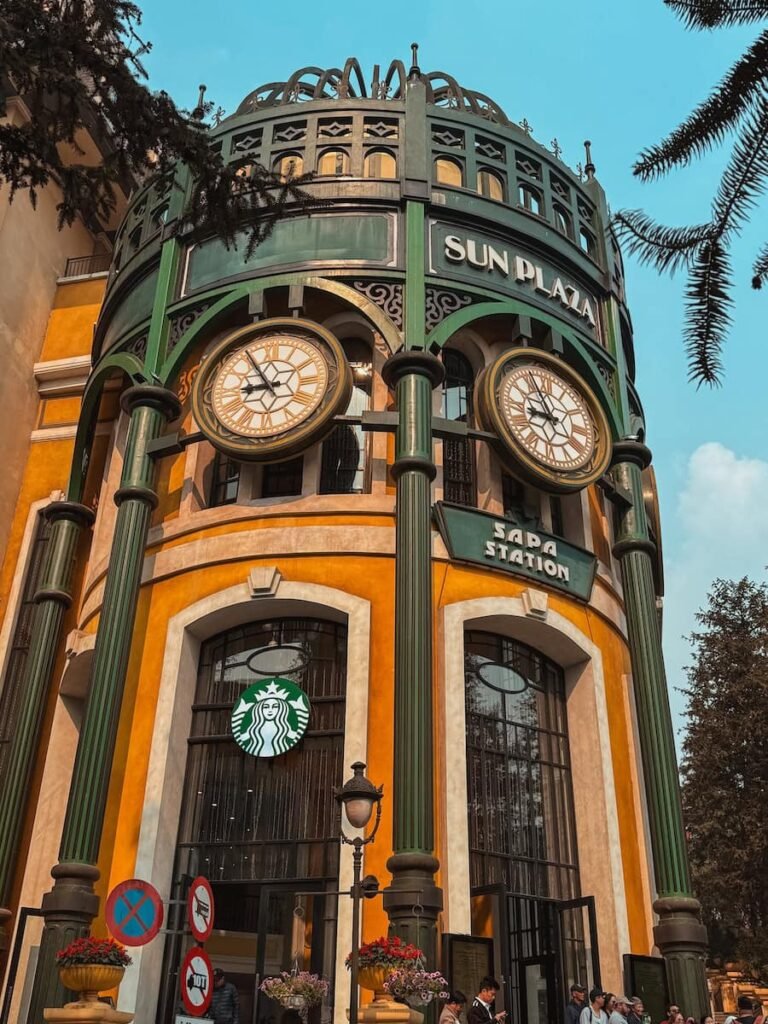
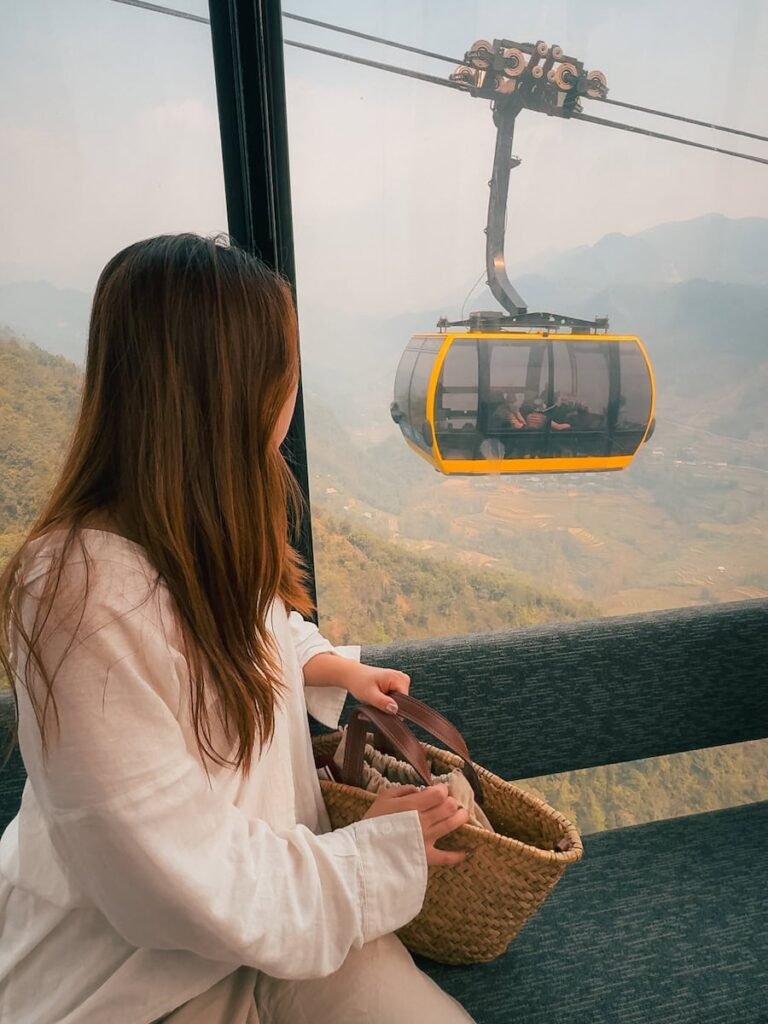
The train takes you to the Sun World Cable Car Station, where you’ll board the Fansipan cable car for the spectacular ride up the mountain. From the upper station, you can continue toward the summit while exploring the temples, enormous Buddha statues, viewpoints, and other structures built into the mountainside.
Give yourself several hours for the entire experience. Between the mountain train, cable car, exploring the complex, reaching the summit, and traveling back down, Fansipan takes longer than you might expect.
Weather at Fansipan
There is one thing you should know before buying your ticket: the views on Fansipan are never guaranteed.
We had clear weather in Sapa Town but once we got higher in elevation, everything was completely covered in fog.
Obviously, I would have loved to see those sweeping mountain views you see in photos, but I also knew going in that this was a possibility given unpredictable mountain weather.
I wouldn’t plan on visiting multiple times or rearranging your entire Sapa itinerary trying to chase perfect weather. Getting up and down takes a significant amount of time, and tickets aren’t cheap.
You might get incredible panoramic views, or you might end up standing inside a cloud like we did. Go with realistic expectations and take whatever the mountain gives you.
If You Have Extra Time
Depending on when you plan to leave Sapa, you may have time for one or two more stops.
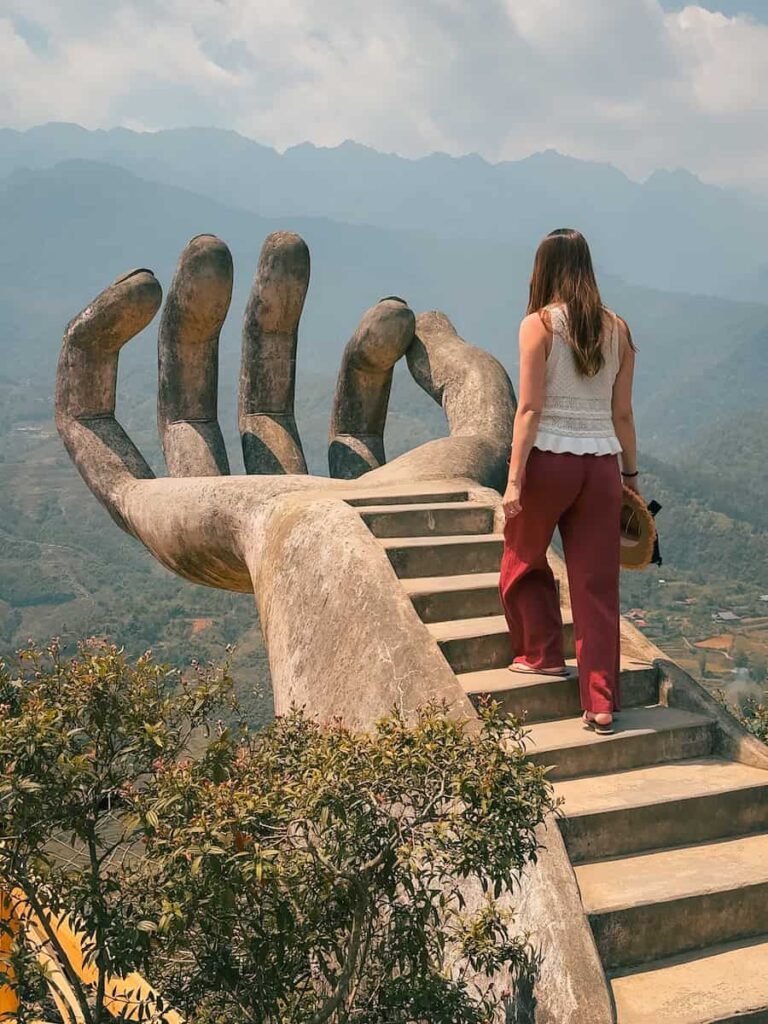
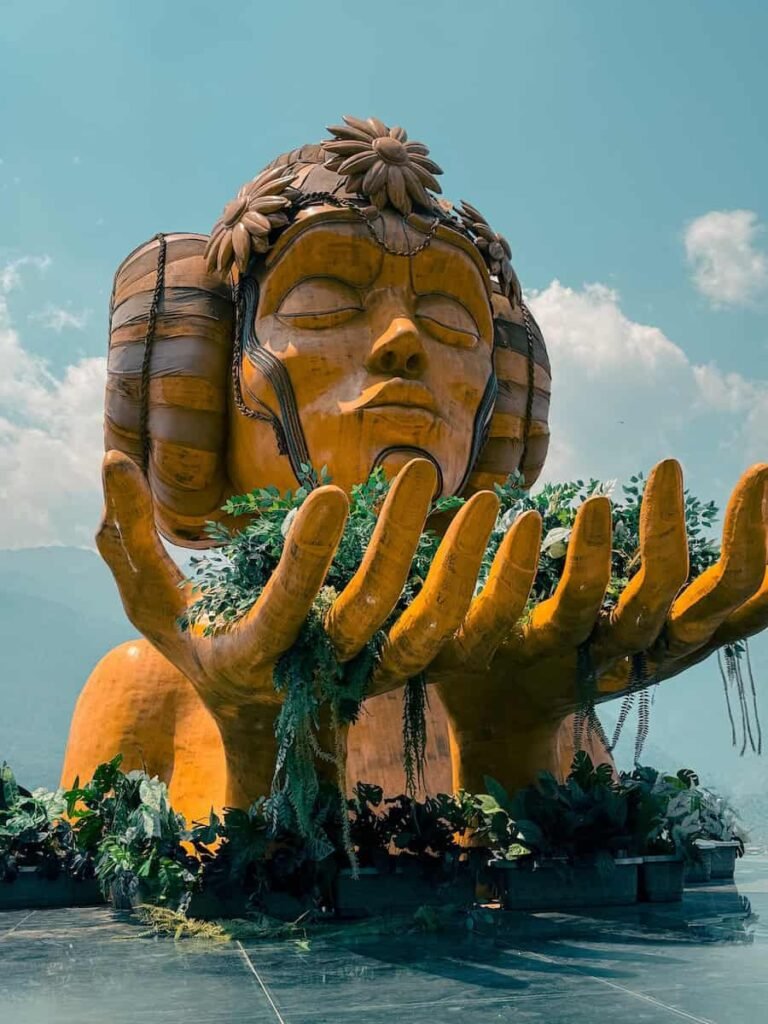
You could visit Silver Waterfall and Love Waterfall, which can easily be combined on the same trip outside town, or stop at Moana Sapa, a photo focused attraction with several installations overlooking the mountains.
Return to Hanoi
This is one part of my actual itinerary that I would change.
I stayed in Sapa for almost the entirety of Day 9 and took an overnight sleeper bus toward Hanoi Airport, which allowed me to squeeze almost three full days out of Sapa.
The bus was convenient because it traveled directly from Sapa toward the airport and took around 5 to 6 hours. But I didn’t sleep particularly well, and going straight from an overnight bus into another travel day wasn’t the most comfortable way to end this part of the trip.
I was lucky enough to have lounge access at Hanoi Airport, where I could shower, change, and freshen up before our morning flight to Da Nang. Without that, going directly from an overnight sleeper bus onto another flight would have been pretty miserable.
If maximizing time in Sapa is your priority, or if you don’t want to have to transfer multiple times from Sapa to Hanoi Airport, the overnight bus does work.
But for this itinerary, I recommend leaving Sapa after Fansipan and returning to Hanoi for a comfortable night in a hotel instead. You’ll sacrifice a few hours in Sapa, but you’ll get a proper shower, a real bed, and a much more relaxing start to the Central Vietnam portion of your trip.
You can return by bus or travel back to Lao Cai and take the train. Either way, spend the night in Hanoi and get some rest before flying to Da Nang the following morning.
Day 10: Fly to Da Nang and Continue to Hoi An
Today, you’re leaving Northern Vietnam behind and flying south to Da Nang, the gateway to the Central Vietnam portion of this itinerary.
The flight from Hanoi to Da Nang takes around 1 hour and 20 minutes, with frequent direct flights throughout the day. I recommend booking a morning flight so you can arrive in Hoi An with plenty of time to explore.
Vietnam Airlines and VietJet both operate this route. VietJet is usually cheaper, but as a budget airline, you’ll pay separately for things like checked luggage.
You can stay in either Hoi An or Da Nang for the final few days of this itinerary. I chose to split my time between the two, but since they’re only about 45 minutes apart, you could easily choose one as your base and visit the other as a day trip.
If you do split your stay, the order doesn’t really matter. I chose Hoi An first and saved Da Nang for last so we would be closer to the airport on departure day.
Getting from Da Nang airport to Hoi An
Hoi An is about 25 to 28km from Da Nang airport, which takes about 45 minutes depending on traffic.
Your options:
- Grab is the easiest for most people, running roughly 250,000 to 500,000 VND ($10 to $20) depending on time of day and demand. This is what we did.
- A pre-booked private car runs around 450,000 to 700,000 VND ($18 to $28), and is worth it if you’d rather have everything arranged before you land
Where to Stay in Hoi An
For a first visit, I recommend staying in or near Hoi An Ancient Town if you want to be able to walk to restaurants, cafes, shops, and the lantern filled streets in the evening.
If you prefer a quieter stay, look at the rice fields and countryside between Ancient Town and the beach. You’ll sacrifice some walkability, but the setting is much more peaceful.
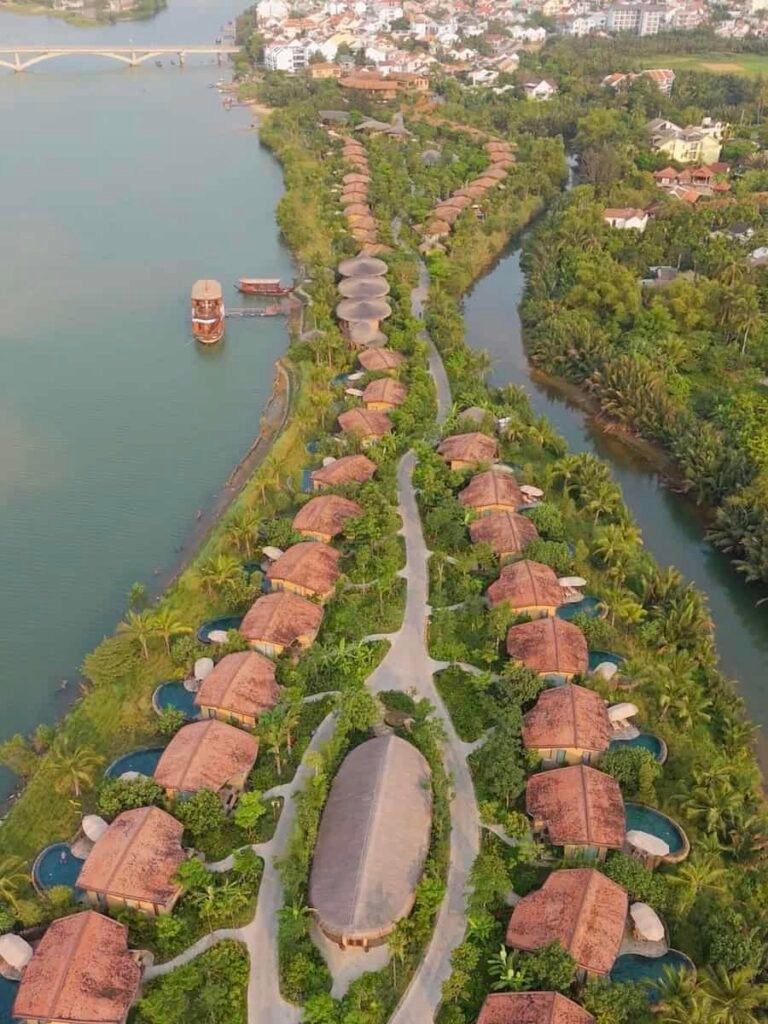
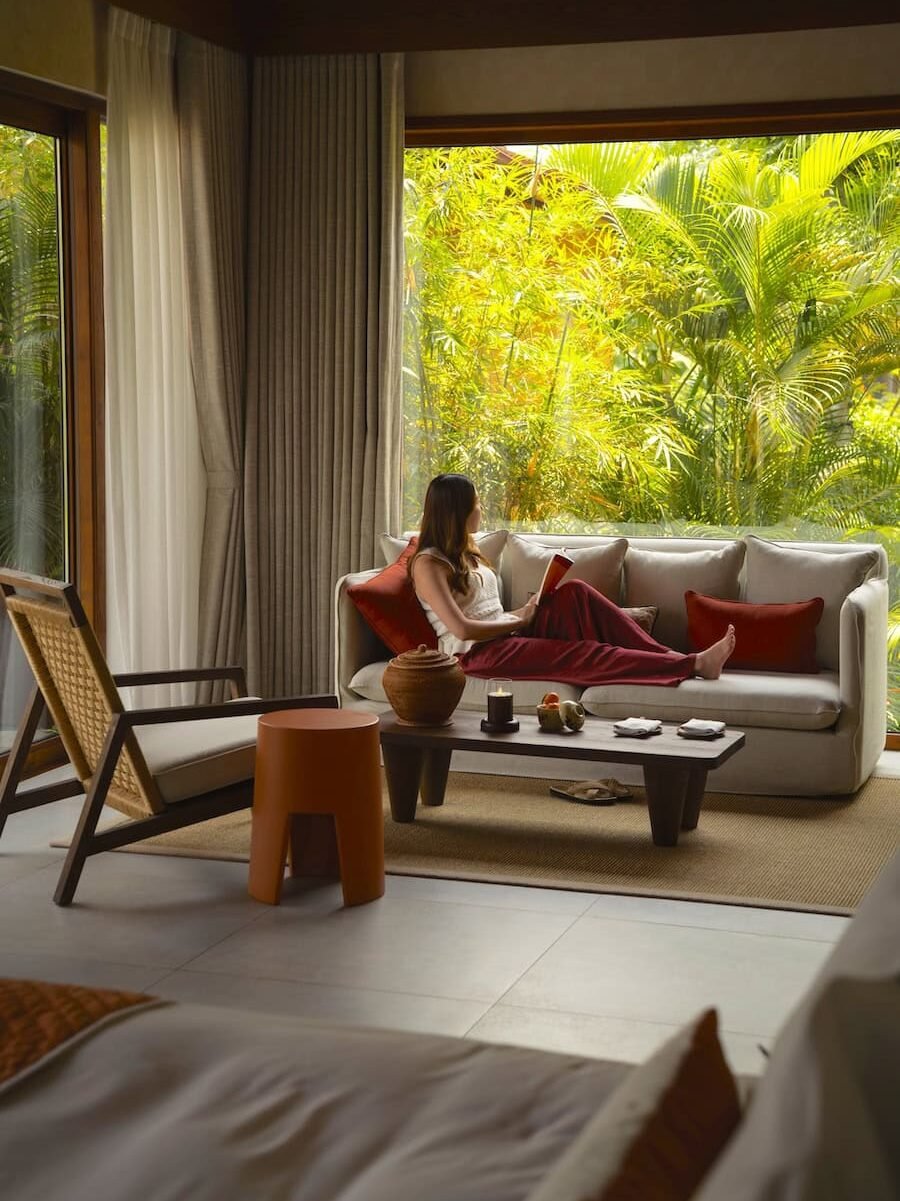
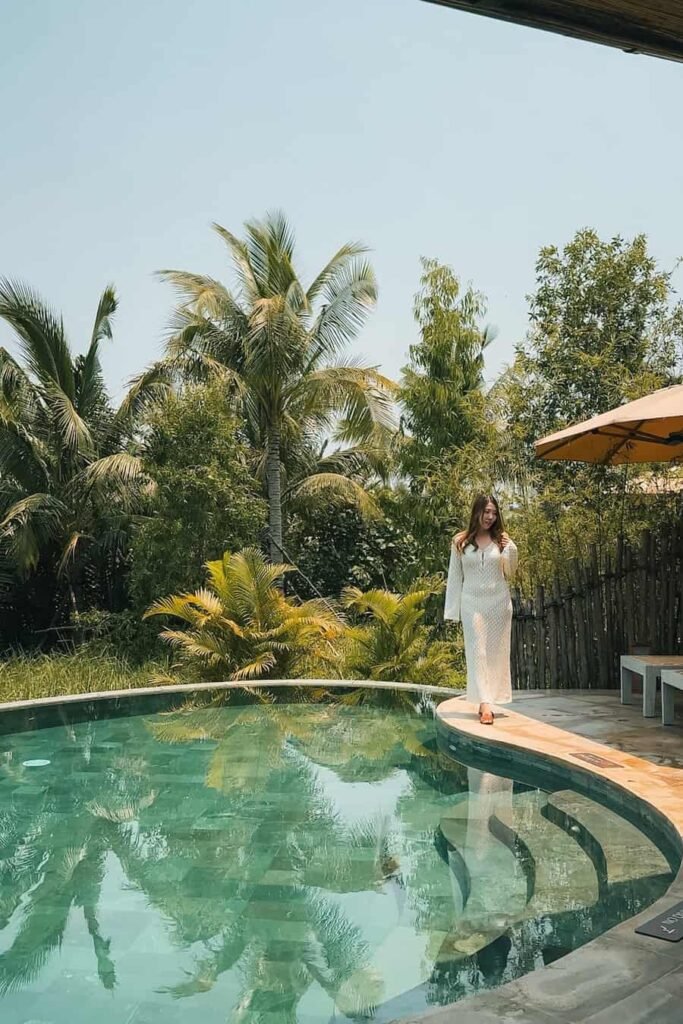
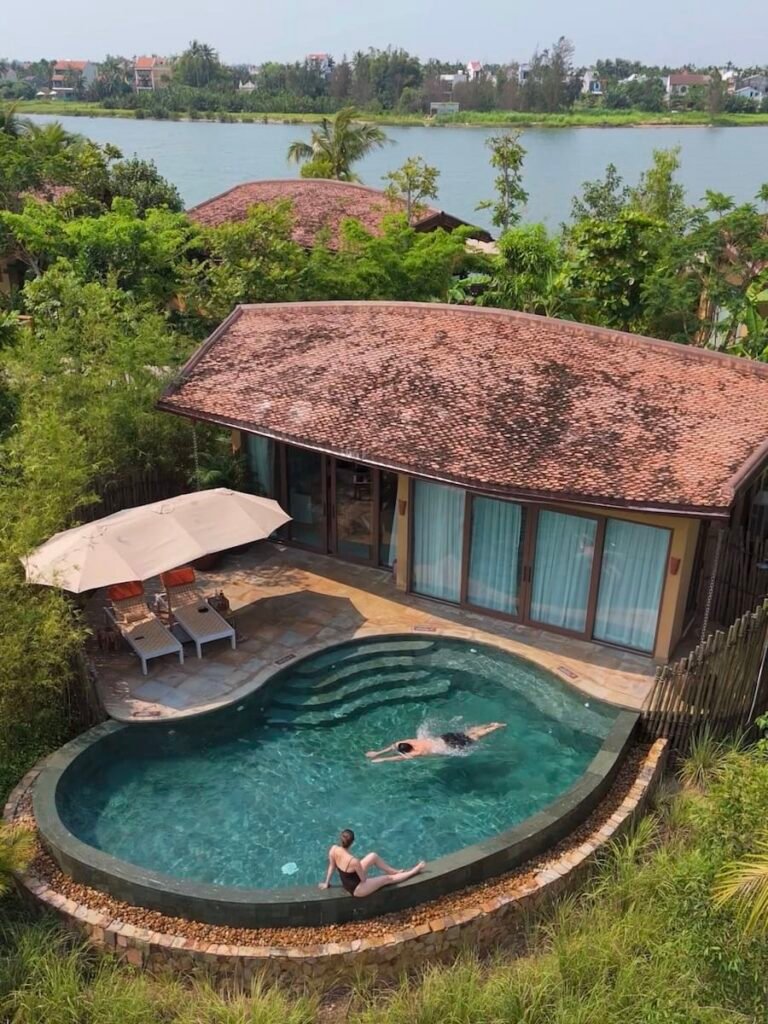
We stayed at Namia River Retreat, a beautiful wellness focused resort along the Thu Bon River about 10 minutes by car from Ancient Town. Every villa has its own private pool, and our stay included a 90 minute wellness treatment per person, per night. There is also a complimentary boat that takes guests between the resort and Ancient Town.
The property itself was gorgeous, breakfast was exceptional, and the staff were some of the warmest we encountered anywhere in Vietnam. If you’re looking for somewhere to splurge during this trip, this would be my pick.
If you want to stay really close to the Ancient town, Anantara Hoi An Resort, Allegro Hoi An, and The Signature Hoi An are great options.
If this is your first trip and you only have two nights, I’d prioritize being close to Ancient Town. You can always visit the beach or rice fields during the day, but being able to walk into the historic center in the morning and evening makes a short stay much easier.
Spend Your Day in Hoi An Ancient Town
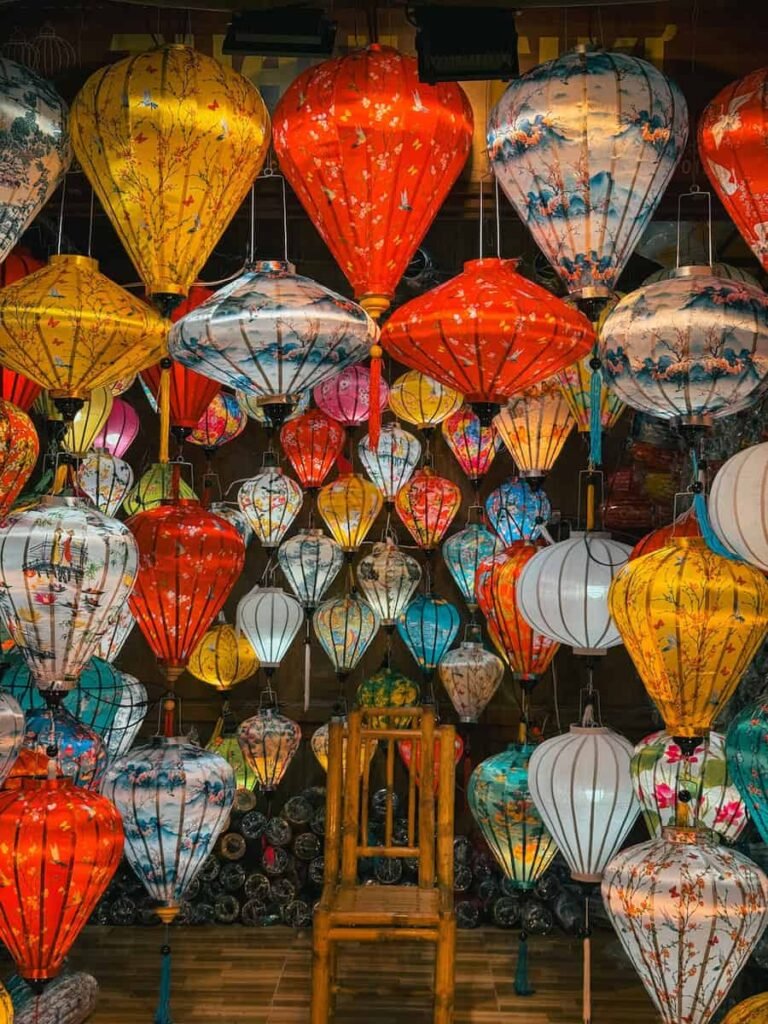
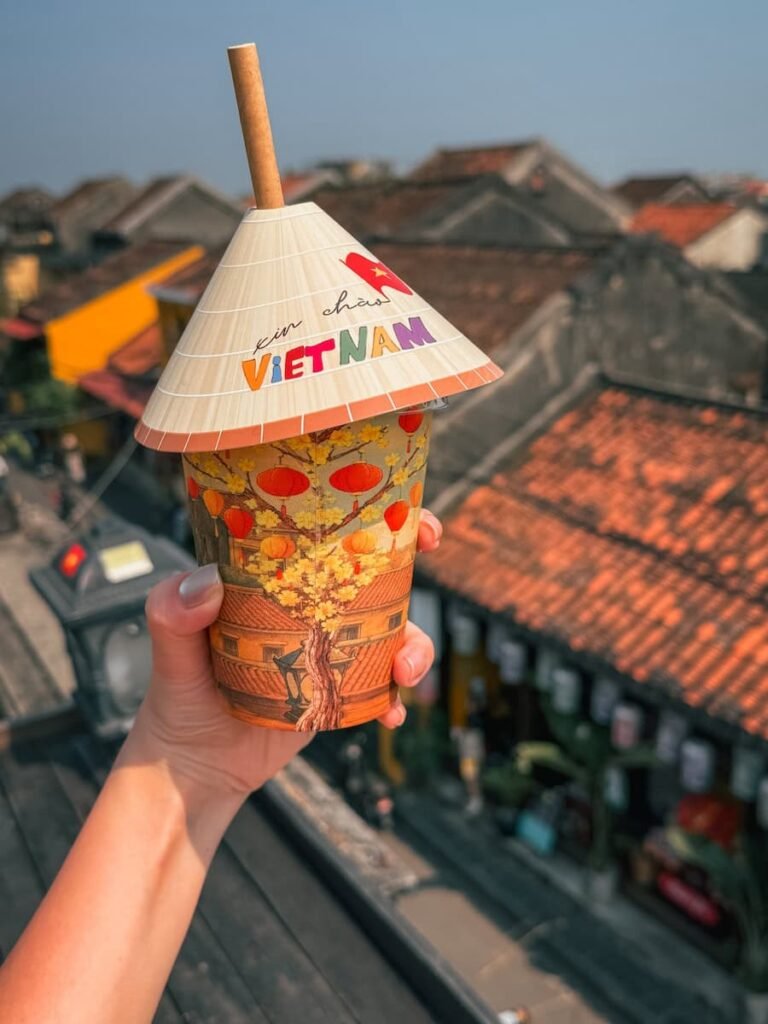
Hoi An’s historic center is a UNESCO World Heritage Site, and it really does look like the photos you’ve probably seen. Narrow streets wind between mustard yellow buildings, with old merchant houses, temples, cafes, boutiques, and colorful lanterns everywhere.
The Ancient Town is compact and best explored on foot, so I wouldn’t worry too much about following a strict route. Give yourself time to wander and stop wherever catches your attention.
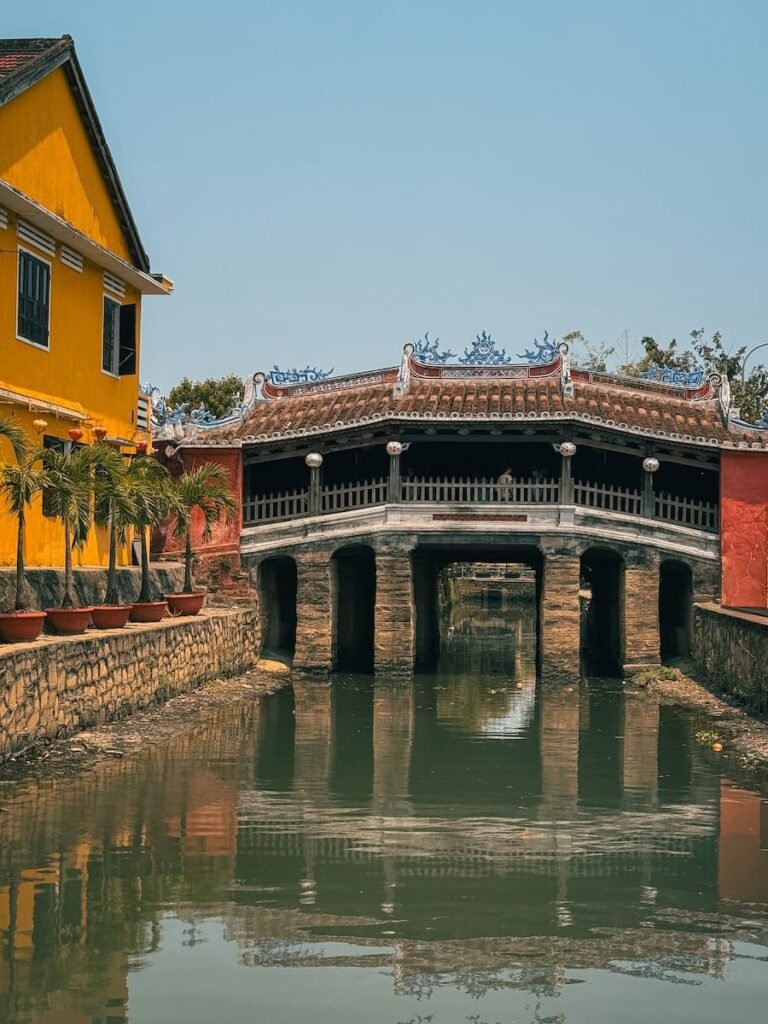
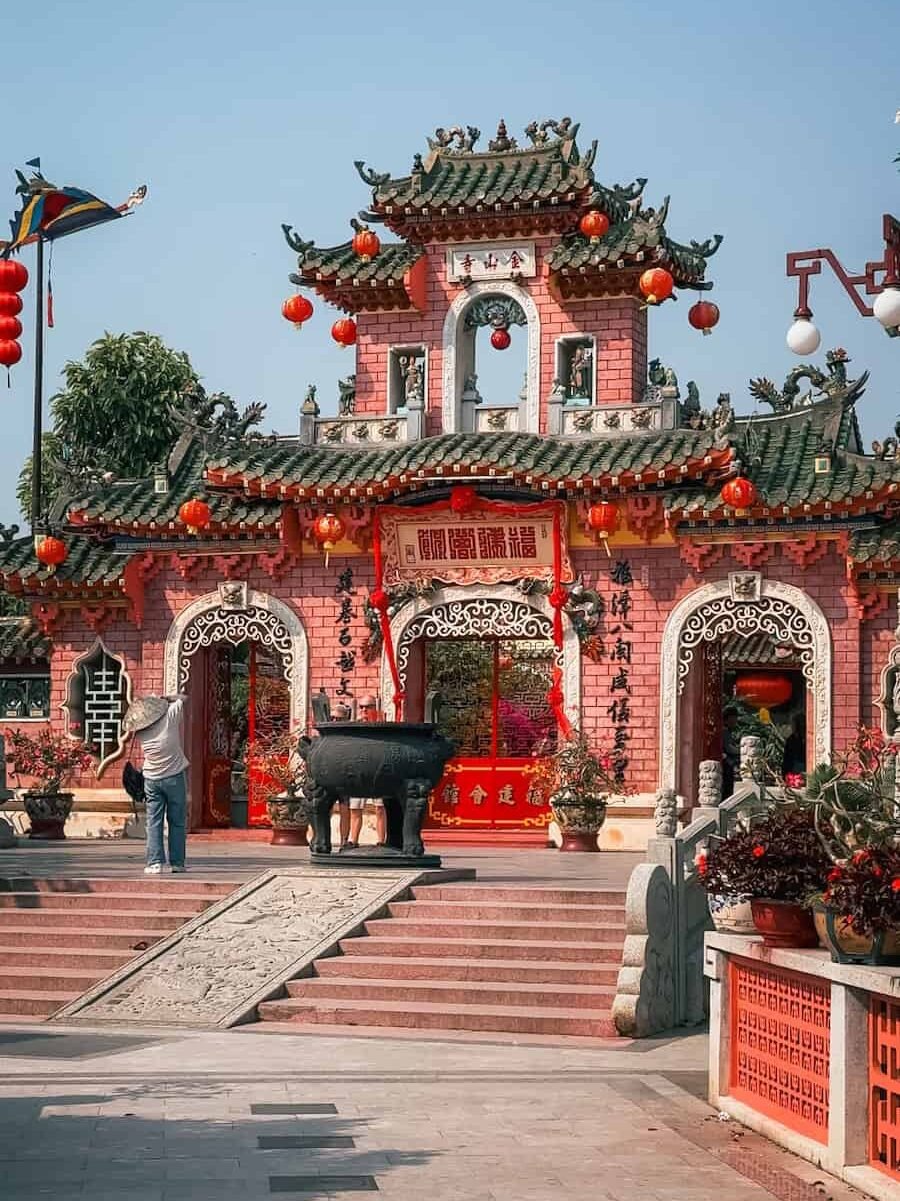
Visit the Japanese Covered Bridge, one of Hoi An’s most recognizable landmarks, and pop into some of the old merchant houses and temples along the way including the Fujian Assembly Hall.
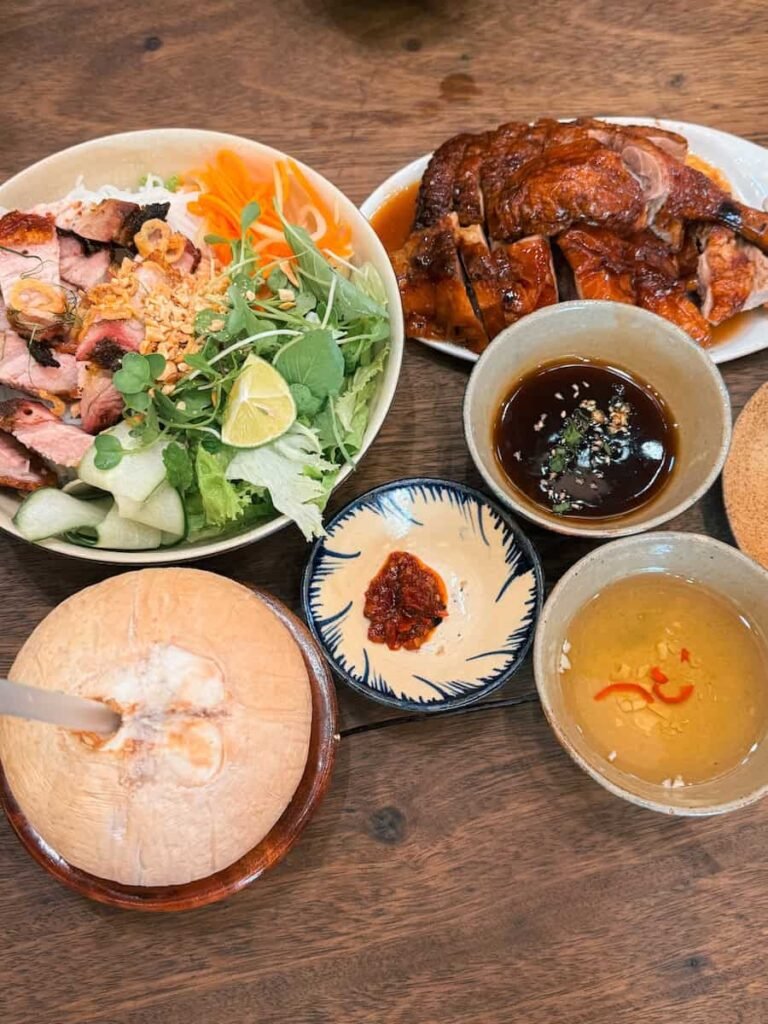
This is also a good time to try some of Hoi An’s local specialties. Cao lau is a noodle dish closely associated with Hoi An, while white rose dumplings are another local specialty you’ll see throughout town.
My absolute favorite restaurant in Hoi An was Com Linh, so definitely add that one to your list.
If you’re planning to have clothes made in Hoi An, I would also visit a tailor today. Custom clothing usually requires multiple fittings and alterations, so starting on your first day gives you as much time as possible before leaving.
See Hoi An at Night
Make sure you stay in Ancient Town through sunset because this is when Hoi An completely changes.
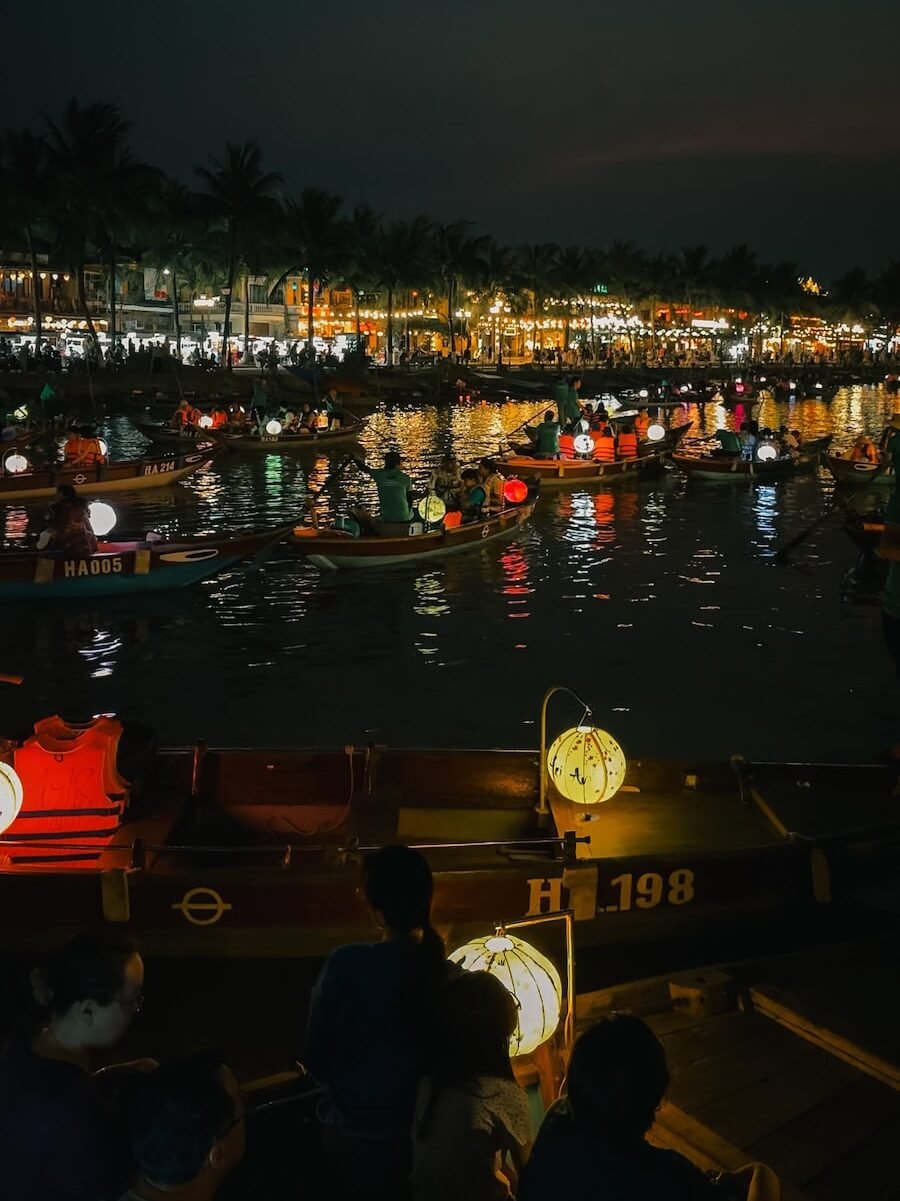
Thousands of lanterns begin illuminating the streets, and the lights reflect off the Thu Bon River as the lantern boats start filling the water.
Walk through the Hoi An Night Market, although I personally found most of the items being sold to be fairly low quality. I think it’s worth browsing for the atmosphere, but I wouldn’t necessarily come here specifically to shop.
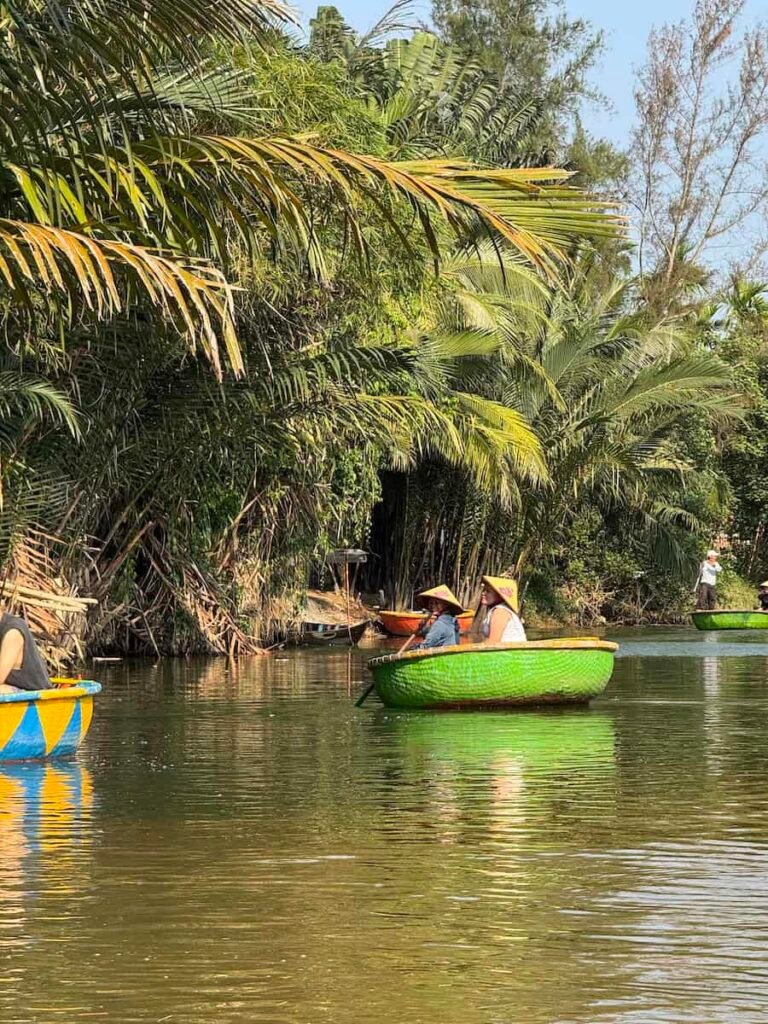
You can also take a short lantern boat ride along the Thu Bon River. Yes, it’s touristy, but being out on the river surrounded by glowing lantern boats is a pretty unique Hoi An experience.
Day 11: Hoi An, Rice Fields & a Relaxing Day
Even if you skip the boat ride, spend some time walking along the waterfront after dark before grabbing dinner and heading back to your hotel.
After a busy first day in Hoi An, I’d make Day 11 intentionally slower.
Start with an early morning walk through Hoi An Ancient Town. If you enjoyed it the day before, it’s worth coming back in the morning when the streets are quieter and before the larger tour groups arrive.
This is a good opportunity to revisit anything you missed, stop at a cafe, or simply wander without much of a plan.
Enjoy Some Time at Your Hotel
By midday, head back to your hotel and actually enjoy it.
We stayed at Namia River Retreat, so we spent some time relaxing at our villa, using the pool, and enjoying the resort. Since our stay included a daily wellness treatment, we also built that into our downtime.
Hoi An can get hot in the middle of the day, so this is a good time to slow down before heading back out later in the afternoon.
If you’re staying somewhere with a beautiful pool or spa, I’d deliberately leave a few hours open to enjoy it. After more than a week of moving through Northern Vietnam, I was very ready for a slower day at this point in the trip.
Visit the Rice Fields Around Hoi An
Later in the afternoon, head out into the countryside surrounding Hoi An.
One of the things I loved about this area is how quickly the scenery changes once you leave Ancient Town. Within a short drive, the busy streets give way to rice paddies, small roads, and a much quieter side of Hoi An.
We went to Roving Chill House, a cafe surrounded by rice fields outside the historic center. The setting was beautiful, and it’s an easy way to experience the countryside without committing to a longer tour.
Grab a drink, enjoy the views, and give yourself some time to wander around the surrounding rice fields before heading back toward town.

Or Spend the Afternoon at An Bang Beach
If you’d rather have a beach day, head to An Bang Beach instead.
An Bang is only around 15 minutes from Ancient Town and is lined with restaurants and beach clubs where you can spend the afternoon by the water.
We had planned to make it here but ultimately ran out of time, so this is one thing I would still add on a future trip.
Personally, if you only have two days in Hoi An, I would choose the rice fields. You’ll have My Khe Beach coming up in Da Nang, while the countryside surrounding Hoi An offers something a little different from the rest of this itinerary.
For more ideas, including cooking classes, lantern making workshops, additional restaurants, and everything else we did in Hoi An, read my complete guide to the best things to do in Hoi An here.
Day 12: Da Nang
Today, check out of your Hoi An hotel and make the short trip north to Da Nang.
Hoi An and Da Nang are only about 45 minutes apart, so this is an easy travel day and you should still have most of the day to explore.
Da Nang feels completely different from Hoi An. It’s a much larger, more modern city with a long stretch of beach, high rise hotels, restaurants, and mountains rising just outside the city.
I wasn’t feeling my best during the last few days of our trip, so we unfortunately missed a few things I had originally planned in Da Nang. I’m sharing the itinerary I would follow if I were doing the trip again.
Where to Stay in Da Nang
For a first visit, I recommend staying near My Khe Beach. You’ll have easy access to the beach and plenty of restaurants and cafes, while still being a short Grab ride from downtown Da Nang.
We actually stayed at two different hotels because we extended our trip by an extra night.
My favorite was M Hotel Danang, a modern design focused hotel directly across from My Khe Beach. I loved the interiors, our room, and the overall atmosphere here, and between the two hotels we tried, this was easily my favorite.
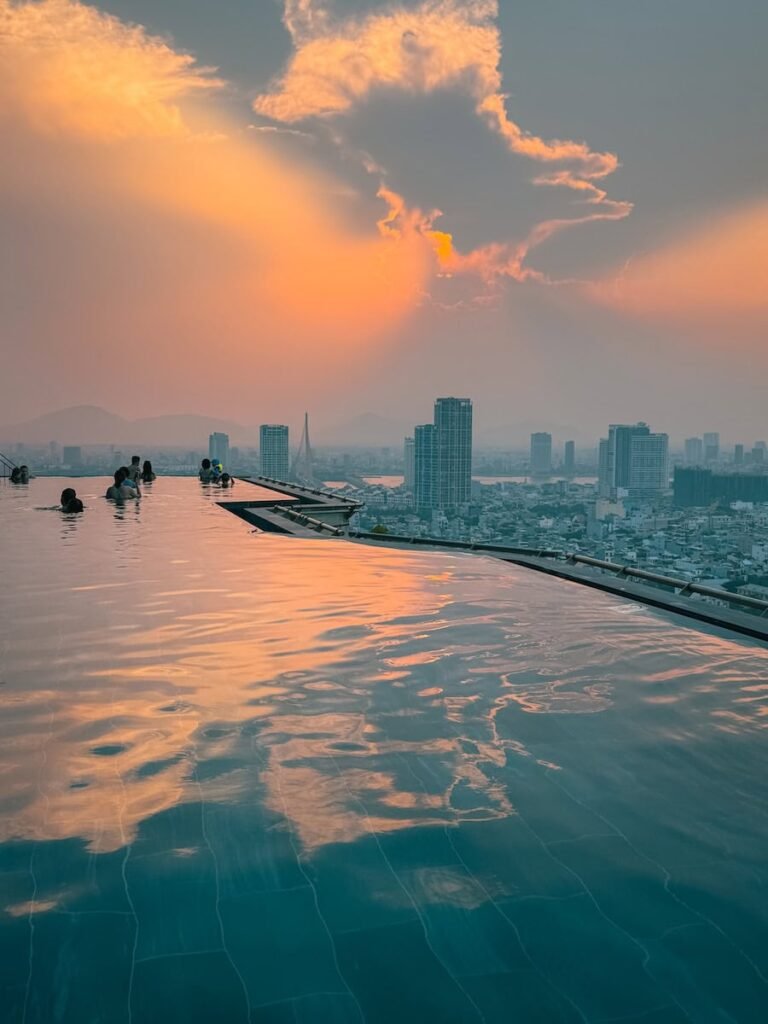
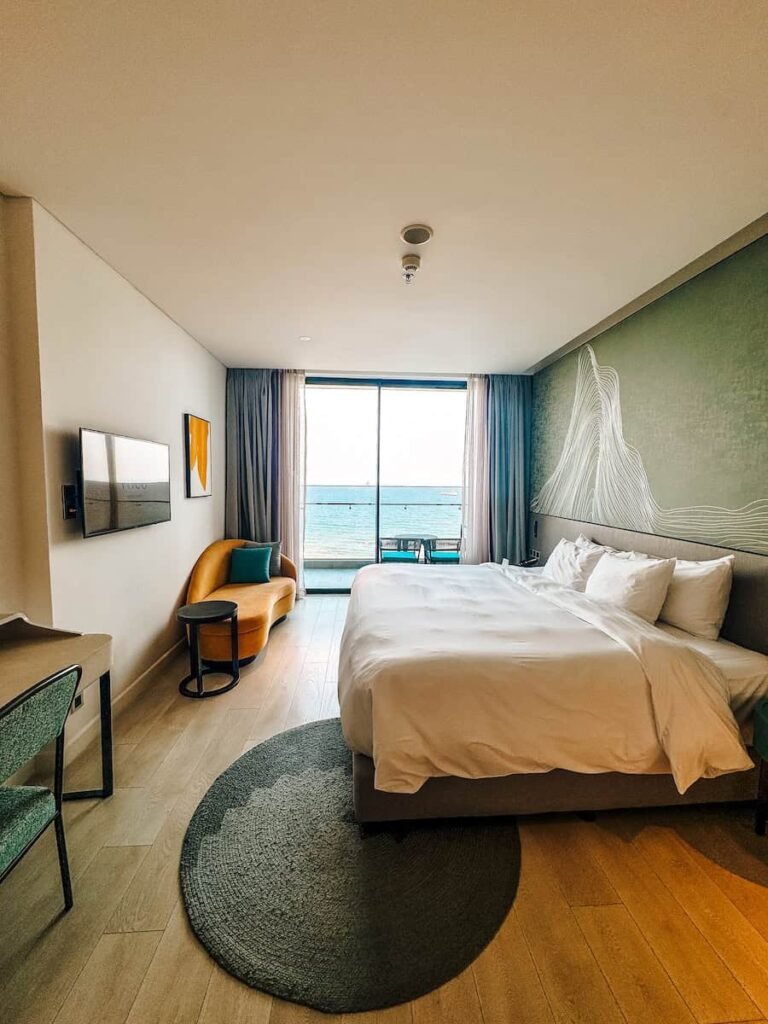
We also stayed at voco Ma Belle Danang, which is another beachfront option with a rooftop infinity pool. It was comfortable and conveniently located near the beach, but between the two, I much preferred M Hotel for the design, room, and overall experience.
TIA Wellness Resort: A great luxury option if you want more of a resort experience, with private pool villas and a strong focus on wellness and spa treatments.
For a super luxurious stay, InterContinental Danang Sun Peninsula Resort is the splurge option. It’s located on the Son Tra Peninsula rather than in central Da Nang, so it’s much more secluded and resort focused. I would choose this if the hotel itself is a major part of your trip rather than if you want the most convenient base for sightseeing.
Visit the Marble Mountains
After checking in and dropping off your bags, head to the Marble Mountains, located between Hoi An and central Da Nang.
The Marble Mountains are a cluster of five limestone and marble hills, each named after one of the five elements. Hidden throughout the mountains are caves, pagodas, temples, and viewpoints overlooking the surrounding coastline.
You can climb the stone staircases to explore, but there is also an elevator that takes you partway up if you want to save some energy.
Give yourself a couple hours here. There are quite a few stairs and uneven surfaces, so wear comfortable shoes.
Spend the Afternoon at My Khe Beach
After Marble Mountains, head back toward the city and spend some time at My Khe Beach.
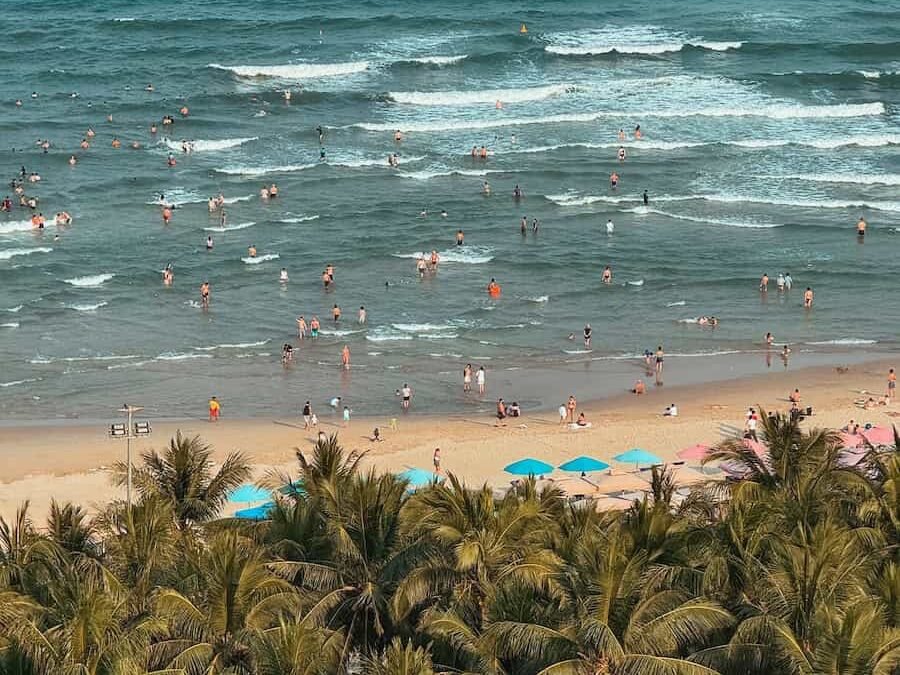
My Khe Beach is a long stretch of white, sandy beach that runs on the eastern side of Da Nang, from the Marble Mountains area to the foot of the Son Tra Peninsula in the north. You’ll find plenty of hotels, restaurants, food trucks and cafes nearby.
Take a walk along the water, grab a drink at one of the beachfront cafes, try some water sports, or simply head back to your hotel for some pool time before going out again in the evening.
Evening
After a relaxing time at My Khe Beach, head towards Han River and Downtown Da Nang. Some notable attractions here include Han Market and Da Nang Cathedral, better known as the Pink Church. It’s a pink Gothic cathedral from the French colonial period, and one of the most photographed buildings in the city.
The Han River runs straight through Da Nang, and the city has built its entire evening identity around it. The most famous sight here is the Dragon Bridge, a bridge made in the shape of a dragon that stretches across the river. There is a fire show that runs at 9 pm on Fridays, Saturdays and Sundays, plus major holidays. The dragon breathes fire, then sprays water over the river, and the whole thing lasts about half an hour. It’s free and there’s no ticket. If you happen to be visiting Da Nang on the weekend, try to catch the show after dinner before heading back to your hotel.
Day 13: Day Trip From Da Nang
Use your final full day in Vietnam for a day trip.
We had actually planned to do one ourselves, but I wasn’t feeling well toward the end of our trip and we ultimately stayed in Da Nang instead. If I were following this itinerary again, I would choose between Hue and Ba Na Hills.
Personally, I would choose Hue.
Option 1: Day Trip to Hue
Located about two hours north of Da Nang, Hue was the imperial capital of Vietnam during the Nguyen Dynasty and offers something completely different from the other destinations on this itinerary.
The main attraction is the Imperial City, a huge walled complex that once served as the political and ceremonial center of the Nguyen emperors. Inside are gates, courtyards, temples, palaces, and the remains of the Forbidden Purple City.
Most Hue day trips also include some of the elaborate royal tombs scattered around the city. These aren’t simple burial sites. Many were designed as sprawling complexes with temples, gardens, lakes, pavilions, and ornate architecture.
Another common stop is Thien Mu Pagoda, a seven story pagoda overlooking the Perfume River and one of Hue’s most recognizable landmarks.
You can visit independently, but for a day trip from Da Nang, I would book a guided tour or private driver. With roughly four hours of driving round trip, having the transportation organized makes it much easier to see the major sights in one day.
Your other option is Ba Na Hills, about an hour west of Da Nang.
This is where you’ll find the famous Golden Bridge, the pedestrian bridge that looks like it’s being held above the mountains by two enormous stone hands.
But Ba Na Hills is much more than the bridge. It’s a mountaintop entertainment complex reached by cable car, with gardens, viewpoints, a French inspired village, restaurants, and amusement park attractions.
If seeing the Golden Bridge is high on your Vietnam bucket list, this is the day to do it. Just know that it’s one of the most popular attractions around Da Nang, so expect crowds, particularly around the bridge itself.
Dinner
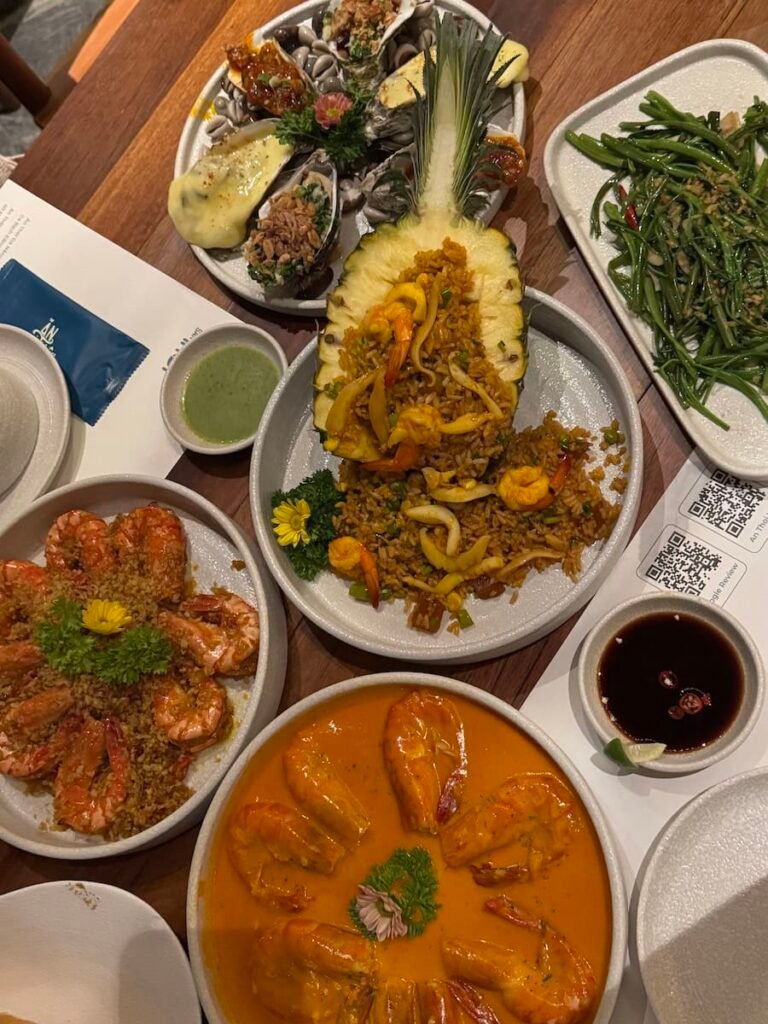
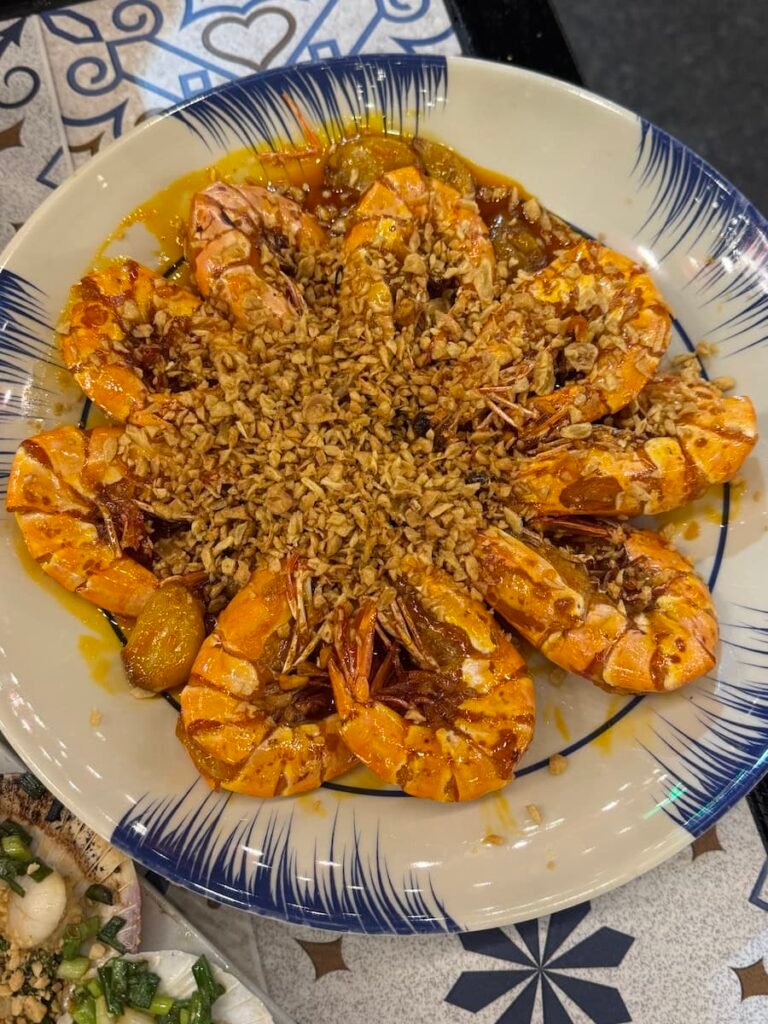
You should have at least one meal focused on seafood while in Da Nang. Two places we visited were Moc Quan Seafood, which is listed in the Michelin Guide, and An Thoi Hai San. Both had amazing seafood, but the tiger prawns were a highlight at both spots.
I still dream about the prawns fried with garlic at Moc Quan. At both restaurants, the staff will even help peel your prawns tableside.
We did have to wait over an hour at Moc Quan, so I highly recommend making a reservation.
You really can’t go wrong with either place, but the biggest difference is the atmosphere. Moc Quan feels like a bustling seafood market with a bit of chaos, while An Thoi Hai San has more of an elevated restaurant atmosphere.
Day 14: Son Tra Peninsula & Departure
You’ve made it to the final day of your two week Vietnam itinerary!
If you have a later flight like we did, spend your last day exploring Son Tra Peninsula, the mountainous peninsula just north of Da Nang.
Also known as Monkey Mountain, Son Tra feels surprisingly wild considering how close it is to the city. The peninsula is covered in forest, with winding coastal roads, viewpoints, beaches, and sweeping views over Da Nang and the coastline.
Visit Linh Ung Pagoda & Lady Buddha
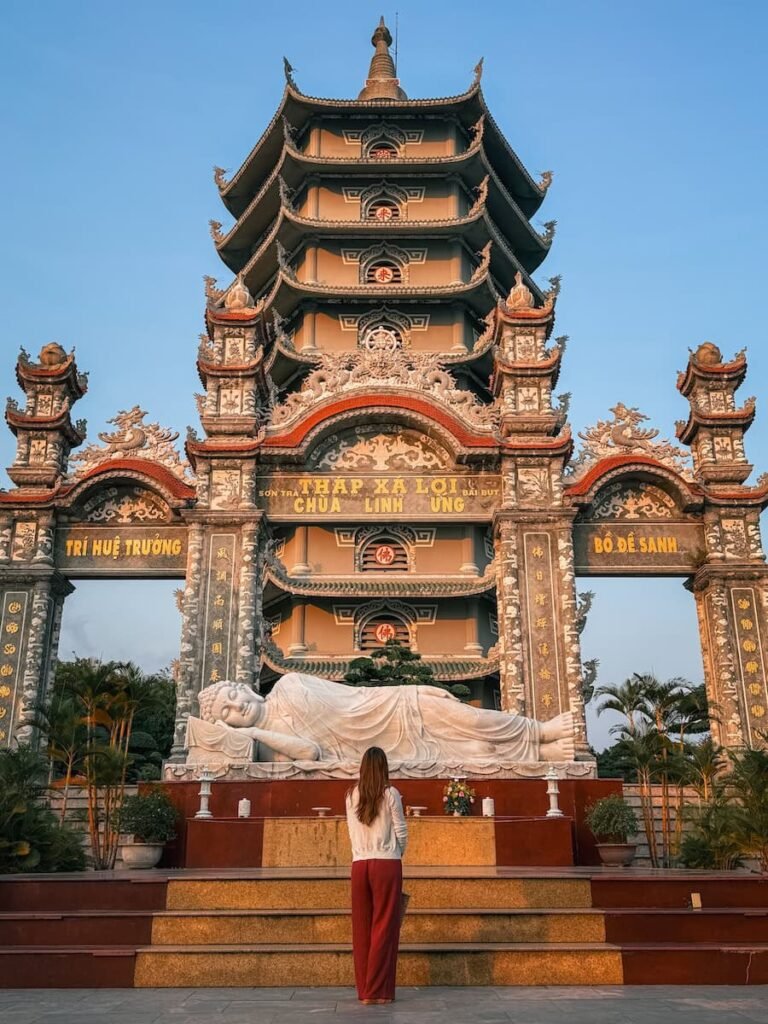
Start at Linh Ung Pagoda, one of the most recognizable landmarks on Son Tra Peninsula.
The temple complex overlooks the ocean and is home to the enormous white Lady Buddha statue, which stands facing the sea with the mountains behind her.
Take some time to walk around the temple grounds and enjoy the views over Da Nang and the coastline.
Son Tra Peninsula is also home to the rare red shanked douc langur, along with plenty of monkeys (hence, the name “Monkey Mountain”). Keep an eye out as you explore, but don’t approach or feed any wildlife you encounter.

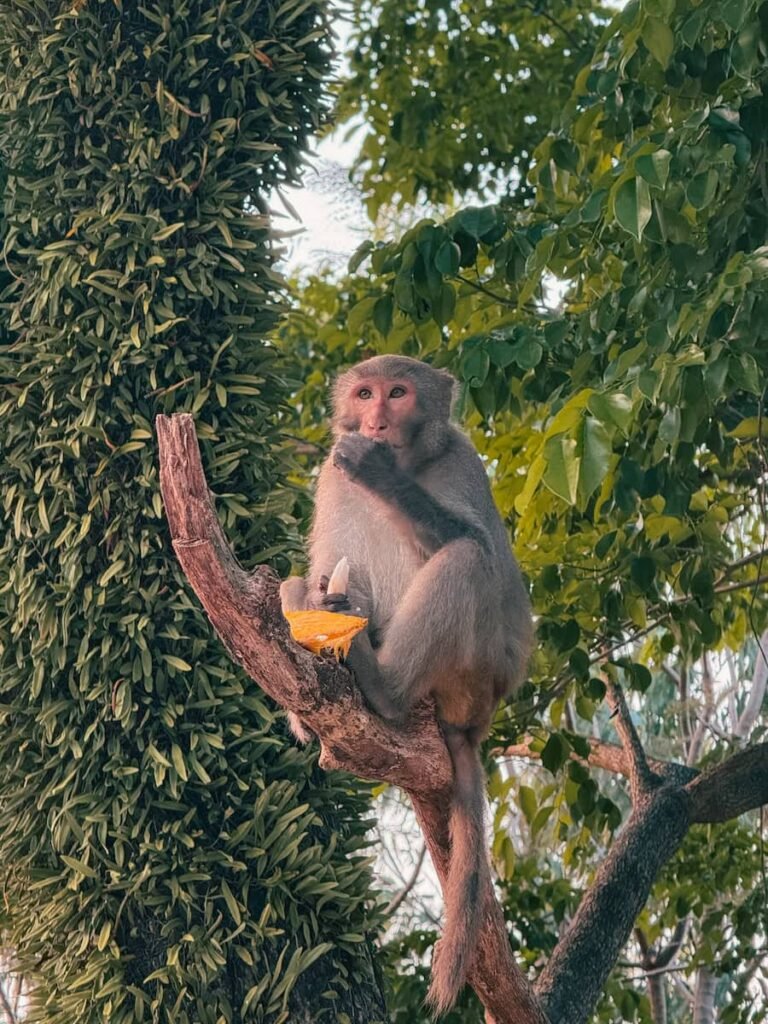
If you have more time, continue farther around the peninsula to take in some of the coastal viewpoints before heading back to your hotel to collect your luggage.
From there, head to Da Nang International Airport for your flight home. The airport is conveniently close to central Da Nang, which is one of the reasons I like saving Da Nang for the final stop on this itinerary.
If your flight leaves early in the morning, simply skip Son Tra Peninsula and head straight to the airport.
Google Maps Pins
Here’s a map of the places mentioned in this blog post!
Final Thoughts on This 2 Week Vietnam Itinerary
Two weeks might sound like a long time to spend in just Northern and Central Vietnam, but after taking this trip, I’m glad I didn’t try to squeeze the entire country into one itinerary.
There is already so much variety along this route. You’ll experience the energy and incredible food of Hanoi, the limestone landscapes of Ninh Binh and Ha Long Bay, the rice terraces and mountains of Sapa, the lantern filled streets of Hoi An, and finally the beaches and coastline around Da Nang.
And even with two weeks, I never felt like we had too much time. If anything, there were places like Ninh Binh where I wished we had slowed down even more.
My actual trip was slightly more condensed than the itinerary I’ve shared here, but if I were planning it again, this is the route I would follow.
And if you only have 10 to 12 days, you don’t have to give up on the entire itinerary. Make Ninh Binh a day trip from Hanoi, shorten Sapa, or choose between Hoi An and Da Nang as a single base.
I hope this guide helps you plan an incredible trip to Vietnam!
Check Out My Other Posts on Vietnam
-
The Best 2 Week Northern & Central Vietnam Itinerary
-
11 Best Things to Do in Sapa, Vietnam: The Ultimate Sapa Guide
-
18 Best Things to Do in Hoi An Vietnam: The Ultimate Guide