
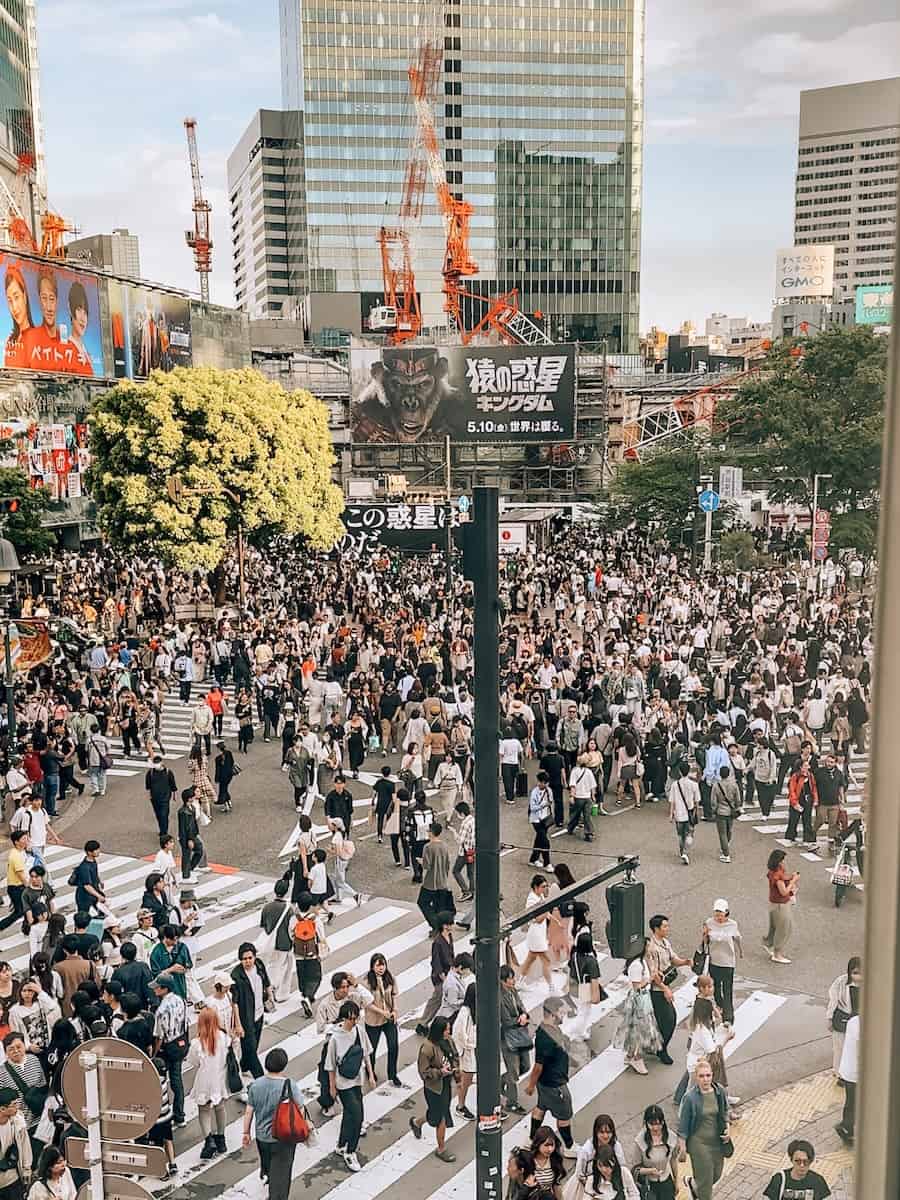
Where to Stay in Tokyo: 5 Best Areas and Hotels
Tokyo is one of my favorite cities, and I’ve already visited 3 times in the last 2 years. It’s a massive city, so choosing where to stay can feel quite overwhelming. Given its size, each neighborhood has a completely different personality, and where you stay can change how you experience the city.
In honesty, there is no terrible areas to stay in Tokyo because the city is incredibly well connected. However, depending on your itinerary and interests, there may be better areas to stay in.
Now, Tokyo is huge. There are dozens of different neighborhoods and if we were to cover every Tokyo neighborhood, this post would never end. In this guide I’ve narrowed it down to 6 different areas to stay in Tokyo. For each one, I break down the pros and cons and share my top hotel picks across different budgets. Whether this is your first trip to Japan or a return visit, this guide will help you decide on the best home base for your stay in Tokyo.
Don’t forget to read my Tokyo Travel Guide and 5-day Tokyo itinerary if you need help planning your trip after choosing a base!
This post contains affiliate links. If you make a purchase using one of these links, I may receive compensation at no extra cost to you. Thank you for supporting my business so I can create content like this for you!
Tokyo Neighborhoods at a Glance
If you are short on time, here is a quick overview before we dive deeper.
Shinjuku is best for nightlife and transport connections to rest of Japan
Shibuya is best for trendy vibes, shopping, and younger travelers
Ginza is best for luxury shopping and upscale hotels
Tokyo Station and Marununouchi are best for convenience and easy airport access
Asakusa is best for traditional atmosphere and budget friendly stays
Ueno is best for budget travelers, families and easy access to Narita Airport
Since Ginza and Tokyo Station are so close to each other, I’ll be combining it in this guide.
Tips About Selecting a Hotel in Tokyo
1. Select a hotel that is close to a subway station
Public transport in Tokyo is incredible. You’ll want to pick up this unlimited metro pass since you’ll most likely be moving on the subway throughout your trip. Most booking sites will tell you how close a hotel is from the nearest subway station. I aim for hotels less than 500 meters (0.3 miles) from the subway station for convenience. You can also use Google Maps to map out how long it will take to walk to the station from the hotel, and ideally under 10 minutes is the best.
Wondering if you’ll need a JR pass for traveling in Japan? Read my recommendations on transportation in Japan here.
2. Stay close to the Yamanote line
The JR Yamanote line is a circular line that includes many major train stations of Tokyo.
3. Review room size before booking
Japanese hotels, especially Tokyo hotels in Central Tokyo tend to be small. Very small. Some of the more budget friendly hotels will seem really cheap at first, but you realize its barely enough room to fit your suitcase into the room (forget opening that suitcase…). I usually try to book at least 20 sq meters (215 sq ft) for a comfortable stay, especially if I’m spending more than a night.
4. Look to see if a hotel has a konbini nearby
Konbini are convenience stores, mainly 7-11, Family Mart and Lawson. I always stop by a konbini to get drinks and snacks in the evening so I like having them close to the hotel.
✦ ✦ ✦
Shinjuku
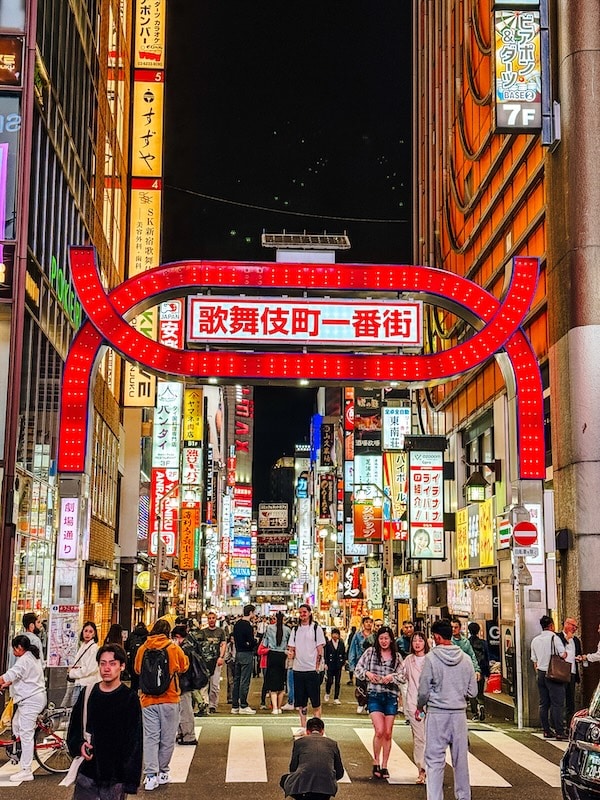
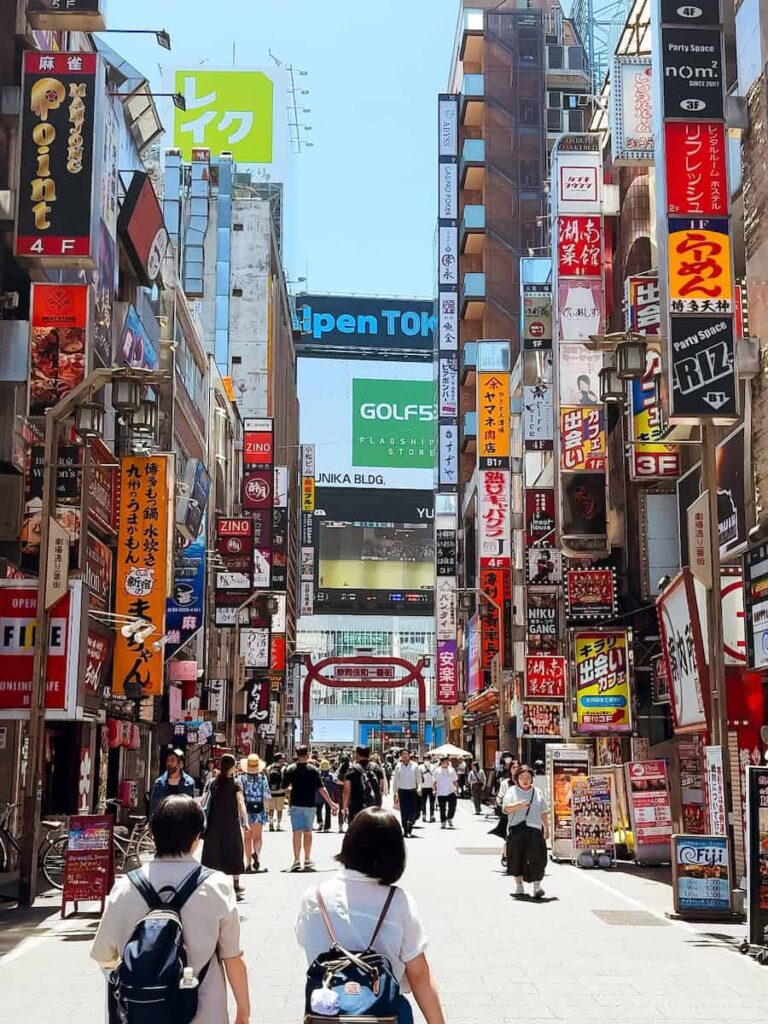
Shinjuku is one of the most popular areas to stay in Tokyo and for good reason. It is home to Shinjuku Station, the busiest train station in the world, which means unbeatable transportation access to almost anywhere in Tokyo and beyond in Japan.
This area is lively, energetic, and buzzing at all hours. You will find neon lights, restaurants, bars, shopping, and endless food options. While it can feel a bit chaotic, the convenience is unmatched.
From Narita Airport:
- Direct on Narita Express (NEX) train.
- Direct by limousine bus.
From Haneda Airport:
- No direct train. Take the Keikyu line to Shinagawa Station and transfer to Yamanote line to Shinjuku.
- Direct by limousine bus. This is what I would recommend if you’re staying in Shinjuku. There are several stops so find what’s closest to your hotel. There’s a separate luggage compartment on the bottom of the bus, so this is super convenient.
You can also book a private transfer but taxis and private rides in Japan are not cheap, so expect to pay a hefty premium (would recommend this option if you have a larger family).
Shinjuku Pros:
- Incredible transport connections
- Great food and nightlife
Shinjuku Cons:
- Feels busy and can be overwhelming
- Certain areas like Kabukicho (entertainment district) not recommended with children
- Expensive
Best Hotels in Shinjuku
$ Hotel Sunroute Plaza Shinjuku
$$ JR Kyushu Hotel Blossom Shinjuku
$$ Hotel Groove Shinjuku
$$$ Hilton Tokyo
$$$ Kimpton Shinjuku Tokyo
$$$ Park Hyatt Tokyo
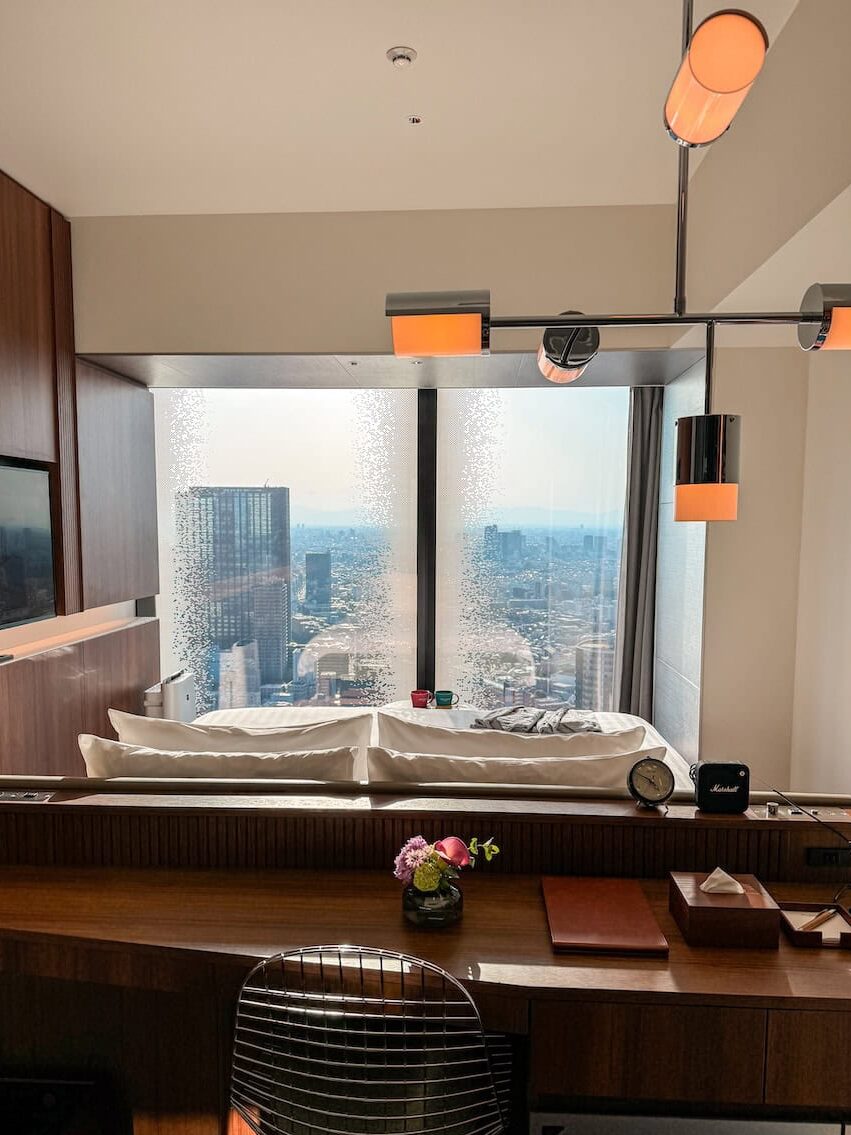
Hotel Groove Shinjuku
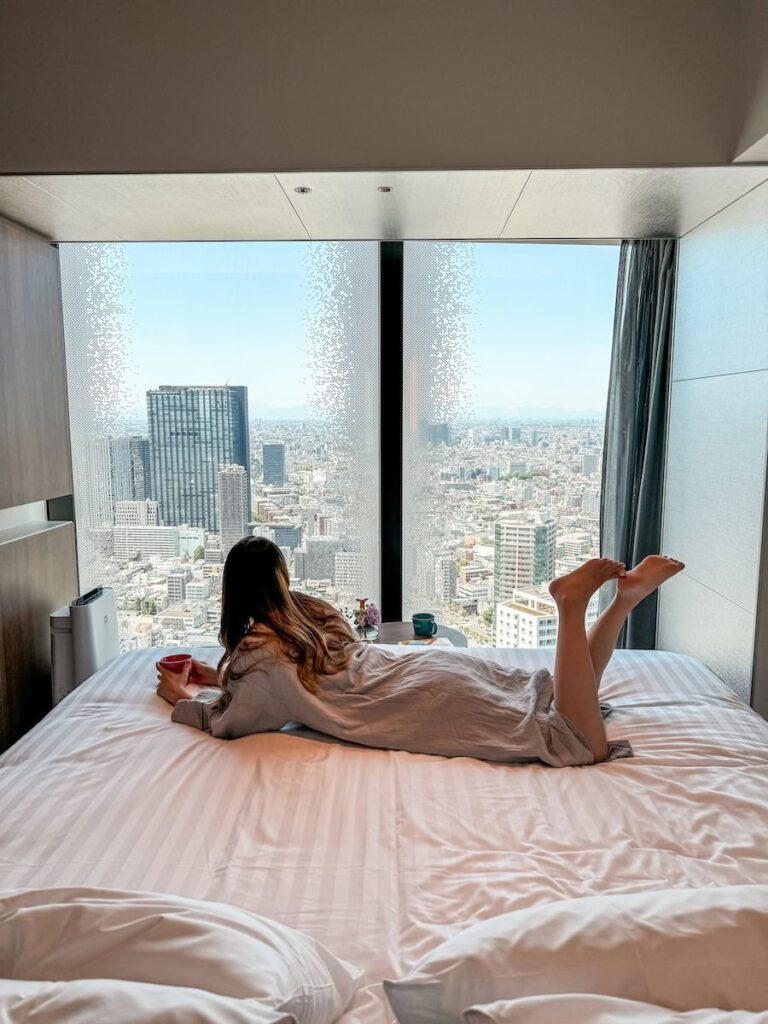
We stayed here on our first trip to Tokyo, not too long after the hotel opened in 2023. It’s located in Tokyo Kabukicho Tower, which is a stop for the limousine bus from the airports. Can’t get any more convenient, honestly! It had the easiest access to the airports than all of the other hotels we’ve stayed in.
The hotel is situated on floors 20-38 of the tower, so despite the chaos going on below in Kabukicho, it felt peaceful once you were in the hotel. It’s a modern hotel with large windows with incredible city views of Tokyo, and even though the hotel itself was lovely, I probably wouldn’t stay here with kids just given that it’s in Kabukicho. No kids though? Highly recommend it here!
Top things to do in Shinjuku
Department stores – Isetan, Takashiyama, Keio, Lumine
Shinjuku Gyoen National Garden – a beautiful and peaceful garden (especially for cherry blossoms)
Omoide Yokocho Memory Lane – Narrow streets with restaurants and bars
Golden Gai – alleyway lined with bars
Hanazono Shrine – Shinto Shrine
Giant 3D Cat – a fun display
✦ ✦ ✦
Shibuya
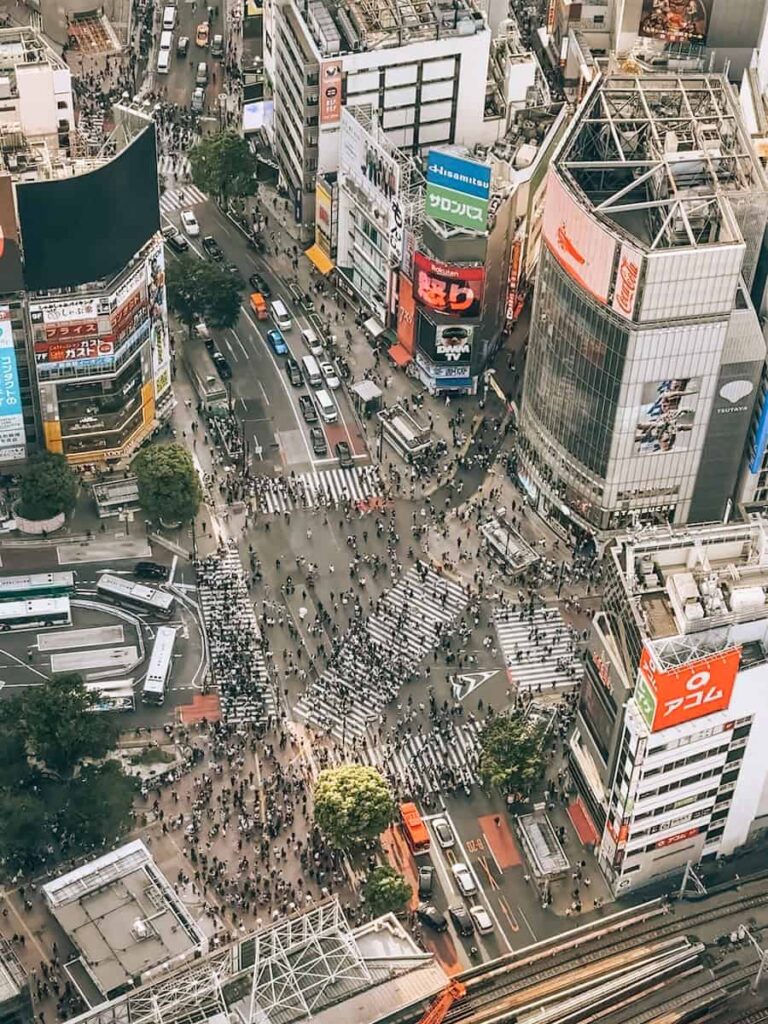
Shibuya is one of Tokyo’s most recognizable neighborhoods, famous for the Shibuya Crossing. The area feels youthful and stylish. If you love shopping, cafes, and great food, Shibuya is a fantastic base.
It is also very walkable and well connected, though slightly less central than Shinjuku for long distance train routes.
From Narita Airport:
- Direct on Narita Express (NEX) train.
- Direct by limousine bus.
From Haneda Airport:
- No direct train. Take the Keikyu line to Shinagawa Station and transfer to Yamanote line to Shibuya Station.
- Or take Monorail to Hamamatsucho Station and transfer to Yamanote line to Shibuya.
- Direct by limousine bus. This is also what I would recommend if you’re staying in Shibuya. There’s a separate luggage compartment on the bottom of the bus, so this is super convenient.
Shibuya Pros:
- Trendy and lively atmosphere
- Great shopping and dining
- Very walkable
Shibuya Cons:
- Busy and crowded
- Hotels are also pricey here
Best Hotels in Shibuya
$ JR East Hotel Mets Shibuya
$$ sequence MIYASHITA Park Shibuya
$$ Hotel Indigo Tokyo Shibuya
$$$ Hyatt House Tokyo Shibuya
$$$ Cerulean Tower Tokyu Hotel
Top things to do in Shibuya (Including Harajuku and Omotesando)
- Shibuya Scramble Crossing – the world’s busiest intersection
- Shibuya Sky – an open deck observatory with 360 degree panoramic views of Tokyo and beyond
- Takeshita Street – busy street in Harajuku
- Cat Street – an upscale shopping street
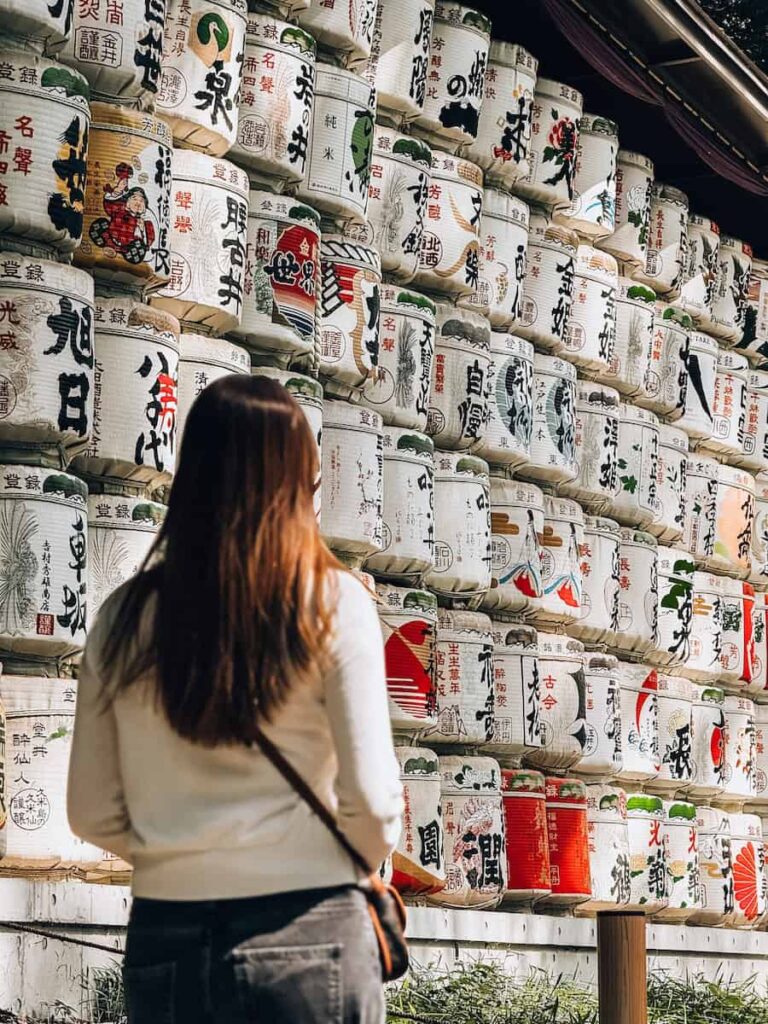
- Meiji Jingu Shrine – a shrine in a peaceful setting. Don’t miss the sake barrels.
- Miyashita Park – a modern complex with a rooftop park, cafes, and shops.
- Nonbei Yokocho – a narrow, nostalgic alleyway filled with tiny bars and yakitori spots.
✦ ✦ ✦
Ginza & Tokyo Station
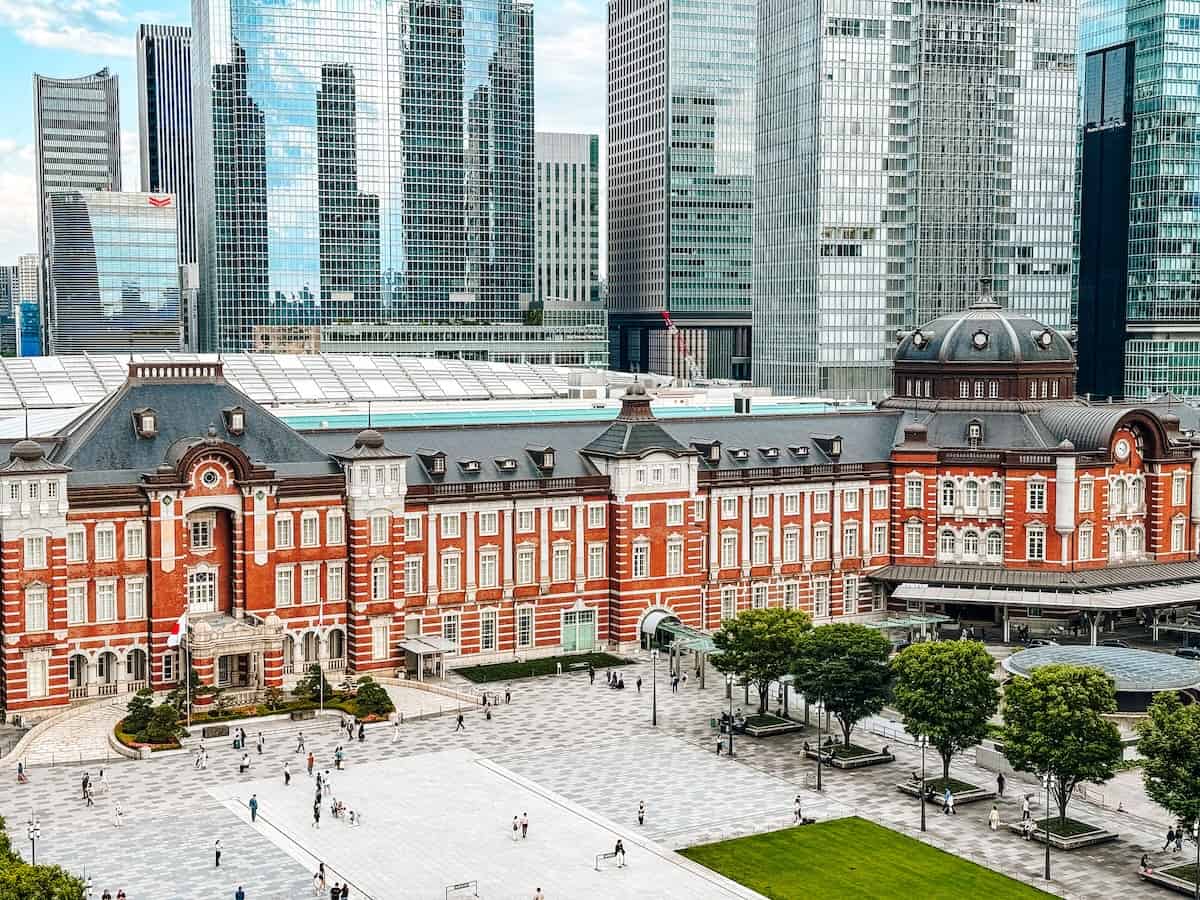
Ginza is Tokyo’s luxury district, known for high end shopping, elegant streets, and refined dining. It feels more polished and calm compared to Shinjuku or Shibuya. This is my personal favorite area to stay in. If you enjoy luxury hotels, designer shopping, and a quieter base, Ginza is an excellent choice.
I’ve combined Ginza and Tokyo Station in this guide because they are so close to each other. You can walk from one station to the other in 15 minutes.
From Narita Airport:
- Direct on Narita Express (NEX) train to Tokyo Station
- Direct by limousine bus to both Ginza and Tokyo Station.
From Haneda Airport:
- No direct train to Tokyo Station. Take Monorail to Hamamatsucho Station and transfer to Yamanote line or Keihin-tohoku line for Tokyo Station.
- For Ginza, you can take a direct train from Haneda to Higashi-Ginza Station on Keikyu airport line.
- Unfortunately the limousine bus from Haneda to Ginza has been suspended.
Ginza/Tokyo Station Pros
- Luxury atmosphere
- Beautiful streets and architecture
- Central location
- Less chaotic compared to Shinjuku and Shibuya
Ginza/Tokyo Station Cons
- More expensive
- Less nightlife compared to Shinjuku
- No airport limousine from Haneda Airport
Best Hotels in Ginza
$ Mitsui Garden Hotel Ginza Gochome
$$ The Gate Hotel Tokyo by Hulic
$$ MUJI Hotel Ginza
$$ Hotel The Celestine Ginza
$$$ Tokyo EDITION
$$$ Hyatt Centric Ginza
Best Hotels at Tokyo Station
$ Remm Tokyo Kyobashi
$$ Karaksa Hotel Tokyo Station
$$ Mitsui Garden Hotel Nihonbashi Premier
$$$ The Tokyo Station Hotel
$$$ Mandarin Oriental Tokyo
$$$ Four Seasons Hotel Tokyo at Otemachi
Hyatt Centric Ginza
Absolutely love this hotel! I think I had the best hotel breakfast EVER at this place. Many Japanese hotels provide you with pajamas, and I remember their pajamas were so soft and comfy here. All the major shops were within easy walking distance from the hotel, and Tsukiji Outer Market was just 15 minutes by walking so we were able to get there early to beat the crowds. Read my full review here.
Top things to do in Ginza & Tokyo Station
- Tokyo Station – a historic red-brick facade station
- Shopping – Ginza Six, flagship stores of Uniqlo, GU, Muji
- Tsukiji Fish Market – sample delicious fresh seafoood at this outdoor market
- Imperial Palace – main residence of the emperor of Japan
✦ ✦ ✦
Asakusa
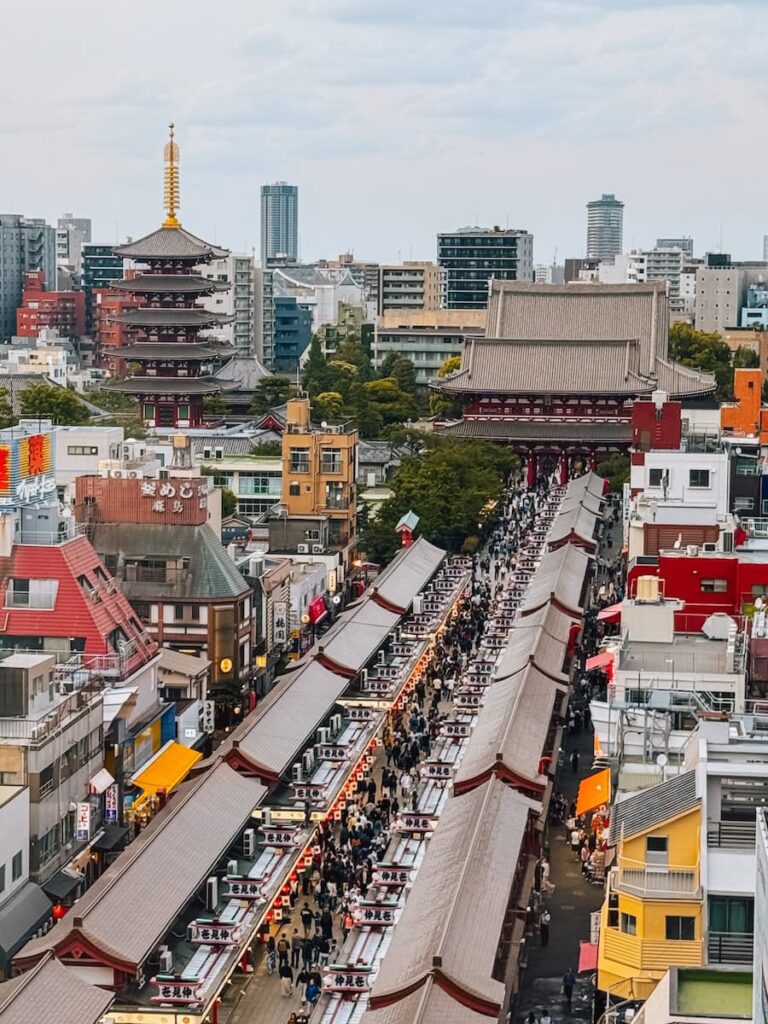
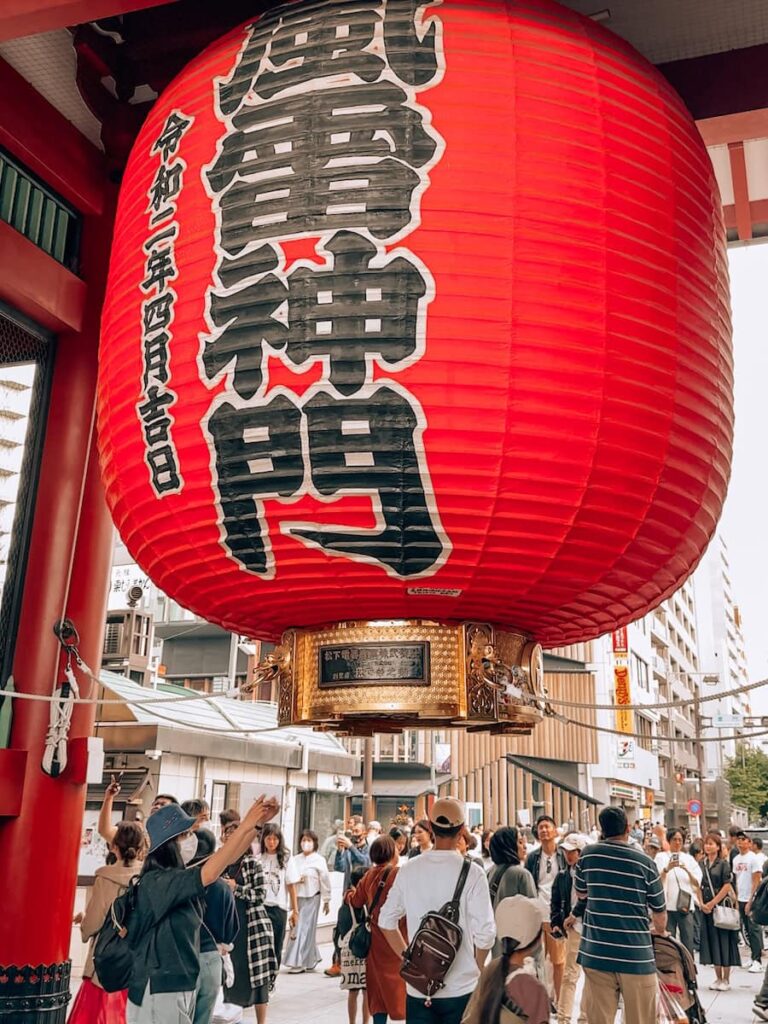
Asakusa offers a glimpse into old Tokyo with its traditional streets and temples. It is home to Sensoji, Tokyo’s oldest temple.
This area is also one of the best for budget accommodations and offers easy access to the Ginza Line. Do note that it is further out from major attractions, so you’ll likely have to add a bit of travel time each day.
This would not be my choice for a first visit given how far it is, but if it’s your second or third time and you don’t need to stay in the center of it all, this would be a great place to base yourself as the transportation in Tokyo is amazing and will get you anywhere.
From Narita Airport:
- Direct on Keisei Narita Skyaccess to Asakusa Station
From Haneda Airport:
- Direct train on Keikyu airport line.
- The airport limousine bus stops at Asakusa View Hotel so if your hotel is close by, this could work.
Asakusa Pros
- Traditional atmosphere
- More affordable hotels
- Less hectic
Asakasa Cons
- Farther from nightlife hubs
- Quieter in the evening
Top things to do in Asakusa
- Sensoji Temple – the oldest temple in Tokyo
- Nakamise street – street in front of Sensoji that’s lined with food and gift stalls
- Asakusa Culture & Visitor Center – a free observatory to see Nakamise street and Sensoji Temple
- Tokyo Skytree – this observatory / tower is not exactly IN Asakusa, but close by.
✦ ✦ ✦
Ueno
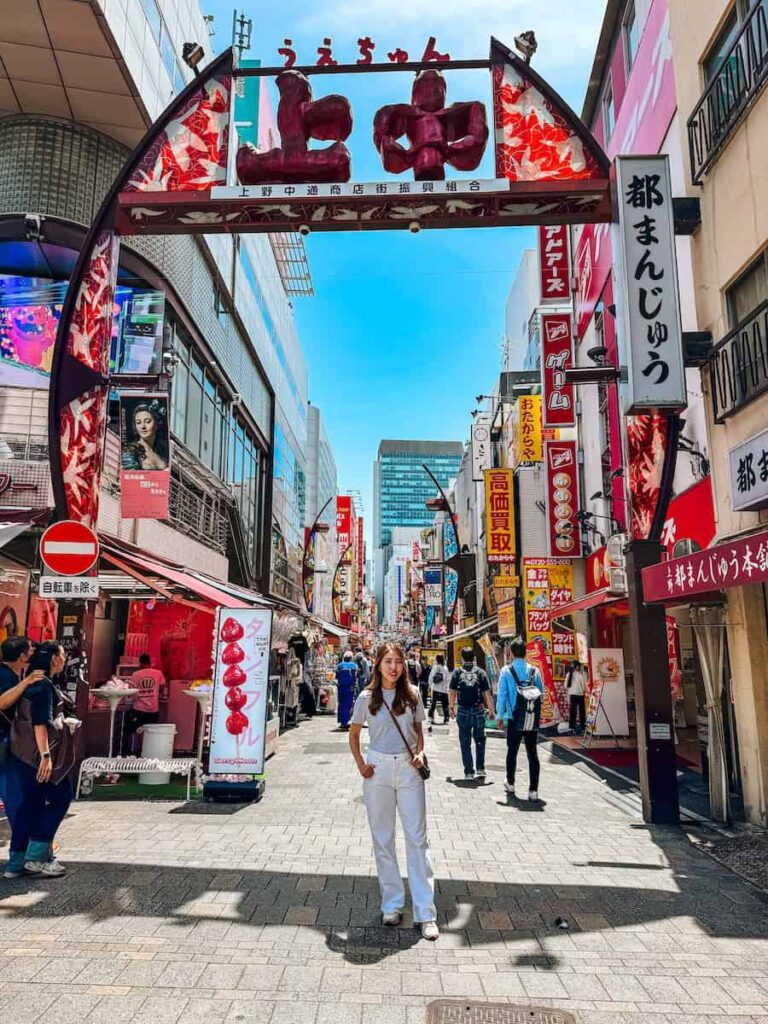
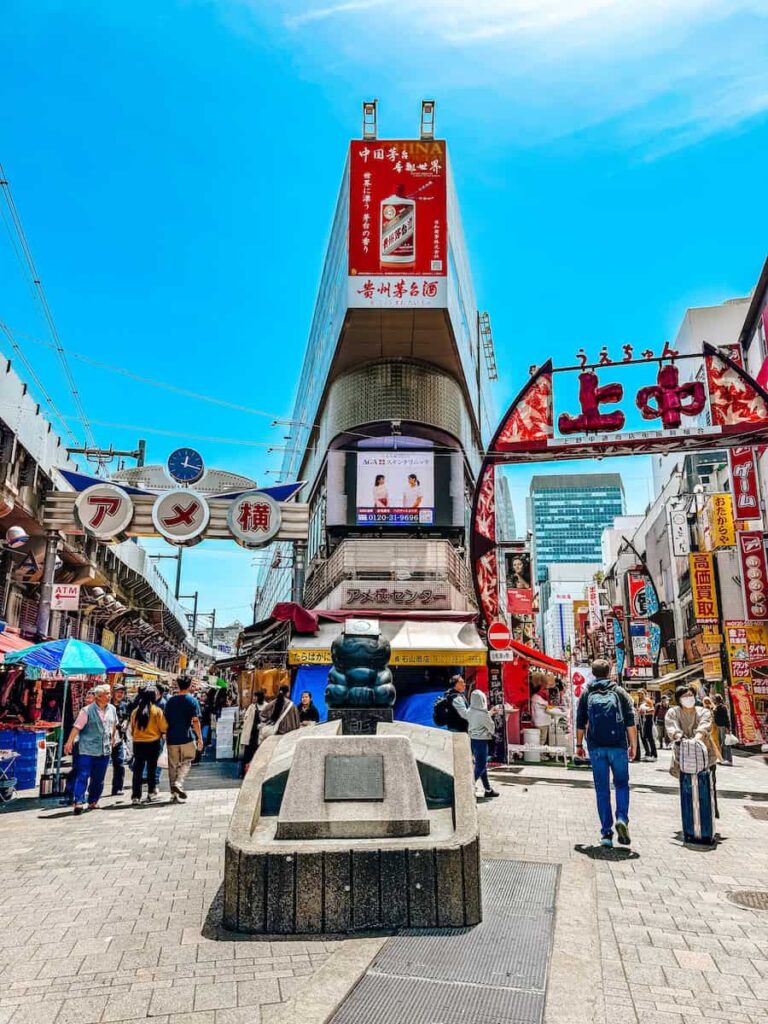
Ueno is an underrated area to stay in Tokyo, especially if you are arriving from or departing to Narita Airport.
The Keisei Skyliner stops at Ueno Station, making airport transfers fast and simple with no complicated connections.
The area has a more local and laid back feel compared to Shinjuku or Shibuya. Ueno Park is home to several major museums, a zoo, and beautiful walking paths.
Just outside the station, Ameyoko Market offers street food, casual shopping, and a lively atmosphere that feels very old school Tokyo.
Ueno is also one of the best areas if you’re looking for a hotel with a reasonable price that still offer excellent convenience.
From Narita Airport:
- Direct by Skyliner.
From Haneda Airport:
- No direct train to Tokyo Station. Take Monorail to Hamamatsucho Station and transfer to Yamanote line or Keihin-Tohoku line for Ueno Station.
Ueno Pros
- Easy Narita Airport access
- More affordable hotels
- Museums and large park nearby
- Great casual food options
Ueno Cons
- Less nightlife
- More local and less polished vibe
Best Hotels in Ueno
$ Hotel Sardonyx Ueno
$$ Mitsui Garden Hotel Tokyo
$$ Hotel Resol Ueno
$$$ &here Tokyo Ueno
$$$ Mimaru Tokyo Ueno Inaricho – good for large families
Top Things to do in Ueno
- Ameyoko market – a vibrant local market
- Ueno Park – a free-entry park known for cherry blossoms and museums on its ground
- Ueno Zoo – Japan’s oldest zoo, famous for its giant pandas
- Tokyo National Museum – Japan’s oldest museum with Japanese art and artifacts
✦ ✦ ✦
Where to Stay in Tokyo Based on Your Travel Style
If you are still deciding where to stay, this section breaks it down by travel style. While Tokyo’s transport system makes it easy to get around from almost anywhere, choosing the right neighborhood can make your trip feel smoother and more enjoyable.
Best Areas for First Time Visitors
For first time visitors, Shinjuku or Shibuya are the easiest and most convenient areas to stay.
Both neighborhoods are extremely well connected and place you right in the middle of Tokyo’s energy. Shinjuku offers the best overall transport connections, making it ideal if you plan to take day trips like Mount Fuji or travel onward to other cities in Japan. Shibuya is slightly more compact and walkable, with great shopping, cafes, and a lively atmosphere.
If you want to be surrounded by restaurants, shops, and major train lines, either of these areas is a solid choice for your first trip.
Best Areas for Luxury Travelers
If you prefer a calmer base with upscale hotels and dining, Ginza and the Tokyo Station area are excellent choices.
This area feels polished and elegant, especially in the evenings, and is home to many of Tokyo’s top luxury hotels. You are centrally located and within walking distance of high end shopping and excellent restaurants, while avoiding the crowds and chaos of areas like Shinjuku. This is a great option if you enjoy returning to a quieter hotel after full sightseeing days. And did I mention this was my favorite part of town to stay in?
Best Areas for Budget Travelers
For travelers looking to keep hotel costs down without sacrificing convenience, Ueno and Asakusa offer some of the best value.
Ueno is especially practical if you are arriving from or departing to Narita Airport, as it is directly connected by Keisei Skyliner. It also offers plenty of affordable hotels with easy access to museums, parks, and casual dining.
Asakusa has a more traditional atmosphere and often even more budget friendly options. While it is slightly farther from central attractions, transport connections are still very reliable.
Best Areas for Families
For families, convenience and room size tend to matter more than nightlife. Ueno and the Tokyo Station area are both family friendly options.
Ueno is close to parks, museums, and attractions that work well for kids, and often has larger room options at more reasonable prices. The Tokyo Station area is clean, safe, and extremely convenient, especially if you are traveling with luggage or moving between cities.
Best Areas for Nightlife
If nightlife, bars, and late nights are a priority, Shinjuku and Shibuya are the best places to stay.
Shinjuku is known for its lively entertainment districts and endless dining options, while Shibuya has a trendier nightlife scene with stylish bars and clubs. Staying in either area makes it easy to walk back to your hotel late at night.
✦ ✦ ✦
Frequently Asked Questions About Where to Stay in Tokyo
What is the best area to stay in Tokyo for first time visitors?
For first time visitors, Shinjuku and Shibuya are the easiest areas to stay. Both are extremely well connected and have endless dining, shopping, and transportation options. Shinjuku is best for transport connections. If you don’t like the noise and chaos, look at Ginza.
Is Tokyo Station a good place to stay?
Yes, Tokyo Station is an excellent place to stay, especially if you plan to take the Shinkansen or travel to other cities in Japan. The area is very convenient, clean, and central, with easy access to both Haneda and Narita airports. It is quieter at night compared to Shinjuku or Shibuya, which many travelers prefer.
Is Ginza worth staying in even though it is expensive?
If your budget allows, Ginza is absolutely worth considering. It offers some of the best hotels in Tokyo, a polished atmosphere, and a central location. It is ideal if you enjoy luxury shopping, refined dining, and a calmer base after busy sightseeing days.
Are hotels in Tokyo really that small?
Yes, many hotels in Tokyo have smaller room sizes, especially budget and business hotels. Always check the room size before booking. I recommend looking for rooms that are at least 20 square meters for a comfortable stay, especially if you are traveling with luggage or staying more than one night.
Is it better to stay near a JR station or a subway station?
Both work well, but staying near a subway station, especially along the Yamanote Line, is ideal for most visitors. The Yamanote Line connects many of Tokyo’s major neighborhoods and makes getting around very straightforward. Being close to any subway station within a short walking distance is also perfectly fine.
Is Ueno a good area to stay in Tokyo?
Yes, Ueno is a great option, particularly for budget travelers and those flying in or out of Narita Airport. The Keisei Skyliner makes airport transfers easy, and the area offers affordable hotels, museums, parks, and casual dining. It has a more local feel compared to Shinjuku or Shibuya.
How many nights should I stay in Tokyo?
For a first visit, I recommend at least four to five nights in Tokyo. This gives you enough time to explore multiple neighborhoods without rushing, while also allowing for a day trip or slower sightseeing days. Check out my 5 day itinerary here.
Final Thoughts
Choosing where to stay in Tokyo can feel overwhelming at first, but the good news is that there truly is no wrong choice. Tokyo’s public transportation system is one of the best in the world, making it easy to explore the city no matter where you base yourself.
The key is to match your neighborhood to your travel style. If it is your first visit and you want to be in the middle of the action, Shinjuku or Shibuya are excellent options. For a more refined and relaxed stay, Ginza and the Tokyo Station area offer beautiful hotels and a central location. Travelers looking for better value will find great options in Ueno and Asakusa, especially if budget or airport access is a priority.
No matter which area you choose, Tokyo is a city you will likely want to return to again and again (like me!). Each neighborhood offers a different perspective, and staying in a new area on each visit is part of what makes Tokyo so exciting.
Once you have chosen your home base, do not forget to read my 5 day Tokyo itinerary to help you plan what to see, where to eat, and how to make the most of your time in the city.
Check Out My Other Japan Posts Here:
-
Where to Stay in Tokyo: 5 Best Areas and Hotels
-
The Ultimate 5 Day Tokyo Itinerary: Best Guide for First Timers
-
Complete Japan Train Travel Guide: Costs, Passes, and How to Book
-
Best Things to do in Budapest in Winter: A Complete Guide
-
The Best 4 to 5 Day Seoul Itinerary: Ultimate Guide for First-Timers
-
Valldemossa Travel Guide: The Most Magical Village in Mallorca
-
Hotel Review: Hyatt Centric Ginza Tokyo (Japan)
-
How to get from Tokyo to Lake Kawaguchiko for Mount Fuji
-
The Perfect 3 Day Kyoto Itinerary: Ultimate Guide for Best Time in Japan
-
Tokyo Travel Guide – Best Things to do in Tokyo


One Comment