
The Perfect 3 Day Kyoto Itinerary: Ultimate Guide for Best Time in Japan
Kyoto is one of my favorite places to visit in Japan. It feels timeless, filled with centuries old temples, peaceful gardens, lantern lit alleyways, and traditional wooden houses that make it so different from the buzzing modern Tokyo.
As the former imperial capital for more than a thousand years, Kyoto is home to an incredible number of historic sites. In fact, there are over 1,600 temples and 400 shrines scattered throughout the city. With so many places to visit, planning a trip can quickly start to feel overwhelming, especially if it is your first time.
One of the most common mistakes travelers make in Kyoto is trying to visit too many places in a short amount of time. Because many of the city’s most famous sights are spread across different districts, poor planning can easily lead to long travel times and a lot of unnecessary zigzagging across the city.
With only a few days in Kyoto, having a well organized plan that groups nearby attractions makes all the difference.
This 3 day Kyoto itinerary is designed to help you experience the city’s most beautiful temples, historic streets, and scenic neighborhoods in a logical way by grouping attractions that are close to each other. It’s a balanced itinerary that allows you to see Kyoto’s highlights while still leaving room to slow down and enjoy the atmosphere that makes the city so special.
This post contains affiliate links. If you make a purchase using one of these links, I may receive compensation at no extra cost to you. Thank you for supporting my business so I can create content like this for you!
Things to Know Before Going to Kyoto
Kyoto is not as large as Tokyo, but it doesn’t make it a small city by any means. Just like Tokyo, public transportation is easy to use and the city is well connected.
The best way to see Kyoto, is by geographical regions. This 3 day itinerary for Kyoto will be based on grouping closer attractions together, to maximize efficiency and to conserve energy.
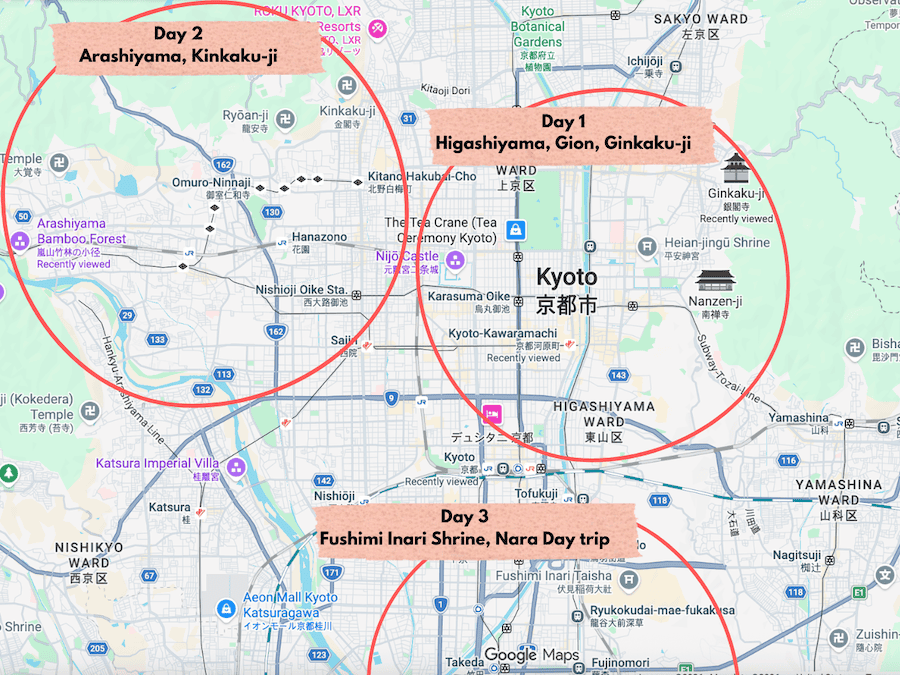
Before you head to Kyoto, you’ll want to read my Kyoto Travel Guide. This has a list of best things to do in the city, and best places to stay at.
Some things to prepare yourself with prior to the trip are:
- Google Maps – the app works really well in Japan, with accurate train and bus schedules and directions.
- Kyoto City Subway and Bus 1 Day Ticket – read my guide here for general tips on traveling Japan by train first to familiarize yourself with the general transportation system. Public transportation in Kyoto is easy and convenient. This Kyoto unlimited bus and subway pass costs $7.75 a day. One way bus tickets are about $1.45 USD, and I don’t think this pass saves you that much money but for days that involve more movement throughout the city, consider getting it.
- Kansai Pass – this is a regional rail pass that includes nearby places like Osaka, Kobe and Nara. If you plan on visiting these cities, I would recommend this rail pass.
- e-sim – you’ll need to stay connected with data in Japan. Trust me, you’ll need it for finding directions and searching things all the time. I recommend this one.
- Cash – Japan is becoming more and more credit card friendly, but some places (for example some street food vendors and restaurants) still only accept cash. Make sure to exchange some currency. If you are in Japan, use the ATMs at 7-11 as they have the best rates.
- IC Card – these are rechargeable transportation cards that you can use to pay for subways, buses, and even at convenience stores. iPhone users can simply download it on their Wallet app and reload with a credit card on file, and tap your phone to pay. Suica, Icoca and Pasmo are 3 different types, but they all basically have the same function.
- Klook – I love using Klook for my hotels, transportation and activities in Japan. You can use my code MINYWANDER for 10% off your total (10% for new customers and 3% for returning – I recommend maximizing your first purchase for the biggest discount!)
How To Get Around in Kyoto
Public transportation is efficient and easy in Japan. Use Google Maps to figure out what mode of transportation options there are, and then use an IC card (Suica, Pasmo or Icoca) on your phone (if you have an iPhone you can add to your wallet) or the physical card to pay for trains, subways, buses or taxis. Read my article on Japan’s Transportation Guide for an in-depth understanding of how the transportation system in Japan works.
✦✦✦
Where To Stay For 3 Days in Kyoto
My favorite area to stay in Kyoto is around Gion District, Kawaramachi Station, or Sanjo Station. Kyoto has a great transportation system like the rest of Japan so you’ll never have trouble getting anywhere regardless of where you stay, but the areas mentioned above are close to major attractions and subway stations. If you want a detailed guide, read my Where to Stay in Kyoto Guide (Coming soon ***).
Tips for Kyoto Hotels:
🧳 If you stay in more than 1 hotel, ship your luggage from one hotel to the next (ask your hotel front desk and it usually takes 1 day) instead of lugging it around on subway or having to use expensive taxis. We sent our large luggage from Tokyo to Kyoto the night before travel and it was the best decision ever!
🛏️ Japanese hotel rooms tend to be small. Make sure to check room size when you’re booking.
How to Get to Kyoto
✈️ Fly into KIX (Kansai International Airport) and take the Haruka express train, or the airport limousine bus, both direct to Kyoto Station.
🚅 From other major cities in Japan like Tokyo, take the Shinkansen (bullet train) to Kyoto Station.
A Note About This Itinerary
This itinerary requires 3 full days, so we will assume you’ve arrived the day prior. It is also a pretty packed itinerary, so if you want to take it slow, you can modify the pace.
✦ ✦ ✦
Day 1: Higashiyama, Gion, Downtown Kyoto
Morning: Higashiyama & Kiyomizu-dera
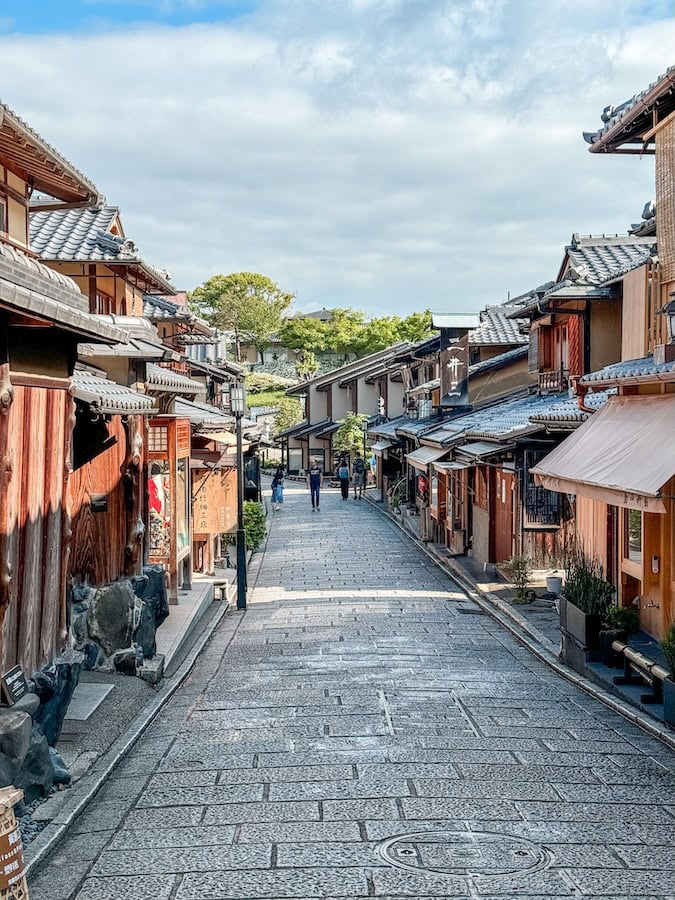
When you think of Kyoto, you’re probably imagining historic temples, traditional wooden buildings, and historic atmosphere. You’ll find all of this in the Higashiyama district. Located on the eastern side of Kyoto, walking through the narrow stone lanes and lantern lit paths of this historic district will feel like stepping back in time.
However, it’s also one of the most crowded places in Kyoto. This is why I recommend starting here in early morning, before the morning crowds arrive.
Start at Ninenzaka & Sannenzaka, which are pedestrian streets lined with historic wooden buildings, shops and teahouses. You can take a bus to Higashiyama Yasui stop and walk about 8 minutes to reach Ninenzaka. Depending on where you are staying, you may be able to walk to Ninenzaka.
You can stop by some of the gift shops along the way, and there is a Starbucks that is well-known for its traditional look. I found the Starbucks to be too crowded during the day.
Walk up a short flight of stone stairs to reach Sannenzaka. If you turn to the right as soon as you go up the stairs, you’ll reach the famous photo spot with the Yasaka Pagoda in the background.
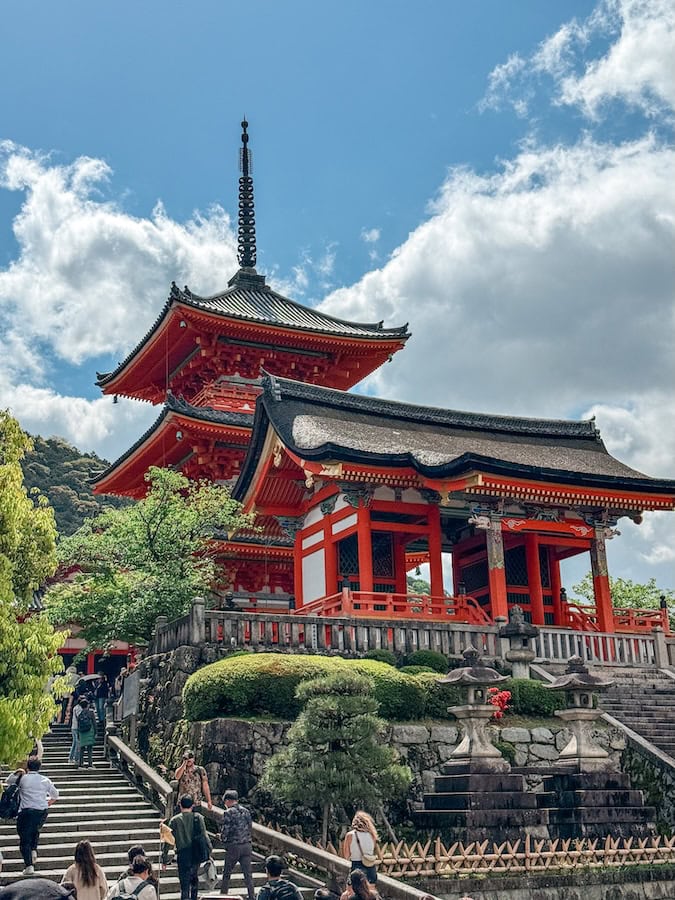
Keep walking along the Sannenzaka and turn left at the end of it, and in about 4 minutes you’ll reach the entrance of Kiyomizu-dera Temple. This is a UNESCO World Heritage Site Buddhist temple complex sits on extensive hillside grounds and consist of multiple structures, including several halls and gates. You’ll need to pay a fee of ¥500 per adult for entry.
Walk through the main red gates of Nio-mon and the most spectacular sight here is the Hondo, or main hall, which has a massive wooden stage jutting out that offers panoramic views of Kyoto. Another interesting sight is the Otowa Waterfall, or Otowa no taki. Visitors can use ladles to catch each of the three streams of pure water and pray for purification of their six senses and to make their wishes come true.
Late morning: Gion District
After touring the temple grounds of Kiyomizu-dera, walk about 15 minutes to Yasaka Shrine. You can also catch a bus for a portion of this walk if you’re getting tired. Use Google Maps for directions and buses.
Yasaka Shrine is a Shinto shrine located in the Gion district. It’s free to enter and here you’ll also find several buildings including gates, a main hall and a stage. The shrine is particularly known for its lanterns, as there are hundreds of paper lanterns surrounding the stage that get lit each night to create a mystical atmosphere. I do think that it’s worthwhile to return to this shrine at night time if you have the time and energy during your trip to see it glowing in the dark.
From Yasaka Shrine walk 5 minutes to reach Hanamikoji-dori, or Hanamikoji Street. This street is flatter unlike the hilly Ninenzaka/Sannenzaka streets, and is lined with antique wooden buildings, and machiyas which are geisha teahouses.
It would be a good idea to grab lunch now, before moving on to the next destination.
Afternoon: Northern Higashiyama
After your lunch, take a bus to Ginkakuji-michi bus stop. Use Google Maps for bus times and nearest bus stop to you.
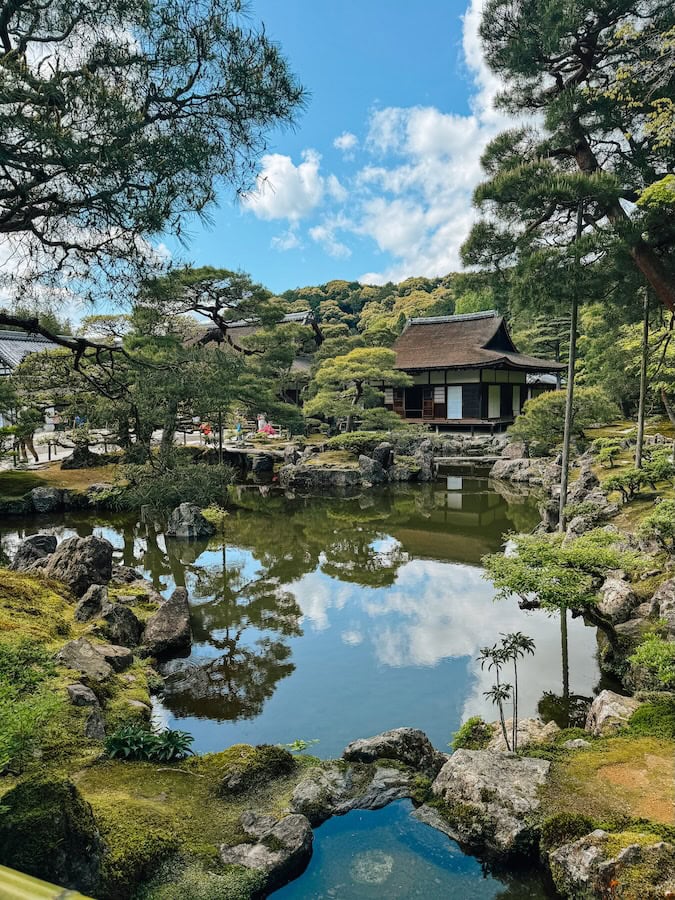
The Ginkaku-ji, or also known as the Silver Pavilion, is a Zen temple famous for its serene gardens and beautifully designed landscapes.
When I visited the entrance fee was ¥500, but as of April 2026, the fee will rise to ¥1000 (approximately $6 USD).
It takes about an hour at the most to admire the beautiful gardens at a relaxed pace.
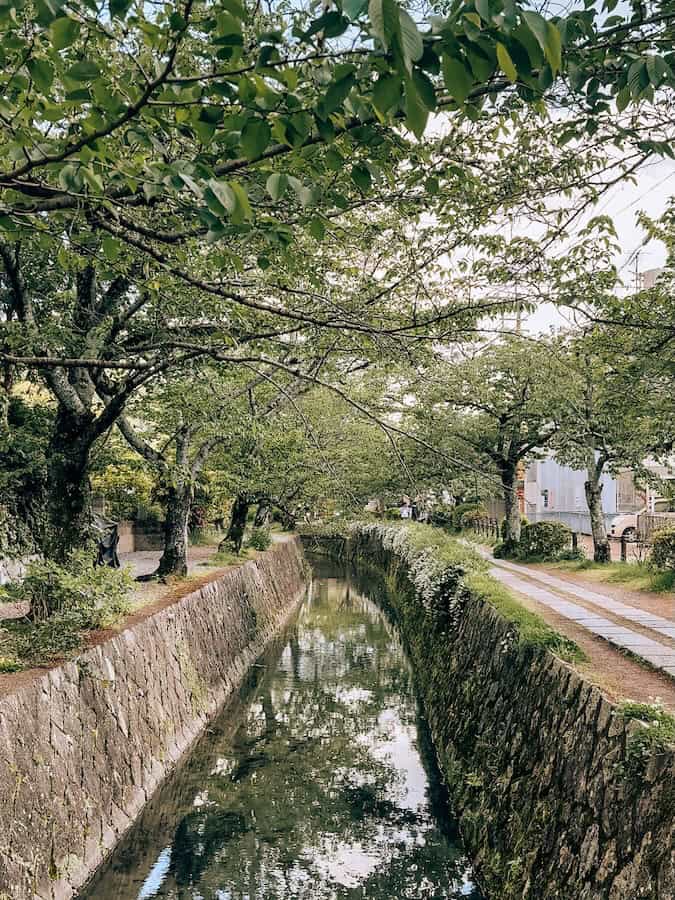
After leaving the temple, walk along the scenic Philosopher’s Path (Tetsugaku No Michi), a peaceful stone path that follows a canal lined with trees and small temples. It is especially beautiful during the spring when the pathway is surrounded by cherry blossoms. It’s not as dramatically beautiful without the cherry trees in bloom in my opinion, but you can still enjoy a pleasant walk and visit several small temples along the way.
The entire Philosopher’s Path is 2 km, or 1.2 miles, and reaches the Nanzen-ji Temple. It would take 40-60 minutes to just walk along the path, but if your’e stopping by cafes or temples, will likely take longer. We decided not to walk the entire path because we were quite tired and hungry, but you can definitely walk all the way to Nanzen-ji Temple.
Late Afternoon: Central Kyoto
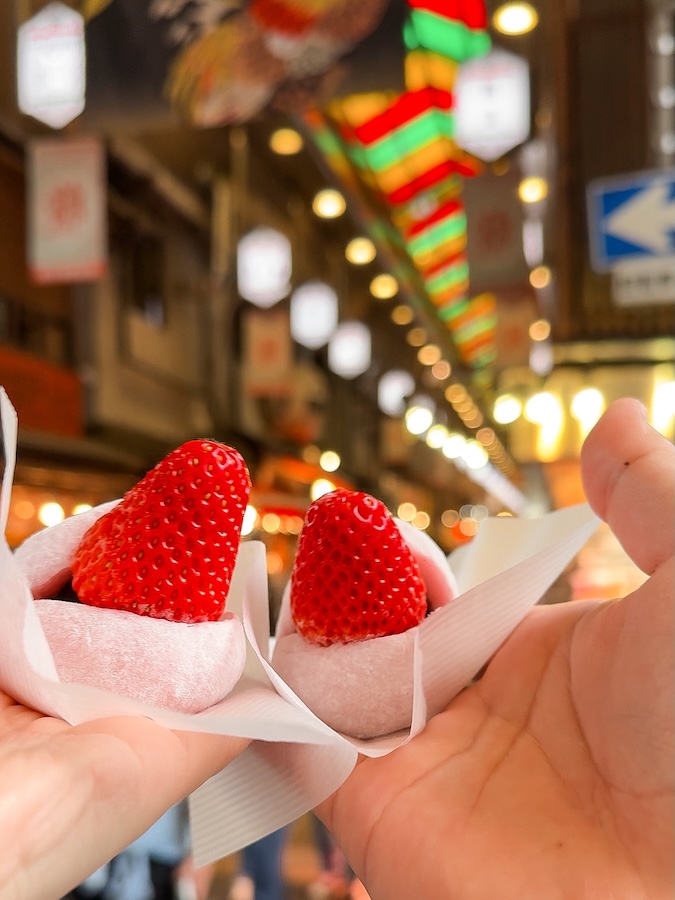
After finishing the walk, hop on a bus toward Nishiki Market, a lively covered market often called “Kyoto’s Kitchen.”
I have to admit, I didn’t find Nishiki Market to be impressive. The food was quite pricey, and I’m pretty sure you can find the same or better quality elsewhere. However, if it’s your first visit to Kyoto, I’d say check it out at least once. The market closes at 6 pm so make sure to arrive before then.
You’ve had quite a long day, but you have to check out Pontocho Alley before closing the night.
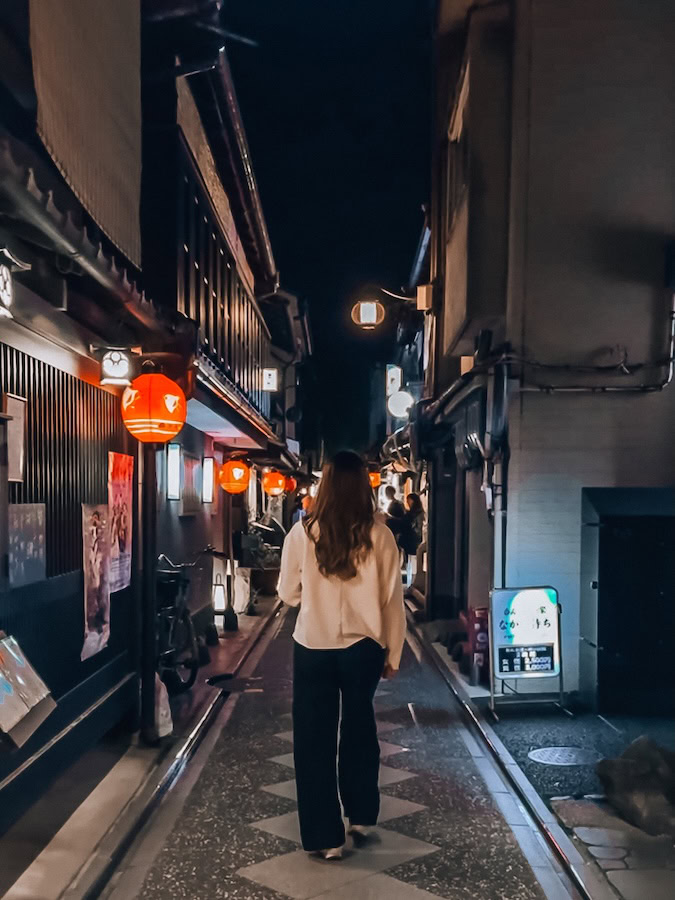
Pontocho Alley is a narrow lantern lit alley along the Kamogawa River filled with restaurants and small bars. It is one of the most atmospheric places in Kyoto at night. You can either grab dinner here, or head here for drinks after dinner elsewhere.
Day 2: Arashiyama & Kinkaku-ji Temple
On your second day in Kyoto, head to Arashiyama, a scenic district on the western edge of Kyoto known for its bamboo groves, temples, and peaceful mountain surroundings. While most visitors come here for the famous bamboo grove, Arashiyama has much more to offer than just that one photo spot.
How to get to Arashiyama from Kyoto:
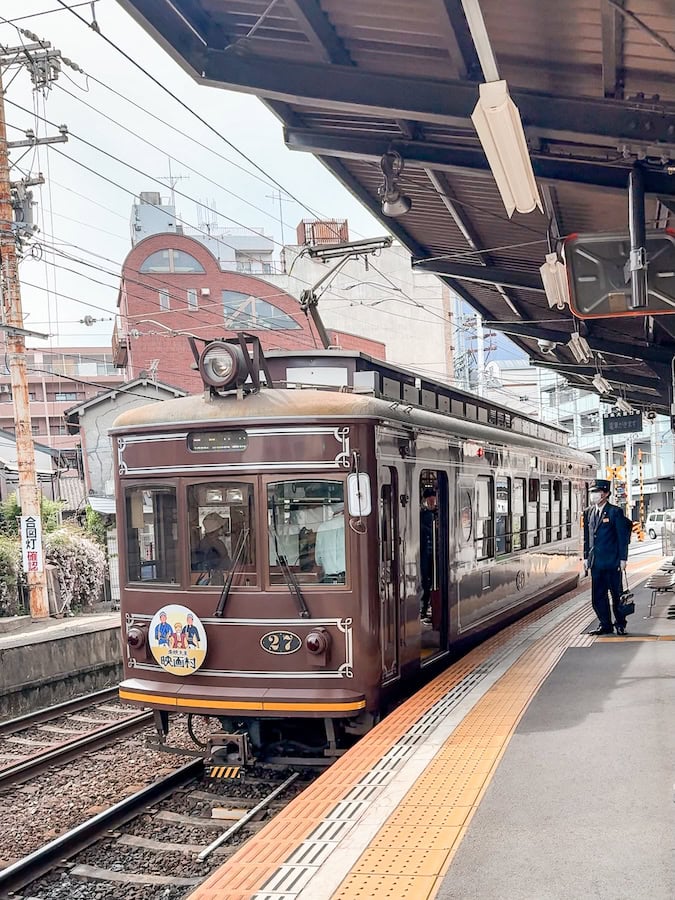
Trains, buses and the historic Randen trams will get you to Arashiyama Station from anywhere in Kyoto. Use Google Maps to explore your options for that day. You may have to transfer once to get to Arashiyama depending on where you are departing from. The journey takes about 45-60 minutes from Kyoto.
The Randen trams are antique trams that operate in the western part of Kyoto. There are 2 lines: Arashiyama and Kitano lines. Consider getting this pass that includes unlimited subway in Kyoto and unlimited Randen rides for 1 day. It costs less than $5!
Morning: Arashiyama
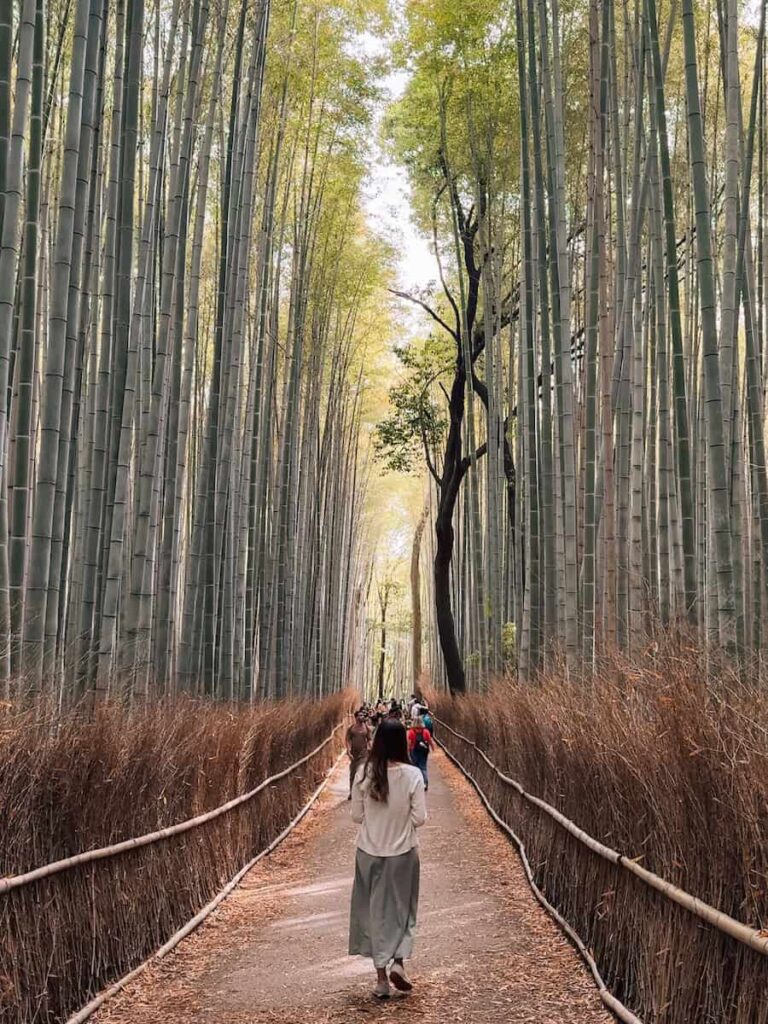
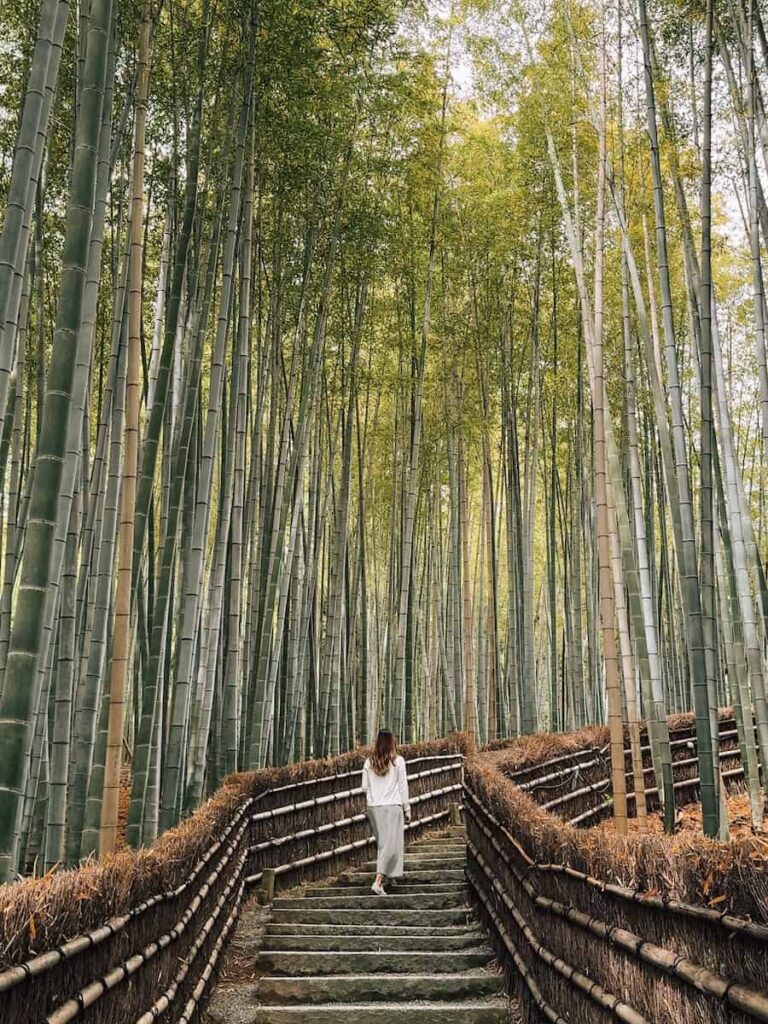
Once you arrive at Arashiyama Station, it’s a 10 minute walk to the famous Arashiyama bamboo grove. I would head here first to beat the crowds.
The bamboo forest was a lot smaller than I had imagined. And even though we went somewhat early, there was already quite a few people there. Honestly, I don’t expect to find any of Kyoto’s main attractions to be empty in the mornings anymore because of how popular this destination is, but you’ll still have an easier time navigating if you go earlier than mid-day.
Next, explore Tenryu-ji Temple, which is basically just adjacent to the Arashiyama bamboo forest. It costs ¥500 to enter. This is a masterpiece of Japanese style temples. I loved how serene the gardens were, and the overall calming atmosphere despite all the visitors there.
If you are interested in seeing another bamboo grove, head to Adashino Nenbutsu-ji Temple. You can take a bus from Tenryu-ji Temple to this temple (takes about 12 minutes), take a cab (remember that Japanese taxis are not cheap!) or if you walk it takes 25 minutes. Once you pay the ¥500 fee to enter, you’ll first see the grounds filled with 8,000 statues, which are dedicated to lonely souls. Walk past the stone figures and you’ll come upon a stairway lined with bamboos. This place has gained popularity over the last few years so it may not be as empty as when I visited, but it’s a bit further out from the main Arashiyama area so it will have less of the larger tour groups.
Another 10 minutes from here you’ll find Otagi Nenbutsu-ji Temple, another small temple with over 1,000 whimsical stone statues. I wish I had known about this one prior to going, because I only found out about it after returning from my trip. If you’re heading in that direction already, please check this place out for me!
Late morning: Arashiyama center
In the afternoon, make your way back toward the center of Arashiyama and stop by Togetsukyo Bridge, one of the district’s most recognizable landmarks. The historic bridge spans the Katsura River and offers beautiful views of the surrounding mountains, which are especially stunning during cherry blossom season in spring and foliage season in autumn.
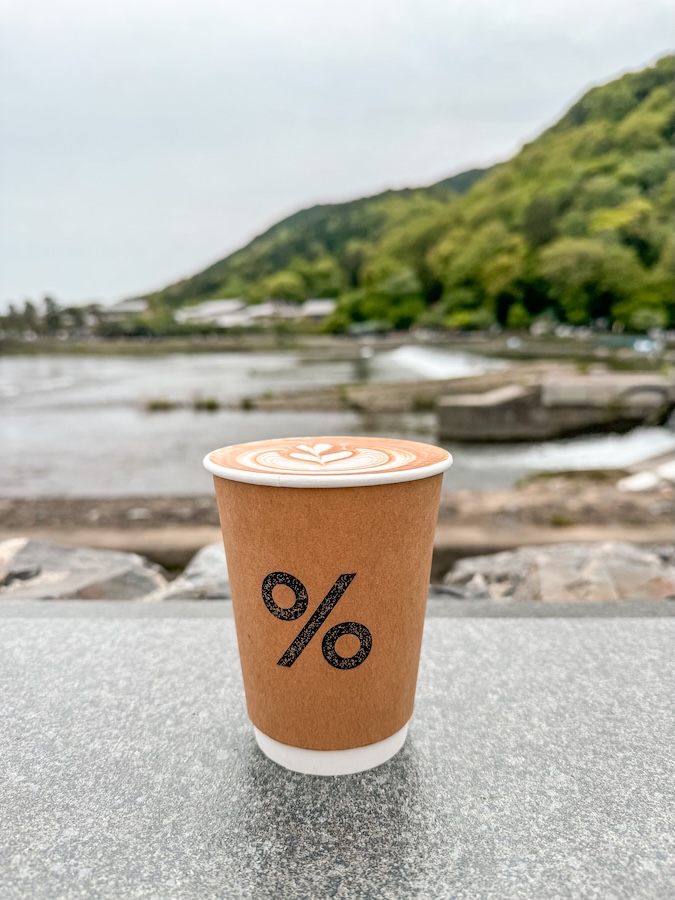
Just a short walk away, grab a drink from % Arabica Arashiyama, one of Kyoto’s most famous coffee spots. Their Kyoto Latte is a popular choice, and I highly recommend it! There was a line but it went by quickly. Take your coffee and sit by the river to take in the scenery.
This is also a great time to get some lunch. We made reservations at Arashiyama Itsukichaya and had the most beautifully presented meal with views of the river. There are plenty of good restaurants around, but you may need reservations for popular spots.
We didn’t do this, but one of the things I would like to do next time is the scenic train and boat ride in the Hozugawa River.
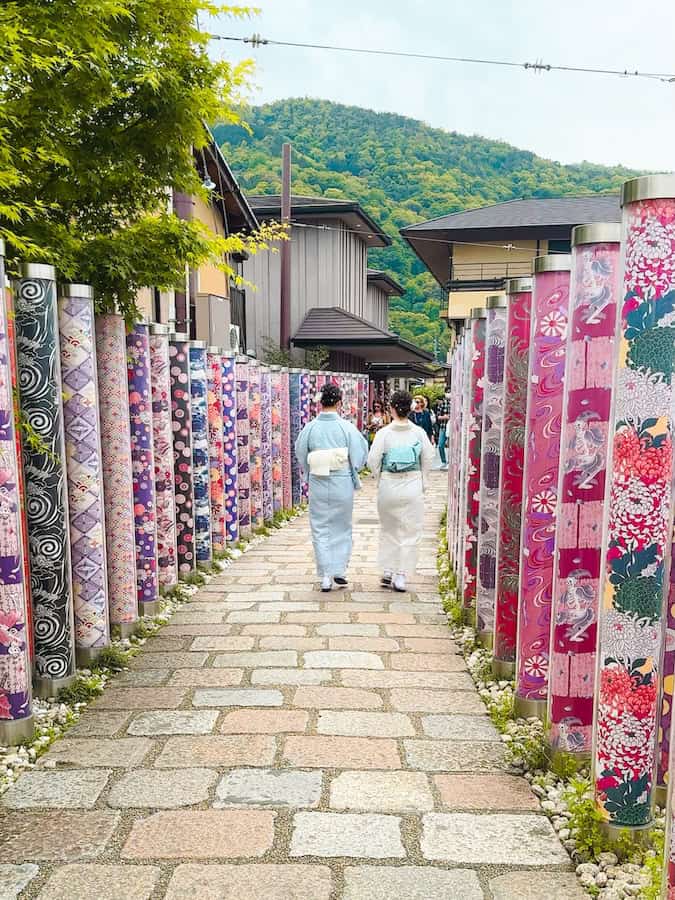
Klook.comBefore leaving Arashiyama, stop by Kimono Forest at Arashiyama Station, an installation of hundreds of glowing pillars decorated with colorful kimono textile patterns.
Afternoon: Kinkaku-ji Temple
From Arashiyama Train Station, we took the charming randen tram and transferred to a bus to get to Kinkaku-ji Temple, or the Golden Pavilion.
This is one of the most famous temples in Japan, and is another UNESCO World Heritage Site. Covered in brilliant gold leaf and reflected in a peaceful pond, the temple is one of Kyoto’s most iconic sights. The temple closes at 5 pm so make sure to keep this in mind. Entrance is also 500 JPY.
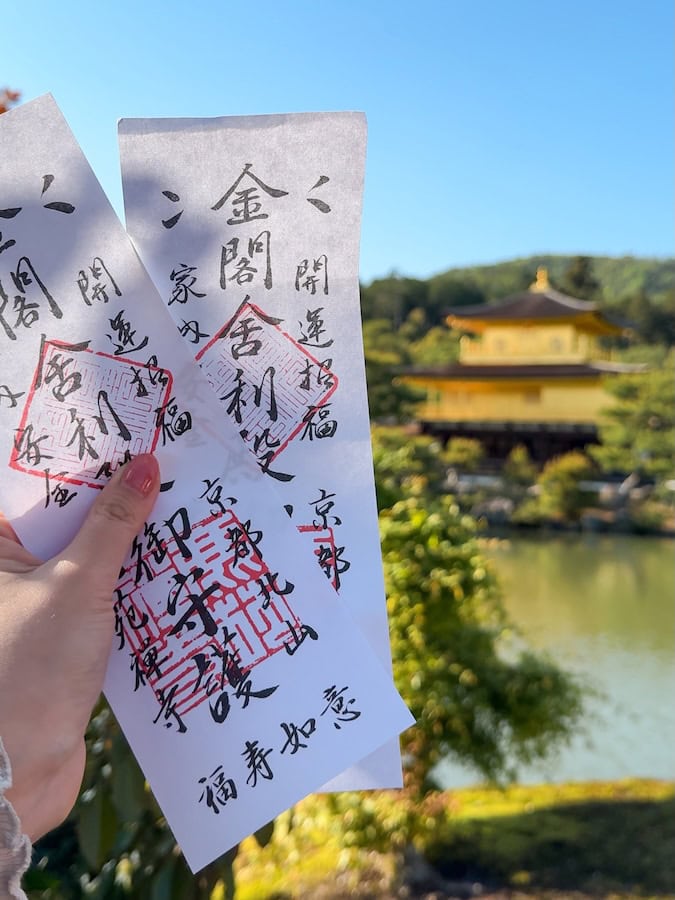
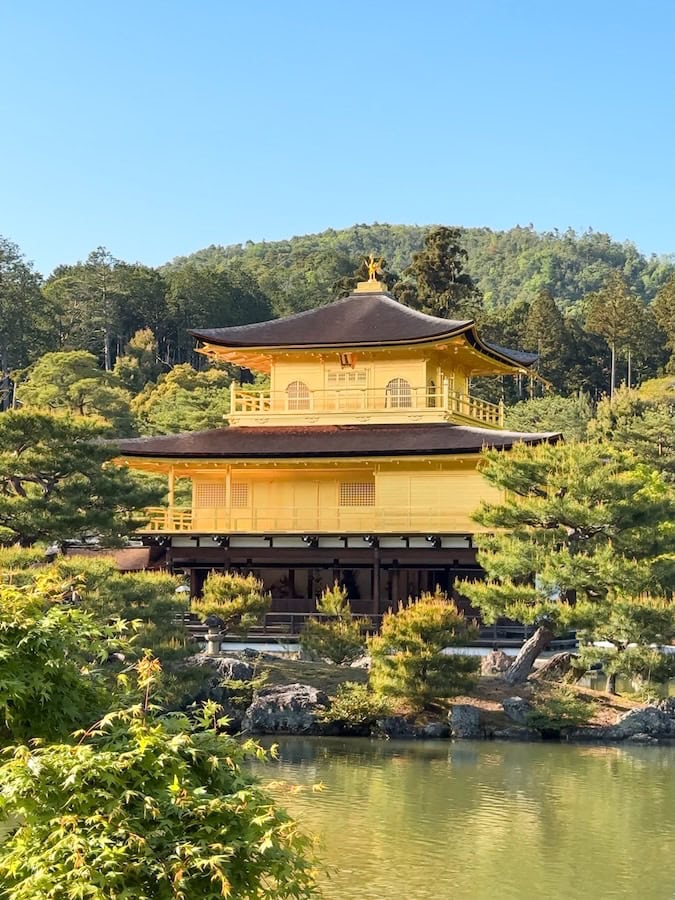
Whereas the Ginkaku-ji Temple (Silver Pavilion) WASN’T silver in color, this temple covered in gold was quite magnificent. You could see the temple and its surrounding grounds in about 45 minutes-60 minutes.
After seeing the Kinkaku-ji Temple, return to central Kyoto for dinner, or perhaps re-visit the Yasaka Shrine when it’s glowing lanterns are lit up at night.
Day 3: Fushimi Inari and a Day Trip to Nara
Morning: Fushimi Inari Shrine
While planning your trip to Japan, you must have come across photos of red Torii gates, which mark the entryway into a shrine.
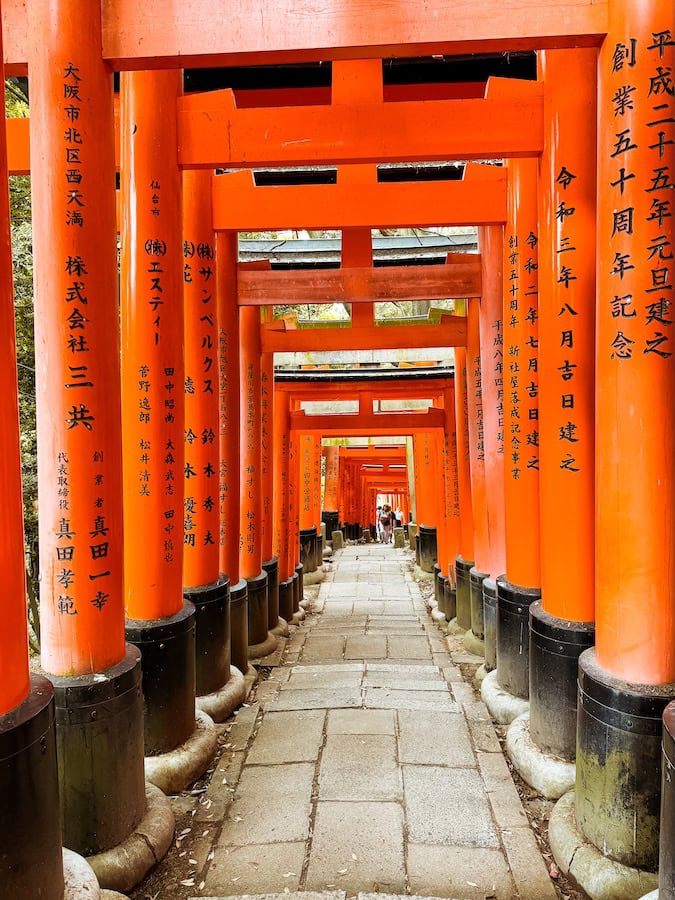
The torii gates of Fushimi Inari Taisha Shrine are undoubtedly one of the most famous in Japan. There are thousands of bright red torii gates that wind up the mountainside.
Take the train from Kyoto to Fushimi Inari Taisha. You’ll likely be getting off at Inari Station, or Fushimi-Inari Station. Either way, the shrine is just a short distance from both stations.
The first section near the entrance is where most crowds will be. Most people don’t walk all the way up to the top, but if you do, you’ll find the crowds thinning the further you go. For a full round-trip to the top and back, expect 2-3 hours depending on your fitness levels and how often you stop.
Afternoon: Day Trip to Nara
From Fushimi Inari Taisha Shrine, you can reach Nara in less than an hour.
There’s a few different routes but they all take similar amounts of time to reach Nara, so I would just use Google Maps to see what your next available route is.
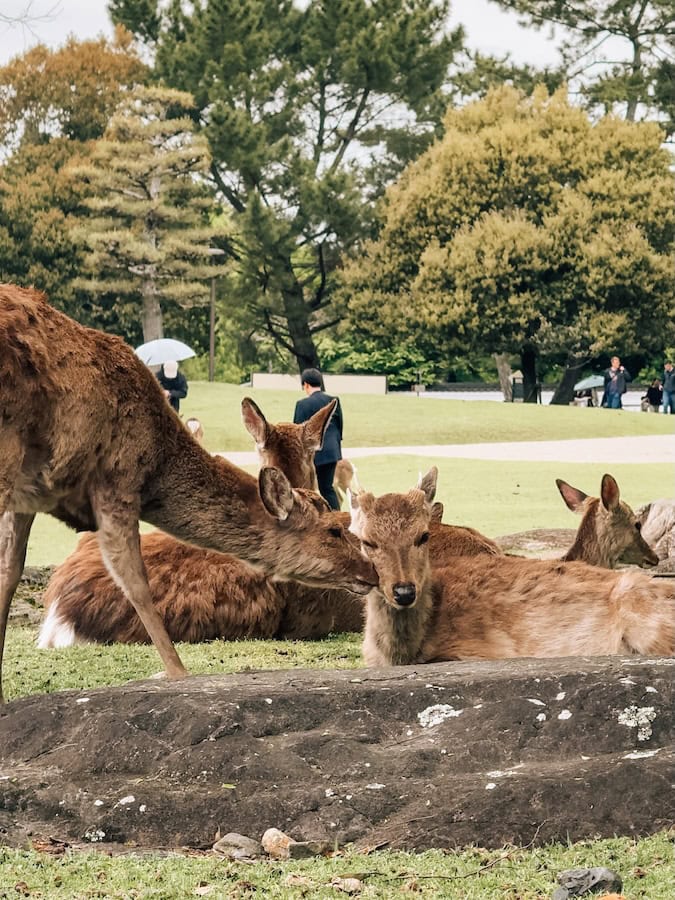
Start your trip in Nara at the Nara Park, home to more than 1,000 free roaming deer. To get here from Kyoto, I suggest heading to Kintetsu-Nara Station instead of Nara Station. This is where your Kansai Pass, if you have purchased it, would come in handy.
It was pretty incredible to see deer just roaming freely in the park but also some of the surrounding streets. These deer are considered sacred messengers in the Shinto religion. You’ll find street vendors that sell crackers that can be fed to the deer. Please, do not feed them anything else!
Recently with the popularity of Japan booming, there have been reports of some of the deer becoming aggressive towards tourists, especially the ones near the entrance which are more exposed to people. I did find that some of the deer were less gentle, following us around and nudging or biting our clothes for more crackers. Be cautious and respectful.
While in Nara, visit Todai-ji, a UNESCO World Heritage temple that houses the world’s largest bronze Buddha statue. The massive wooden hall that contains the statue is equally impressive and is considered one of the largest wooden buildings in the world.
We didn’t have great weather in Nara as it was raining so we missed a lot of photo opportunities, but I recommend spending a few hours exploring Nara including its most popular temples and strolling down the Naramachi Street for some shopping and browsing.
Alternative Option for Day 3: Day Trip to Osaka
Instead of Nara, you could do a day trip to Osaka from Kyoto. However, I think that Osaka deserves a bit more dedicated time, so we decided to spend a few nights there instead of trying to squeeze it in as a day trip. Of course if your time in Japan is limited, it is an option as Osaka is only 30 minutes away from Kyoto Station.
More Things to Do in Kyoto if You Have Extra Time
While this 3-day itinerary covers many of Kyoto’s highlights, this beautiful city has far more to offer than you can realistically fit into such a short trip. With over 1,600 temples, hundreds of shrines, and countless historic neighborhoods, it is easy to spend a week or more exploring the city.
If you have additional time in Kyoto, here are a few more places and cultural experiences worth adding to your itinerary.
Nijo Castle
One of Kyoto’s most historically significant landmarks is Nijo Castle, a UNESCO World Heritage Site built in the early 1600s as the residence of the Tokugawa shoguns. The castle is famous for its beautifully painted interiors and “nightingale floors,” which were designed to creak and make “chirping” noises when walked on as a security measure to warn of intruders.
Experience a Traditional Tea Ceremony
Kyoto is one of the best places in Japan to experience a traditional tea ceremony, a cultural ritual centered around the preparation and presentation of matcha. Participating in a tea ceremony offers a deeper look into Japanese culture and hospitality while allowing you to enjoy freshly prepared matcha and traditional sweets.
Visit More Temples and Gardens
Even after visiting the temples included in this itinerary, there are still many incredible ones worth seeing if you have the time. Some beautiful options include Ryoan-ji, famous for its minimalist Zen rock garden, and Nanzen-ji, known for its massive Sanmon gate and historic aqueduct.
Take a Cultural Workshop
Kyoto is also a wonderful place to try hands on cultural activities. Visitors can participate in experiences such as calligraphy, kimono dressing, wagashi (Japanese sweets) making, or sake tasting. These experiences provide a deeper appreciation of Japan’s traditions and craftsmanship.
Kyoto Imperial Palace
Located in a large park in the center of the city, Kyoto Imperial Palace was once the residence of Japan’s imperial family before the capital moved to Tokyo. The palace grounds are peaceful and spacious, making it a nice place for a quiet walk away from the busier tourist areas.
Final Thoughts on this 3-Day Kyoto Itinerary
Kyoto is one of those destinations that leaves a lasting impression. Between its centuries old temples, quiet gardens, historic streets, and traditional neighborhoods, the city offers a glimpse into Japan’s cultural heritage that feels completely different from the vibrant energy of Tokyo.
Three days in Kyoto is enough time to experience many of the city’s highlights, from walking through the historic lanes of Higashiyama and visiting iconic temples to exploring the bamboo forests of Arashiyama and hiking beneath thousands of torii gates at Fushimi Inari. Adding a day trip to Nara also gives you the chance to see another historic city and one of Japan’s most unique sights.
Of course, Kyoto has far more to offer than what can be covered in just a few days. There are countless ancient temples, charming gardens, tea houses, and beautiful places to visit.
But with a well planned itinerary that groups attractions by location, three days is enough to experience the essence of Kyoto while still leaving room to slow down and enjoy the city’s timeless atmosphere.
If you have more time in Japan, consider pairing Kyoto with nearby destinations like Osaka, Nara, or Kobe to experience even more of the Kansai region.
I hope this guide helps make planning your first trip to Kyoto feel easier and more exciting. Be sure to explore my other Japan guides as well!
If you are heading to Tokyo for the first time, make sure to check out my Tokyo Travel Guide and 5-day Tokyo Itinerary!
Kyoto 3 Day Itinerary FAQ
Is 3 days enough time in Kyoto?
Three days is a great amount of time for a first visit to Kyoto. It allows you to see the city’s most famous temples, historic districts, and scenic areas like Arashiyama while still leaving time for a day trip to nearby places like Nara. If you have more time, however, you could easily spend five days or more exploring Kyoto at a slower pace.
What is the best time to visit Kyoto?
The best times to visit Kyoto are spring (March to May) and autumn (October to November). Spring is famous for cherry blossom season, while autumn offers beautiful fall foliage throughout the temples and gardens. Summer can be hot and humid, and winter is quieter.
If you are after the cherry blossoms, peak blooms in Kyoto typically occur around late March through first half of April. Keep in mind that cherry blossom season in Japan will come with not only the gorgeous blooms, but also high prices for everything including accommodations, and more crowds than usual.
How do you get around Kyoto?
Kyoto has an excellent public transportation system consisting of buses, subway lines, and regional trains. Many of the city’s major attractions are connected by bus routes, while trains are useful for traveling longer distances or visiting nearby cities like Nara and Osaka. Using an IC card such as Suica, ICOCA, or Pasmo makes traveling around Kyoto very convenient.
Is Kyoto walkable?
Some parts of Kyoto, like Higashiyama and Gion, are very walkable and are best explored on foot. However, the city’s main attractions are spread across different districts, so you will likely need to use buses or trains to travel between areas.
How far is Nara from Kyoto?
Nara is about 45 minutes to 1 hour from Kyoto by train, making it one of the easiest and most popular day trips from the city. The fastest route is usually via the JR Nara Line or the Kintetsu Railway from Kyoto Station.
How far is Osaka from Kyoto?
Osaka is very close to Kyoto and makes an easy day trip. The two cities are about 55 km (34 miles) apart, and the journey typically takes 30 to 45 minutes by train depending on which line you take.
The fastest option is the JR Shinkansen (bullet train) from Kyoto Station to Shin Osaka Station, which takes about 15 minutes. However, most travelers simply take the JR Special Rapid Service on the JR Kyoto Line, which takes around 30 minutes and runs frequently throughout the day.
You can also take the Hankyu Railway from Kawaramachi Station in Kyoto to Osaka Umeda Station, which takes about 45 minutes and is often a convenient option if you are staying near downtown Kyoto.
Should I stay in Kyoto or Osaka?
Both cities make good bases for exploring the Kansai region. Kyoto is better if you want to be close to historic temples and traditional neighborhoods, while Osaka is more lively and known for its food scene and nightlife. Since the two cities are only about 30 minutes apart by train, it is also possible to split your stay between them but I would recommend dedicating 3 nights in Kyoto, and at least 2 in Osaka.
Kyoto Google Map with Pins
Find the itinerary on a Google Map here: It’s organized by day. Enjoy your Kyoto trip!
USE MY CHECKLIST TO PLAN YOUR TRIP!
- Flights
- Search for the best flights on Skyscanner to get to your destination
- Search for the best flights on Skyscanner to get to your destination
- Hotels
- I use Booking.com for most accommodations
- For Asia, I prefer Agoda as they have the most competitive prices. I also compare prices on Klook (you can use my code MINYWANDER for a discount so see if that’s a better deal)
- For vacation rentals, especially for larger families, consider VRBO
- Transportation
- Trains & Ferries – book on Omio
- Rental Cars – I usually book on DiscoverCars
- For reliable airport pickups, use Welcome Pickups
- For Asia I use Klook (code MINYWANDER for a discount) – Japan trains for example
- Activities & Tours
- GetYourGuide and Viator are my go to’s.
- For Asia, I prefer Klook as there are more options – use code MINYWANDER
- E-sim
- Stay connected with Airalo E-sims.
What times do you recommend starting when you say get there early?
I’m going to fushimi inari at 6am.
Morning at higashiyama area will start around 8:30 for kimono & photo shoot. I have a tea ceremony at 11am and then plan for lunch after that.
I’d love to hear your thoughts on my plans.
Thanks!
6 am should be quite empty! We went around 9:30 am and the entrance was pretty packed, but the higher you go it will clear out.
Your plans sound so exciting! Hope you have a great time.